How to Draw a Coral Reef
Learn how to draw a coral reef with this step-by-step tutorial. Capture the vibrant colors and intricate details of these underwater ecosystems in your artwork.
Materials You'll Need
- Pencil
- Paper
- Eraser
 Welcome to our vibrant journey beneath the waves! In this step-by-step guide, you'll embark on an artistic adventure and learn how to draw a coral reef. These underwater ecosystems are not just visually captivating; they're also teeming with life and color, which makes them an exciting subject for your artwork. Following along, you'll learn how to portray the unique shapes and hues that bring coral reefs to life.
Whether you're a beginner or someone looking to refine your drawing skills, this tutorial is designed with you in mind. We'll walk through each stage, from sketching basic shapes to adding intricate details and lively colors. So gather your drawing materials, unleash your creativity, and let's plunge into the enchanting world of coral reefs together!
Get ready to explore the many facets of this underwater paradise, where every stroke of your pencil can evoke the beauty and diversity of marine life. Let's dive in and see what stunning artwork you can create!
Materials Required
Before we begin, make sure you have the following materials:
- Drawing paper or sketchbook
- Pencil
- Eraser
- Fine-tip black pen or marker
- Colored pencils or markers
- Reference images of coral reefs (optional)
Now that we have everything ready, let's get started!
Step 1: Sketch the Basic Shape
To start, lightly sketch the basic shape of your coral reef on your drawing paper. Remember that coral reefs come in various forms, so feel free to get creative with the shape and size. You can imagine a cluster of coral formations or a more spread-out arrangement. Use light pencil strokes to ensure easy erasing if needed.
Step 2: Add Detail to the Coral
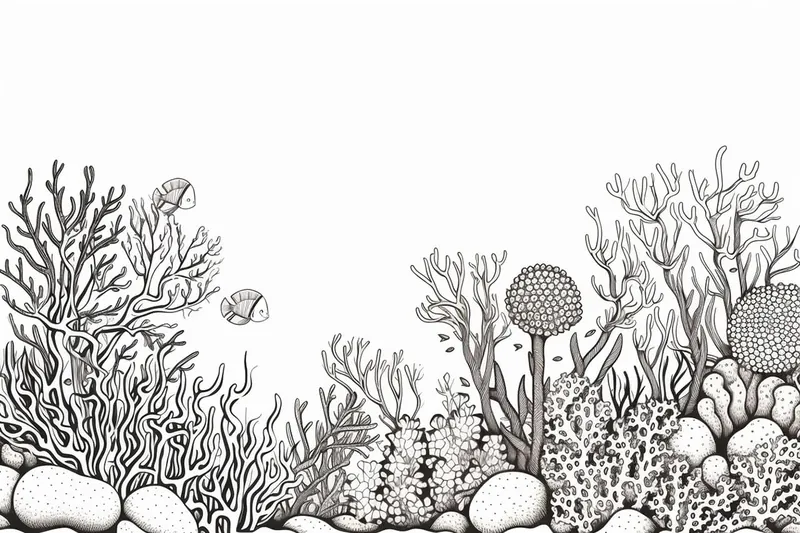
Once you have the basic shape, start adding more details to your coral reef. Coral formations are often made up of intricate, branch-like structures. Use curved lines to create these branches, making sure to vary their thickness and direction. Take a look at reference images or use your imagination to determine the shape and style of the coral you want to draw.
Step 3: Enhance the Texture
To give your coral reef a more realistic texture, add small bumps and irregularities to the coral branches. These can be simple oval or circular shapes scattered along the surface. Use your pencil to lightly shade these areas, creating a sense of depth and dimension. Remember that coral reefs are full of life, so don't be afraid to experiment with different shapes and textures.
Step 4: Draw Marine Life
A coral reef is home to a wide variety of marine life, so let's bring our drawing to life by adding some of these fascinating creatures. Start by sketching a few fish swimming around the coral. Use curved lines to outline their bodies, and add fins, tails, and other characteristics to make them more realistic. You can also draw other sea creatures like clams, starfish, or even a sea turtle.
Step 5: Outline Your Drawing
Once you are satisfied with the overall composition, it's time to trace over your sketch with a fine-tip black pen or marker. This will help define the outlines and make your drawing stand out. Start by outlining the coral formations, then move on to the marine life. Take your time and be careful not to smudge the ink as you go. Once you're done, let the ink dry completely before erasing any remaining pencil marks.
Step 6: Add Color and Details
Now comes the fun part – adding color to your coral reef! Use colored pencils or markers to bring your drawing to life. Coral reefs are known for their vibrant colors, so feel free to experiment with different shades. Start by coloring the coral formations, keeping in mind the diversity of colors you find in real coral reefs – from bright reds and oranges to soft pinks and purples. Then, color the fish and other marine life, taking inspiration from their natural hues.
Step 7: Enhance with Shading and Highlights
To add depth and dimension to your drawing, use shading and highlights. Shade the areas that would be in shadow, such as under the coral or behind the fish. This will create a sense of volume and make your drawing more realistic. Additionally, add highlights to the tops of the coral branches or the bodies of the fish to make them appear more three-dimensional. Blend the colors softly to create a smooth transition between shades.
Tip: To effectively capture the intricate beauty of a coral reef, start by layering your drawing technique. Use a light pencil to sketch the foundational shapes of the corals and marine life, focusing on their organic forms; think of how corals branch and twist. Once you're satisfied with your outlines, switch to colored pencils or watercolors to build depth—layer colors gradually, starting with lighter hues and adding darker tones to create dimension. For added texture, consider using a stippling technique or fine lines to represent the fine details of coral surfaces. Finally, don't forget to incorporate the surrounding water—softly blend blues and greens to emulate the play of light and shadows, bringing your reef scene to life!
Conclusion
[[Congratulations on completing your beautiful coral reef drawing! By following these step-by-step instructions, you have learned how to capture these unique underwater ecosystems' intricate details and vibrant colors. Practice and experiment with different techniques to further develop your artistic skills. So dive into your imagination and keep creating fantastic artwork inspired by the ocean's wonders! For more underwater drawing fun, try sketching a sponge, a squid](https://yonderoo.com/how-to-draw-a-squid/), or seaweed](https://yonderoo.com/how-to-draw-seaweed/).
Gallery of Coral Reef Drawings


Fun Facts About Coral Reefs
- Coral is alive! Coral reefs are built by tiny animals called coral polyps, which work together to form vast underwater structures.
- They're ancient architects. Some coral reefs have been growing for millions of years—older than most rainforests!
- Not just colorful rocks. What looks like rock is actually a skeleton made of calcium carbonate, built by living coral creatures on top.
- Biodiversity superstars. Coral reefs are home to more species per square meter than almost any other environment on Earth.
- They glow! Some coral and reef fish are bioluminescent, meaning they can produce their own light—great for spooky or magical underwater drawings.
- Shallow sun-lovers. Most coral reefs grow in shallow, warm water because they need sunlight to thrive (thanks to a special relationship with algae).
- The Great Barrier Reef is huge. It's the largest reef system in the world—so big it can be seen from space!
- Natural storm barriers. Reefs help protect coastlines from waves, storms, and erosion.
- Coral comes in wild shapes. From branching staghorn coral to brain coral that looks like a maze, each type adds to the reef's personality.
- They're in danger. Pollution, rising sea temperatures, and human activity are threatening coral reefs—but awareness and art can help inspire protection!
Suggested Scenes and Settings for Coral Reef Drawings
- [Tropical Reef Teeming with Life: Draw a bustling coral reef filled with colorful fish, sea anemones, starfish, and swaying sea plants. Or even a friendly sea otter](https://yonderoo.com/how-to-draw-a-sea-otter/)!
- Curious Diver's Discovery: Illustrate a diver floating above a reef, discovering a hidden underwater cave or a rare creature.
- Nighttime Bioluminescent Glow: Picture the reef glowing under a moonlit sea, with jellyfish, corals, and fish radiating eerie neon light.
- Coral Castle: Create an underwater fantasy kingdom made of coral towers and sponge turrets, with mermaids or sea dragons swimming nearby.
- Reef Clean-Up Scene: Show sea creatures teaming up (maybe in a cartoon style) to clean up trash and protect their reef home.
- Tide Pool Peek: Imagine a shallow reef section visible during low tide, where crabs, sea urchins, and coral peek through the water's surface.
- Coral Garden Close-Up: Focus on a macro view of coral structures—maze-like brain coral, delicate fan coral, and twisting tube sponges up close.
- Shipwreck Among the Coral: Depict a sunken pirate ship or ancient boat overgrown with coral and seaweed, now home to curious marine life.
- Underwater Parade: Illustrate a whimsical scene with reef creatures marching in a colorful underwater parade, complete with streamers of seaweed.
- Fantasy Creature Habitat: Design a reef as the magical home of a sea unicorn, kraken, or aquatic fairy, with vibrant coral details adding to the magic.