How to Draw a Capybara in 8 Easy Steps
Learn how to draw a realistic capybara with this step-by-step tutorial, perfect for beginners and intermediate artists
Materials You'll Need
- Drawing paper
- Pencils (2H, HB, 2B, 6B)
- Soft eraser
- Blending stump or tortillion
- Reference image of a capybara
How to Draw a Capybara in 8 Easy Steps
Capybaras are the world's largest rodents and make for adorable drawing subjects! Their gentle expressions and unique proportions make them fun to draw. In this tutorial, we'll guide you through creating your own capybara artwork.
Materials You'll Need
Before we begin, gather these materials:
- Drawing paper - Any quality drawing paper will work
- Pencils - 2H for light sketching, HB for outlines, 2B and 6B for shading
- Soft eraser - For corrections and highlights
- Blending tools - Blending stump or tortillion for smooth shading
- Reference image - Having a photo of a capybara will help with proportions
Step 1: Sketch the Basic Shapes
Start with simple geometric shapes to establish the capybara's form:
- Draw a large oval for the body - capybaras have rounded, barrel-shaped bodies
- Add a smaller oval for the head, positioned at the front of the body
- Connect these shapes with gentle curved lines to form the neck
- Sketch small ovals for the ears on top of the head
- Add basic shapes for the back legs - these will be refined later
Tip
Keep your initial lines light! You'll be erasing and refining as you go.
Step 2: Define the Head and Facial Features
Now let's bring the capybara's face to life:
- Draw almond-shaped eyes - capybaras have gentle, expressive eyes
- Add the iris and leave small highlight circles for that lifelike sparkle
- Sketch a small triangular nose at the front of the snout
- Add the small, rounded ears with simple circular shapes
- Indicate the mouth line below the nose
The key to capturing a capybara's expression is in the eyes - they should look calm and friendly.
Step 3: Outline the Body and Tail
Time to refine the body shape:
- Trace over your initial body outline, making it more natural and less geometric
- Capybaras have a distinctive rounded back that slopes down toward the rear
- Add a small, barely visible tail - capybaras have very short tails
- Focus on maintaining the proper proportions - the body should be substantially larger than the head
Step 4: Add the Legs and Feet
Capybaras have sturdy legs with webbed feet:
- Sketch the front legs using straight lines that taper slightly
- Draw the feet with a curved, paddle-like shape
- The hind legs are thicker and more muscular - show this with wider shapes
- Add the webbed toes - capybaras typically have 4 toes on front feet and 3 on back feet
- Remember that the legs are relatively short compared to the body
Step 5: Refine the Facial Features
Let's add more detail to make the face come alive:
- Darken the eyes, maintaining those highlight spots for depth
- Add subtle eyebrow lines above the eyes
- Define the nose more clearly with nostrils
- Add a gentle lip line below the nose
- Use short, light strokes around the face to suggest fur texture
- Don't forget the whiskers - add a few long, delicate lines extending from the snout
Step 6: Detail the Body with Fur Texture
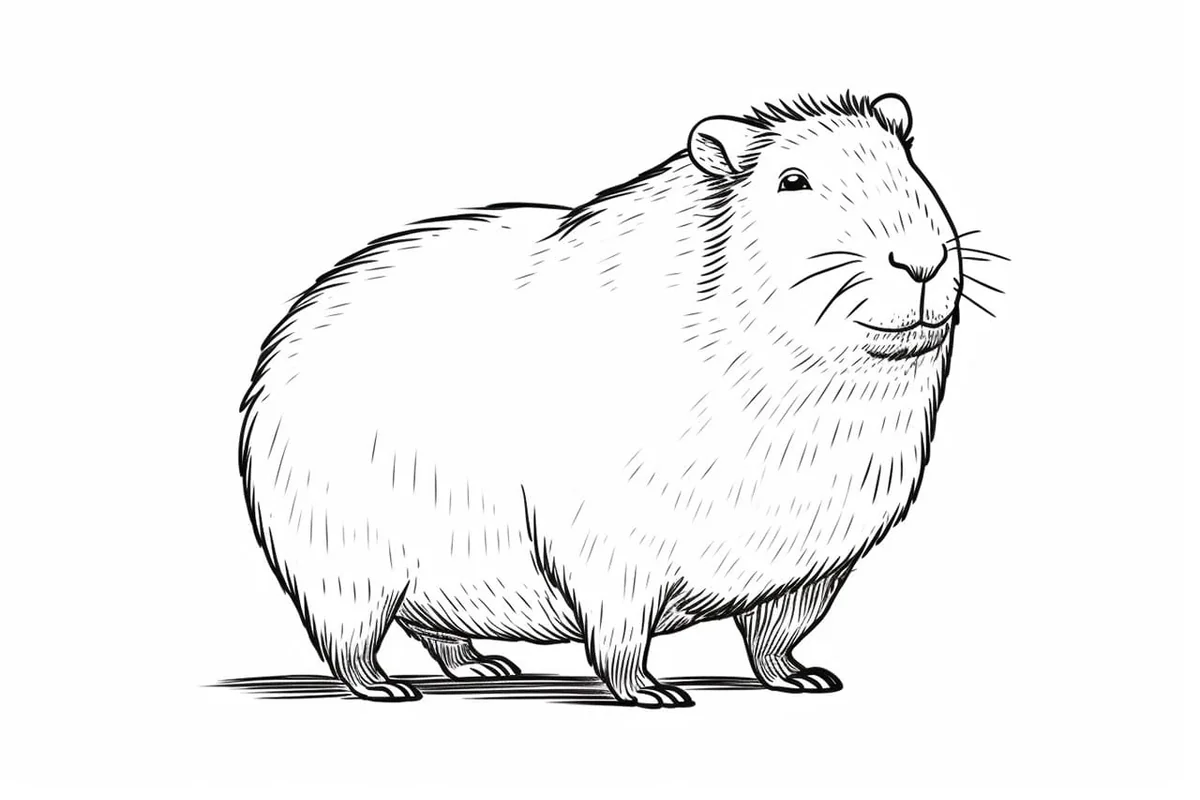
Creating realistic fur is all about direction and layering:
- Use short, curved strokes following the body's contours
- The fur generally flows backward from head to tail
- Vary your pencil pressure - lighter strokes for highlighted areas, darker for shadows
- Pay attention to areas where fur might be thicker, like around the neck
- Layer your strokes to create depth and dimension
Step 7: Add Background Elements (Optional)
While not necessary, a simple background can enhance your drawing:
- Consider adding water ripples if showing the capybara swimming
- Simple grass strokes around the feet can ground your drawing
- Keep background elements minimal so they don't distract from your capybara
- Use lighter pencil pressure for background elements to create depth
Step 8: Finalize Your Drawing
Time for the finishing touches:
- Darken the most important lines for emphasis
- Erase any remaining construction lines
- Add subtle shading to give your capybara three-dimensional form
- Shade under the belly, around the legs, and under the chin
- Use your blending stump for smooth transitions in shaded areas
- Add any final fur details you feel are needed
- Step back and assess - make any final adjustments
Pro Tips for Success
Observation is Key
- Study reference photos to understand capybara anatomy
- Notice how their fur lies flat and smooth
- Observe their peaceful, gentle expressions
Technical Tips
- Start light - you can always darken lines later
- Build gradually - don't try to get everything perfect in one pass
- Follow fur direction - this makes a huge difference in realism
- Vary your strokes - mix short and long strokes for natural-looking fur
Common Mistakes to Avoid
- Making the legs too long - capybaras have short, sturdy legs
- Forgetting the webbed feet - this is a distinctive feature
- Making the head too large - the body should dominate
- Over-detailing - sometimes less is more
Bonus: Cartoon and Anime Styles
Want to try something different? Here are quick tips for stylized capybaras:
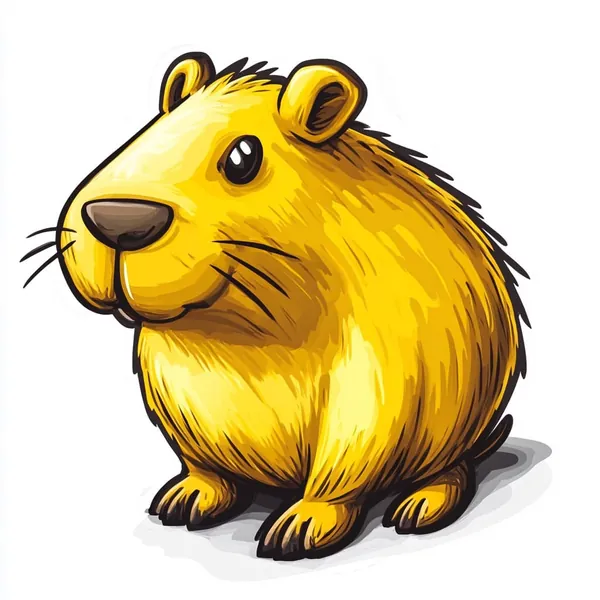
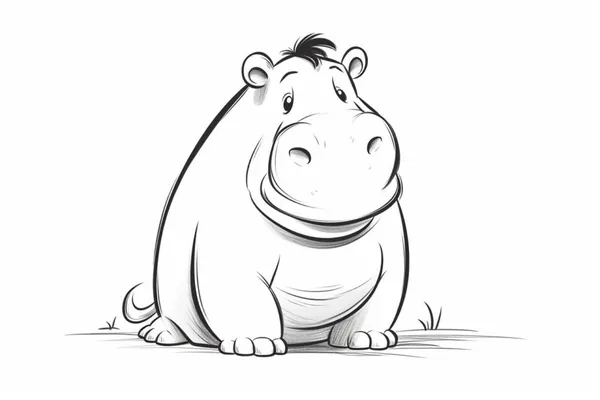
Cartoon Style
- Exaggerate the round shapes
- Make the eyes larger and more expressive
- Simplify the fur texture
- Add a smile for extra cuteness
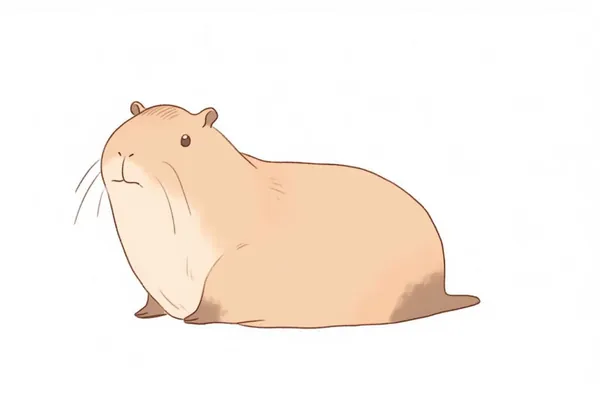
Anime Style
- Give the capybara huge, shiny eyes
- Add expressive eyebrows
- Use clean, bold lines
- Consider adding kawaii elements like blush marks
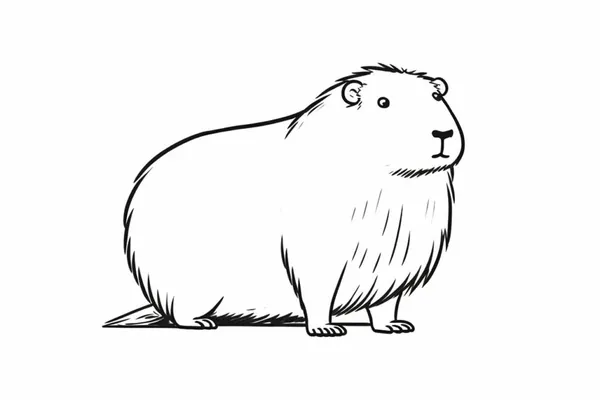
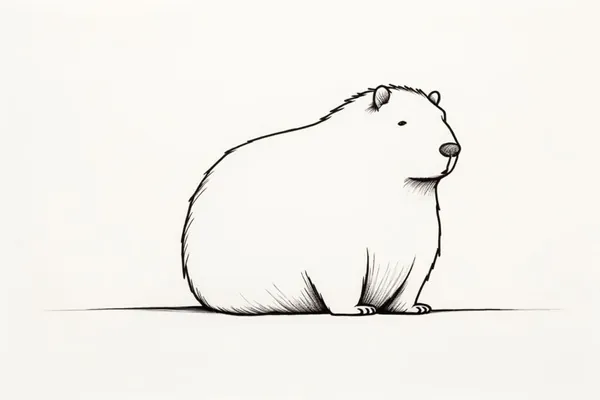
Gallery of Capybara Drawings
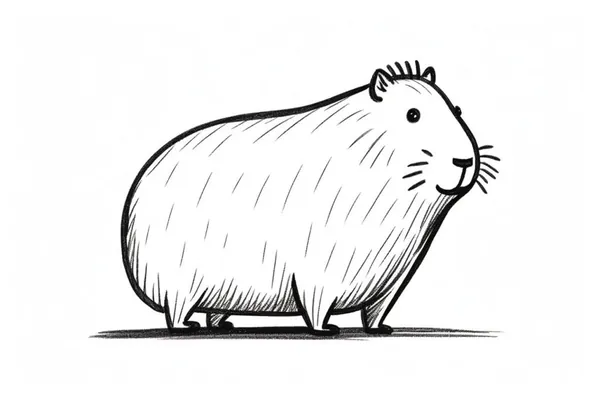
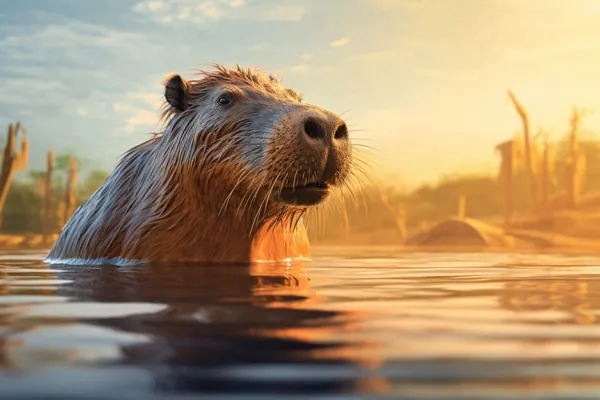
Capybara Drawing Inspiration
Fun Capybara Facts
Did you know?
- Capybaras are semi-aquatic and excellent swimmers
- They're native to South America
- They're incredibly social and get along with many other animals
- Adult capybaras can weigh up to 146 pounds!
Conclusion
Congratulations on completing your capybara drawing! Remember, art is a journey, and each drawing helps you improve. Don't be discouraged if your first attempt isn't perfect - even professional artists practice constantly.
Keep experimenting with different poses, expressions, and styles. Try drawing capybaras in groups, swimming, or interacting with other animals. The more you practice, the more confident you'll become in your artistic abilities.
Happy drawing, and enjoy bringing these gentle giants to life on paper!