How to Draw a Lynx in 6 Simple Steps
Learn how to draw with this step-by-step tutorial.
Materials You'll Need
- Drawing paper
- Pencil (HB or 2B)
- Eraser
- Colored pencils
- Blending stump
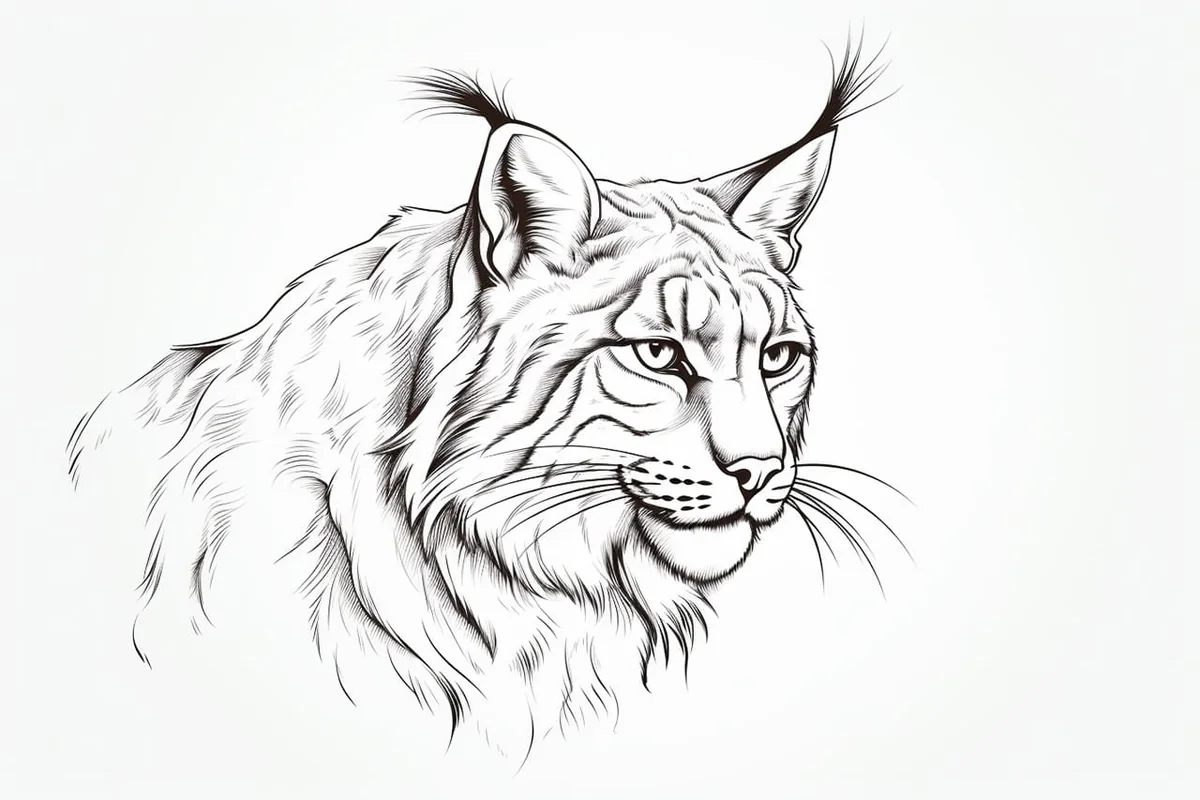
The lynx is one of nature's most captivating creatures, renowned for its striking appearance and majestic demeanor. With tufted ears, piercing eyes, and a distinct coat pattern, this elusive wildcat commands attention in the forest and captures the imagination of wildlife enthusiasts and artists alike. If you've ever wanted to replicate its beauty on paper, you're in for a treat. This guide will equip you with the skills to bring the lynx to life through your drawings.
In the following step-by-step instructions, I will take you through the process of how to draw a lynx, ensuring clarity and ease every step of the way. Whether you're a seasoned artist or a complete beginner, these tips will help you translate the essence of this magnificent animal onto your canvas. So, gather your materials, unleash your creativity, and let's embark on this artistic journey together!
By the end of this tutorial, not only will you have a beautiful representation of a lynx, but you will also gain a deeper appreciation for its intricate features and the artistry involved in capturing such a stunning animal. Ready to get started? Let's dive into the first steps of creating your lynx masterpiece!
Materials Required
Before we delve into the step-by-step instructions, let's gather the materials you will need for this drawing:
-
Pencils (HB, 2B, and 4B)
-
Sharpener
-
Blending stump or cotton swabs
-
Reference photo of a lynx (you can find numerous images online or use a wildlife photography book)


Now that we have everything we need, let's begin the drawing process.
Step 1: Basic Guidelines
Start by lightly sketching a circle for the lynx's head. Then, draw a vertical line that intersects the circle slightly off-center. This line will serve as the lynx's centerline and will help with the placement of facial features.
Next, draw two lines extending downward from the circle, indicating the lynx's neck. Finally, sketch a large oval shape below the neck, representing the body of the lynx. These basic guidelines will provide a framework for the rest of the drawing.
Step 2: Head and Facial Features
Using the circle as a guide, start rendering the head of the lynx. Add more detail to the circle by drawing the lynx's pointed ears, which are one of its distinctive features. Lynx have long tufts of fur on the tips of their ears, so make sure to capture that detail.
Next, sketch the facial features. Start with the lynx's eyes, placing them on either side of the centerline. Lynx have intense, almond-shaped eyes, so be sure to capture their characteristic gaze. Draw a small triangle for the lynx's nose, slightly below the eyes. Then, add the mouth, extending a curved line from each side of the nose.
Step 3: Fur and Facial Details
Now it's time to add more detail to the lynx's face and fur. Start by adding short strokes around the lynx's eyes to represent the fur on its face. Lynx have distinctive markings on their face, including dark lines extending from the inner corner of their eyes to their ears. Sketch these lines lightly to indicate this feature.
Next, add shading and texture to the lynx's fur. Use short, quick strokes to simulate the appearance of fur on the top of the head and around the ears. Pay attention to the lynx's color patterns and try to replicate them as accurately as possible.
Step 4: Body and Limbs
Moving on to the body, start by adding more definition to the lynx's neck. Use curved lines to depict the muscles and contours of the neck. Then, begin shaping the lynx's body by adding a curved line below the head. This line will outline the back of the lynx.
Next, draw the front limbs by adding two lines extending from the body. The lynx's limbs are muscular and robust, so make sure to capture their strength. Add another set of lines below the body to represent the hind limbs, making them slightly longer than the front limbs.
Step 5: Tail and Paws
The lynx's tail is an essential part of its anatomy, so let's add it to our drawing. Start by drawing a long, tapered shape extending from the back of the lynx. The tail should be fluffy and thick, so add some fur texture using short, curved lines.
Moving on to the paws, carefully observe the reference photo for the lynx's paw structure. Sketch the outline of the lynx's front paws, paying attention to the individual toes and their positions. Repeat this process for the hind paws as well, adjusting the size and shape accordingly.
Step 6: Final Details and Shading
Now that we have our lynx's basic structure, it's time to refine our drawing and add the finishing touches. Start by erasing any unnecessary guidelines and refining the shape of the lynx's body, head, and facial features.
Next, add more detail to the lynx's fur by using a combination of short strokes and cross-hatching to create texture. Pay close attention to areas where the fur is thicker or darker, such as around the lynx's neck, tail, and limbs.
Tip: To capture the essence of a lynx in your drawing, start by focusing on its distinctive features—especially the tufted ears and the unique facial markings. Use a soft graphite pencil for your initial sketch to allow for easy adjustments; this will help you refine the proportions and details without leaving harsh lines. As you progress, switch to a harder pencil for defining the fur texture, using short, quick strokes to mimic the direction of the hair. Pay close attention to the lynx's piercing eyes, ensuring they reflect its keen gaze by adding highlights with an eraser or a white gel pen. Lastly, consider layering colored pencils or pastels for depth in the coat, blending shades to replicate the lynx's natural coloration—this will bring your drawing to life and make it truly captivating!
Conclusion
Congratulations! You have successfully learned how to draw a lynx, capturing its unique beauty and essence on paper. By following these step-by-step instructions and paying attention to details, you can create a stunning artwork of this magnificent creature. Remember, practice is key, so keep honing your drawing skills and exploring the wonders of wildlife.
I hope you have enjoyed this tutorial on how to draw a lynx. Happy sketching!
Fun Facts About the Lynx
-
Lynxes are medium-sized wild cats known for their signature features: tufted ears, short tails, and thick, padded paws that act like snowshoes.
-
There are four species of lynx: the Eurasian lynx, Canada lynx, Iberian lynx, and bobcat (a North American cousin)—each adapted to their specific habitat.
-
Those black tufts on their ears aren't just for show—they're thought to help with hearing and may serve as subtle communication tools.
-
Lynxes are solitary and stealthy hunters, using patience, sharp eyesight, and silent movement to catch rabbits, birds, and deer.
-
The Canada lynx has such big feet that it can walk on top of deep snow without sinking—making it perfectly adapted to snowy forests.
-
Despite their quiet nature, lynxes can yowl, growl, and hiss, especially during mating season or when defending territory.
-
Lynxes are excellent climbers and swimmers, but they prefer to stay close to dense forests where they can stalk prey unseen.
-
The Iberian lynx is one of the rarest cats in the world, once critically endangered but now making a comeback thanks to conservation efforts.
-
****A lynx's vision is so sharp that it can spot a mouse from 250 feet away, even in low light—hence the expression "eyes like a lynx."
-
Lynxes are most active at dawn and dusk, a behavior known as crepuscular hunting, which helps them avoid larger predators and the heat of day.
Suggestions for Scenes and Settings for Lynx Drawings
-
Snowy Forest Ambush: Draw a lynx crouched in the snow under pine branches, ready to pounce, with pawprints trailing behind and snowflakes drifting down.
-
Mountain Lookout: Illustrate a lynx perched on a rocky ledge overlooking a valley at sunrise, with its fur catching the golden light.
-
Creeping Through Autumn Leaves: Picture a lynx stalking through fallen leaves, partially hidden in amber and rust-colored undergrowth.
-
Winter Moonlight: Show a lynx walking through a silent, snowy forest under the full moon, its breath steaming in the icy air.
-
Mother and Cubs: Create a warm, tender moment with a lynx grooming her playful cubs outside a cozy den of roots and rocks.
-
Highland Hunter: Draw a lynx in the highlands or tundra, surrounded by hardy grasses and distant, snow-dusted peaks.
-
Forest Guardian Spirit: Imagine a mystical lynx glowing faintly with magical runes or spirit fire, acting as a forest protector in a fantasy world.
-
Frosty Cliffside Rest: Show a lynx lying on a snowy outcrop, tail curled around its paws, with an eagle circling in the distance.
-
Lynx in Fog: Create a moody, misty scene where the lynx's eyes pierce through fog, only parts of its form visible through swirling gray.
-
Dreamscape Camouflage: For a creative twist, illustrate a lynx blending into a surreal environment—its fur mimicking leaves, snow, or stars.