How to Draw a King
Learn how to draw a king in this step-by-step tutorial. Create a regal and majestic figure on paper with expert artist guidance.
Materials You'll Need
- Pencil
- Paper
- Eraser
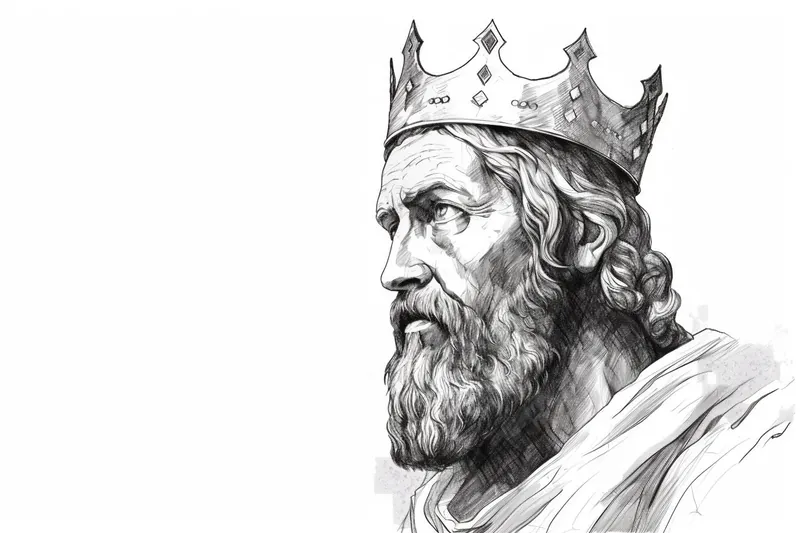
Drawing a king is a rewarding artistic endeavor that allows you to explore themes of power, nobility, and historical grandeur. Kings have been iconic figures throughout history and art, often depicted with intricate crowns, luxurious robes, and commanding expressions. Capturing these elements on paper not only challenges your drawing skills but also helps you practice portraying personality and status through visual cues. Whether you are interested in medieval royalty, fantasy characters, or simply want to enhance your portrait drawing techniques, learning how to draw a king opens the door to rich creative possibilities.
This tutorial is designed for artists with a basic understanding of drawing fundamentals, but it is accessible to beginners who are eager to develop their skills. You will learn to sketch the essential proportions of the human face and body, add detailed costume elements like crowns and robes, and use shading techniques to create depth and realism. By following the step-by-step instructions and clear illustrations, you will build confidence in your ability to depict a regal figure with poise and elegance. This process also encourages experimentation with line work and textures, enhancing your overall artistic versatility.
So, if you've ever wanted to create a majestic portrait that tells a story of leadership and dignity, this guide on how to draw a king is the perfect place to start. Gather your art supplies, prepare your workspace, and get ready to bring a noble monarch to life on your page. Remember, every master artist began with a single line—embrace the process, enjoy each step, and most importantly, have fun as you develop your skills and creativity!
Materials Required
Before we get started, make sure you have the following materials:
- Drawing paper
- Pencil
- Eraser
- Fine-tipped black pen
- Colored pencils or markers (optional)
The above materials will help you create a detailed and visually appealing drawing of a king. Now, let's dive into the steps!
Step 1: Outline the Head and Shoulders
Start by drawing a large oval shape for the king's head. Place it near the top of your paper, leaving enough space for the rest of the body. Just below the head, draw two curved lines that represent the shoulders. These lines should slope downward and slightly outward.
Step 2: Add Facial Features
Within the oval shape, sketch the facial features of the king. Begin with two horizontal lines across the middle of the oval to mark the eye level. Then, draw two oval shapes for the eyes on the upper half of the face. Add a small curved line below each eye to indicate the cheeks. Next, draw a straight line for the nose, extending from the center of the oval downward. Finally, add a smiling mouth by sketching a curved line between the cheeks.
Step 3: Detail the Eyes and Eyebrows
Tip: As you work through the steps of drawing a king, consider using reference images of historical or fictional kings to inspire your design choices, especially for intricate details like crowns and robes. This will not only help you visualize the regal elements more clearly but also encourage you to experiment with various styles and textures, enhancing the overall richness of your artwork.
Within the eye shapes, draw smaller ovals for the irises. Add a tiny circle within each iris to represent the reflection of light. Above the eyes, draw curved lines for the eyebrows, giving the king a dignified and expressive look.
Step 4: Define the Hair and Beard
Extend the lines above the king's head to create his hairstyle. You can make it short and neat or long and flowing, depending on your preference. Next, draw a beard that starts from the bottom of the chin and extends outward. You can add some waves or curls to make it more interesting.
Step 5: Draw the Body
Using the shoulder lines as a guide, outline the rest of the king's body. Draw two vertical lines that extend downward from the shoulders, creating the torso. Then, add two more lines curving outward to form the sides of the robe. Connect these lines at the bottom with a horizontal line to complete the robe shape.
Step 6: Add Details to the Robe
To give the robe a regal appearance, add some decorative elements. Draw a pattern along the edges of the robe, such as lines or small shapes. You can also add a belt around the waist by drawing a horizontal line with a buckle in the center. Don't forget to add some folds and creases to make the robe look realistic.
Step 7: Define the Hands and Arms
Starting from the shoulders, draw two slightly curved lines that represent the upper arms. Then, add two more lines for the lower arms, connecting to the hands. The hands can be drawn as simple shapes, with the fingers slightly curved. Remember to make the hands proportional to the rest of the body.
Step 8: Refine the Face and Features
Take a closer look at the king's face and make any necessary adjustments. Erase any unnecessary lines and refine the shape of the face, eyes, nose, and mouth. Pay attention to the shading around the eyes and under the chin to add depth. Use your artistic judgment to capture the expression and character of the king.
Step 9: Add Details and Accessories
To enhance the royal look, consider adding a crown or a regal headdress on top of the king's head. You can also draw some jewelry, such as a necklace or earrings, to accentuate the regalia. Be creative and add any additional details that you think would enhance the overall drawing.
Step 10: Outline and Finalize
Once you are satisfied with the sketch, carefully go over the lines with a fine-tipped black pen. Start with the facial features and move on to the body and details. Erase any remaining pencil marks, leaving only the clean and crisp lines of your king drawing.
Conclusion
Congratulations! You have successfully learned how to draw a king. By following the step-by-step instructions and using your creativity, you have created a regal and majestic figure on paper. Remember, practice makes perfect, so don't hesitate to try again and refine your technique. Happy drawing!
Fun Facts About Kings
- The title "king" originates from the Old English word "cyning," meaning a male monarch.
- King Arthur is a legendary British leader whose story has inspired countless works of art and literature.
- The crown worn by kings often symbolizes authority and legitimacy, with some crowns dating back centuries.
- King Louis XIV of France, known as the Sun King, reigned for 72 years, one of the longest in European history.
- In chess, the king is the most important piece, and the game ends if the king is checkmated.
- Many kings throughout history have been patrons of the arts, commissioning works that reflect their power and prestige.
- The concept of divine right of kings was a political doctrine that asserted kings derived their authority from God.
- King Tutankhamun, an Egyptian pharaoh, became famous after his nearly intact tomb was discovered in 1922.
Suggestions for Scenes and Settings for King Drawings
- A medieval throne room with the king seated on an ornate throne surrounded by courtiers and banners.
- A fantasy king standing on a misty mountain peak, overlooking his enchanted kingdom.
- [The king in full battle armor, holding a sword and shield](https://yonderoo.com/how-to-draw-a-shield/), ready for war on a battlefield.
- A serene garden setting where the king is depicted in a moment of reflection or meditation.
- The king hosting a royal feast, surrounded by nobles and musicians in a grand hall.
- A winter scene with the king wearing a fur-lined cloak, standing amidst snow-covered castles.
- A portrait of a young king crowned for the first time, capturing a mix of excitement and responsibility.
- The king participating in a traditional ceremony or ritual, such as knighting a warrior or blessing the land.
- A mythical king adorned with magical artifacts, glowing with power in a mystical forest.
- The king depicted in a historical setting, such as ancient Egypt or Renaissance Europe, with era-appropriate attire and architecture.