How to Draw a Ball - Master Spheres with Easy Steps
Learn how to draw realistic balls and spheres with proper shading, highlights, and texture techniques - perfect for beginners mastering 3D forms
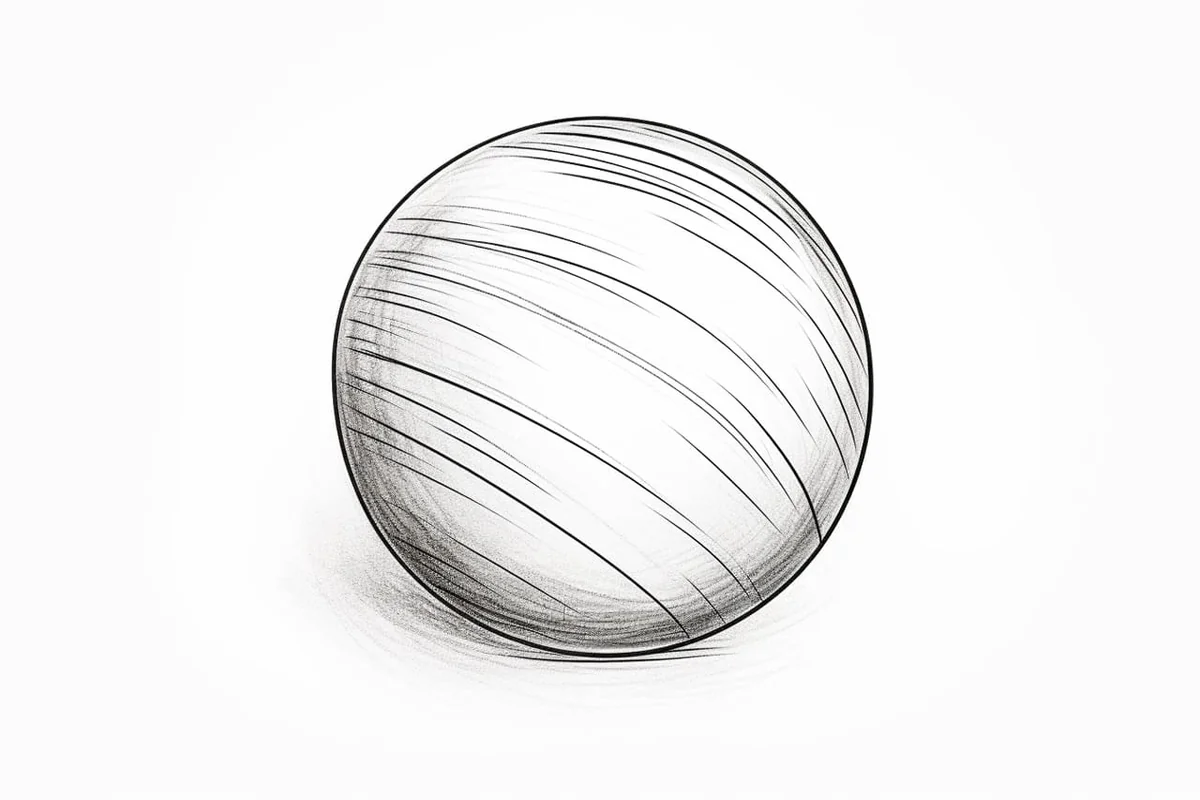
Materials You'll Need
- Drawing paper
- Pencils (2H, HB, 2B, 4B)
- Soft eraser
- Blending stump or tissue
- Ruler (optional)
- Compass (optional)
How to Draw a Ball - Master Spheres with Easy Steps
Drawing a perfect sphere might seem simple at first glance, but mastering the art of creating a realistic three-dimensional ball is one of the most fundamental skills every artist needs to develop. Spheres are everywhere - from sports balls to planets, marbles to bubbles - and understanding how to draw them convincingly will dramatically improve your overall drawing abilities.
In this comprehensive tutorial, we'll explore everything from basic sphere construction to advanced shading techniques that will make your balls look like they're ready to bounce right off the paper. Whether you're a complete beginner or looking to refine your skills, this guide will take you step-by-step through creating balls that truly capture light, shadow, and three-dimensional form.
So grab your pencils and let's roll into the wonderful world of sphere drawing!
Understanding Ball Anatomy - The Science of Spheres
Before we start drawing, let's understand what makes a sphere unique from other shapes:
Geometric Properties
A perfect sphere is a three-dimensional object where every point on the surface is equidistant from the center. This creates a shape that appears as a circle when viewed from any angle, but the magic happens when we add light and shadow to reveal its true three-dimensional nature.
Light Physics on Spheres
Understanding how light interacts with spherical surfaces is crucial for realistic drawing:
- Highlight: The brightest point where light hits the sphere directly
- Midtones: The gradual transition from light to shadow
- Core Shadow: The darkest area where light cannot reach
- Reflected Light: Subtle illumination on the shadow side from surrounding surfaces
- Cast Shadow: The shadow the ball creates on the ground or nearby surfaces
Pro Tip
Real spheres in nature are rarely perfect - they have slight variations, textures, and imperfections that make them more interesting to draw and more believable to view.
Materials You'll Need
Essential Materials
- Drawing paper - Smooth or medium texture works best for spheres
- Pencils - 2H for light construction lines, HB for outlines, 2B and 4B for shading
- Soft eraser - For creating highlights and corrections
- Blending tools - Blending stump, tissue, or cotton swabs for smooth gradients
Optional but Helpful
- Compass - For perfect circle construction (though freehand works too!)
- Ruler - For measuring proportions and establishing light direction
- White charcoal or white pencil - For enhanced highlights on toned paper
Step-by-Step Instructions
Step 1: Create the Perfect Circle Foundation
Start by lightly sketching a circle that will serve as your sphere's outline. Don't worry about perfection at this stage - even professional artists rarely draw perfect circles freehand on the first try.
Using a Compass Method
- Set your compass to your desired radius
- Place the point firmly on your paper
- Rotate smoothly to create a perfect circle
- Keep the pressure light - this is just your foundation
Freehand Method
- Start with light, loose motions to establish the general shape
- Draw several overlapping circular strokes
- Gradually refine the shape, darkening the best lines
- Remember: slight imperfections add character!
Movement Technique
Try the "shoulder movement" technique - use your whole arm rather than just your wrist for smoother, more confident circles.
Step 2: Establish Your Light Source
Before adding any shading, you must decide where your light is coming from. This single decision will determine every shadow and highlight in your drawing.
- Draw a small arrow outside your circle indicating light direction
- Common light positions: upper left, upper right, or directly above
- Consistency is key - once you choose, stick with it throughout the drawing
Step 3: Map the Major Light and Shadow Areas
Now we'll divide the sphere into distinct zones:
Identifying the Light Areas
- Mark the highlight spot - usually a small area closest to your light source
- Sketch the general light zone - roughly one-third of the sphere's surface
- Use very light marks; these are just guides
Defining the Shadow Zones
- Core shadow area - the darkest zone opposite the light
- Transition zone - the gradual blend between light and dark
- Reflected light area - a thin strip along the shadow edge
Pro Tip
Squint your eyes when looking at reference spheres - this helps you see the major light and dark shapes more clearly.
Step 4: Begin Basic Shading
Start building up your tones gradually. Never rush to the darkest shadows - build them up through layers.
First Layer - Light Tones
- Using an HB pencil, lightly shade the entire sphere except for the highlight
- Apply consistent, gentle pressure
- Follow the curve of the sphere with your pencil strokes
Second Layer - Mid Tones
- Switch to a 2B pencil
- Darken everything except the highlight and lightest areas
- Begin to establish the form shadow on the darker side
Pro Tip
Keep your pencil strokes curved to follow the sphere's surface - this immediately makes it feel more three-dimensional.
Step 5: Develop the Core Shadow
The core shadow is where the real drama happens in sphere drawing.
Creating Depth
- Use your 2B or 4B pencil to darken the core shadow area
- Make this zone significantly darker than your mid-tones
- Maintain curved strokes that follow the sphere's form
Edge Quality
- Keep the edge between light and shadow soft and gradual
- Hard edges make spheres look flat
- Blend carefully using your stump or tissue
Step 6: Add Reflected Light
This subtle detail separates amateur from professional-looking sphere drawings.
Understanding Reflected Light
- Light bouncing off surrounding surfaces illuminates the shadow side
- It's much lighter than your main light but darker than mid-tones
- Usually appears as a thin crescent along the shadow edge
Application Technique
- Carefully lighten a narrow strip in the core shadow area
- Use your eraser gently - don't completely remove the graphite
- This creates the illusion of light wrapping around the form
Common Mistake
Reflected light should never be brighter than your mid-tones. If it is, your sphere will look flat and unrealistic.
Step 7: Perfect the Highlight
The highlight is often the focal point of your sphere drawing.
Placement and Shape
- Position it in the light area, but not necessarily at the exact center
- Real highlights are often slightly oval rather than perfectly round
- Size varies based on the ball's surface texture and light intensity
Creating the Highlight
- Use a clean, soft eraser to carefully remove graphite
- Start small and gradually enlarge if needed
- For extra brightness, use white charcoal or leave the paper completely white
Step 8: Add Surface Texture (Advanced)
Different types of balls have unique surface characteristics:
Smooth Balls (Tennis Ball, Pool Ball)
- Clean, sharp highlights with smooth gradations
- Minimal surface texture details
- Focus on perfect shading transitions
Textured Balls (Basketball, Soccer Ball)
- Add subtle surface patterns that follow the sphere's curve
- Dimples, lines, or panels should appear to wrap around the form
- Vary the intensity - details are lighter in highlight areas, darker in shadows
Rough Balls (Golf Ball, Baseball)
- Create texture through stippling or cross-hatching
- Texture should be denser in shadow areas
- Keep texture subtle in highlight zones
Pro Tip
When adding texture, always make sure it follows the sphere's curved surface. Straight texture lines will make your ball look flat.
Step 9: Create the Cast Shadow
The shadow your ball casts on the ground anchors it in space.
Shadow Construction
- Cast shadows are typically elliptical when viewed from most angles
- Darkest directly under the ball, fading as it extends outward
- Direction follows your established light source
Shadow Characteristics
- Soft edges for distant or diffused light sources
- Sharp edges for close or direct light sources
- Usually cooler in temperature than the object itself
Step 10: Final Refinements and Polishing
Step back and evaluate your work with fresh eyes:
Contrast Check
- Ensure you have a full range of values from white highlights to deep shadows
- Strengthen darks if they're too light
- Soften transitions that appear too harsh
Detail Balance
- Make sure texture doesn't overpower form
- Verify that all shadows align with your light source direction
- Clean up any smudges or unwanted marks
Pro Tip
Take a photo of your drawing - sometimes the camera reveals issues our eyes miss when we're too close to our work.
Final Touches - Professional Polish
Cleaning and Contrast
- Darken your darkest darks to maximize contrast
- Brighten your brightest lights using a clean eraser
- Soften harsh edges with gentle blending
Environmental Integration
- Consider adding a simple background to make your ball feel grounded
- A subtle surface texture beneath the ball helps establish the setting
- Keep environmental elements simple to avoid competing with your main subject
Pro Tips for Success
Observational Skills
- Study real balls under different lighting conditions - notice how shadows change
- Take reference photos with your phone to study later
- Practice with various ball types to understand different surface qualities
Technical Excellence
- Always establish your light source first - every shadow depends on this decision
- Build values gradually - you can always go darker, but it's hard to go lighter
- Keep a full range of pencils sharpened - dull pencils create muddy drawings
- Rotate your paper frequently to maintain comfortable hand positions
Form Over Formula
- Think three-dimensionally - imagine the ball as a real object you could hold
- Vary your edges - some areas should be sharp, others soft
- Trust your eyes - if something looks wrong, it probably is
- Practice daily - even 10 minutes of sphere studies will improve your skills dramatically
Common Mistakes to Avoid
1. Placing the Highlight in the Center
The highlight should be positioned in the light area, but rarely at the geometric center of the circle. Real highlights follow the form and light angle.
2. Making Reflected Light Too Bright
Reflected light should never compete with your main light areas. Keep it subtle and believable.
3. Creating Hard Shadow Edges
Unless you're drawing under very direct, harsh light, shadow edges should be soft and gradual. Hard edges make spheres look flat.
4. Ignoring the Cast Shadow
The cast shadow grounds your ball in space. Without it, your sphere will appear to float unrealistically.
5. Over-Texturing the Surface
Texture should enhance form, not overpower it. When in doubt, use less texture rather than more.
6. Inconsistent Light Direction
Once you establish your light source, every shadow and highlight must be consistent with that direction.
Fun Facts About Spheres in Art
- Leonardo da Vinci extensively studied sphere shading in his notebooks, establishing many principles we still use today
- The ancient Greeks considered the sphere the most perfect shape, representing divine geometry
- Modern 3D computer graphics still use the same basic light and shadow principles artists have used for centuries
- Basketball artist Karl Malone (not the player!) holds the world record for the most realistic basketball drawing, taking over 400 hours to complete
- Scientific studies show that our brains are hardwired to interpret spherical shading, which is why good sphere drawings look so convincing
Understanding Different Types of Balls
Sports Balls
Basketball
- Orange surface with distinctive curved lines
- Pebbled texture creates subtle surface variation
- Deep channels where panels meet
Soccer Ball
- Classic black and white hexagonal pattern
- Smooth synthetic surface in modern versions
- Sharp contrast between panel colors
Tennis Ball
- Bright yellow-green color
- Fuzzy felt surface creates soft, diffused highlights
- Curved seam lines divide the surface
Baseball
- White leather surface with red stitching
- Raised seams create distinctive texture patterns
- Slight variations in surface smoothness
Everyday Spheres
Marbles
- Highly reflective glass surface
- Multiple sharp highlights and reflections
- Transparent or translucent qualities
Ping Pong Balls
- Matte white plastic surface
- Very subtle texturing
- Lightweight appearance through delicate shadows
Billiard Balls
- High-gloss resin surface
- Sharp, bright highlights
- Numbers and colors that follow the spherical form
Advanced Techniques for Different Styles
Realistic Rendering
- Photo-level detail with careful observation
- Subtle color variations even in "monochrome" objects
- Environmental reflections and complex lighting
Cartoon Style
- Simplified shading with clear light and dark areas
- Exaggerated highlights for a glossy, animated look
- Bold outlines to define the sphere's edge
Impressionistic Approach
- Loose, expressive strokes that suggest rather than define
- Color temperature variations in shadows and lights
- Atmospheric effects that integrate the ball with its environment
Technical/Scientific Illustration
- Precise, clean rendering with measured proportions
- Consistent lighting that clearly shows form
- Minimal artistic interpretation - focus on accuracy
Different Styles and Approaches
Traditional Realistic Style
Focus on accurate observation and photorealistic rendering:
- Study real balls under controlled lighting
- Use full value range from deep blacks to bright whites
- Subtle gradations and smooth transitions
- Precise highlight placement and reflected light
Cartoon and Stylized Approach
Emphasize character and personality:
- Exaggerated proportions and simplified shading
- Bold, clear highlights for a polished look
- Simple shadow shapes without complex reflected light
- Expressive distortions that add personality
Minimalist Line Art
Focus on essential elements only:
- Single contour line to define the sphere
- Minimal shading - perhaps just a small shadow
- Clean, confident strokes with no unnecessary details
- Emphasis on form rather than surface texture
Experimental Mixed Media
Combine different materials and techniques:
- Charcoal for deep shadows with white pastel highlights
- Ink washes for atmospheric effects
- Colored pencils to explore different ball types
- Digital techniques combined with traditional drawing
Suggestions for Scenes and Settings
Sports and Recreation
- Basketball court scene - draw a basketball mid-bounce with motion lines
- Tennis match moment - capture a tennis ball frozen in mid-air during a serve
- Pool hall atmosphere - multiple billiard balls arranged on green felt
- Beach volleyball - show a volleyball against bright sand and sky
Fantasy and Imagination
- Crystal ball fortune telling - mystical scene with magical reflections inside
- Planet-like spheres - imagine balls as tiny worlds in space
- Floating bubble landscape - soap bubbles of various sizes drifting in air
- Geometric art installation - multiple spheres arranged in artistic patterns
Scientific and Educational
- Physics demonstration - balls showing different stages of motion
- Solar system model - planets as spheres with different textures and sizes
- Molecular structure - atoms represented as connected spheres
- Mathematical visualization - perfect geometric forms in space
Still Life Compositions
- Artist's desk - surrounded by drawing tools and reference materials
- Vintage toy collection - antique marbles and rubber balls
- Modern sculpture - sleek metallic spheres in contemporary settings
- Garden scene - decorative balls among plants and flowers
Action and Movement
- Juggling sequence - multiple balls captured in different positions
- Newton's cradle - physics demonstration with suspended spheres
- Pinball machine - dynamic scene with metal ball in motion
- Bowling alley - dramatic low angle showing ball approaching pins
Frequently Asked Questions
How do I make my sphere look three-dimensional instead of flat?
The key is proper value gradation and highlight placement. Make sure you have:
- A clear light source direction
- Gradual transitions from light to dark
- A bright highlight that's not centered
- Subtle reflected light in the shadow area
- A cast shadow to anchor the sphere in space
Why does my shading look muddy or dirty?
This usually happens when you:
- Skip the light foundation and jump straight to dark values
- Overblend the graphite, losing value distinctions
- Use only one pencil hardness instead of building up with multiple grades
- Don't maintain clean tools - dirty blending stumps create muddy results
How can I create smooth gradations without visible pencil strokes?
Try these techniques:
- Use circular or curved motions that follow the sphere's form
- Layer light applications rather than pressing hard
- Blend frequently with a clean stump or tissue
- Work from light to dark systematically
- Keep your pencils sharp for consistent marks
What's the best way to practice drawing spheres?
Daily sphere studies are incredibly valuable:
- Draw one sphere every day for a month
- Vary your light sources - top, side, multiple lights
- Try different ball types - smooth, textured, transparent
- Time yourself - quick 5-minute studies build confidence
- Study from life whenever possible, not just photos
How do I know if my proportions are correct?
Use these checking methods:
- Measure with your pencil - hold it at arm's length to compare proportions
- Take a photo of your work - the camera often reveals proportion issues
- View from a distance - step back several feet from your drawing
- Compare to reference - use actual balls or high-quality photos
- Ask for feedback from other artists or drawing groups
Conclusion
Congratulations! You've just completed a comprehensive journey through the art of drawing spheres and balls. From understanding the basic geometry and light physics to mastering advanced techniques for different textures and styles, you now have all the tools needed to create convincing three-dimensional spheres.
Remember that mastery comes through practice. The principles you've learned here - understanding light direction, building values gradually, and creating convincing form - will serve you well in every aspect of your artistic development. Spheres appear in countless subjects, from simple still lifes to complex figurative work, and your ability to render them convincingly will enhance everything you draw.
Start with simple practice balls and gradually work your way up to more complex subjects. Try drawing different types of balls under various lighting conditions. Experiment with different styles and approaches. Most importantly, be patient with yourself - even professional artists continue practicing sphere drawing throughout their careers.
The sphere is often called the "perfect form" in art education because it contains every fundamental drawing principle: line, shape, value, form, space, and texture. By mastering the sphere, you're building a foundation that will support all your future artistic endeavors.
So grab those pencils, find some interesting balls to draw from life, and start practicing. Before you know it, you'll be creating spheres that look like they're ready to bounce right off the paper!
Happy drawing, and remember - every great artist started with simple shapes. Your sphere drawing journey is just the beginning of an exciting artistic adventure!