How to Draw a Tyrannosaurus Rex (T-Rex)
Learn how to draw a Tyrannosaurus Rex (T-Rex) from scratch with this step-by-step tutorial. Create a realistic and detailed drawing of this prehistoric predator.
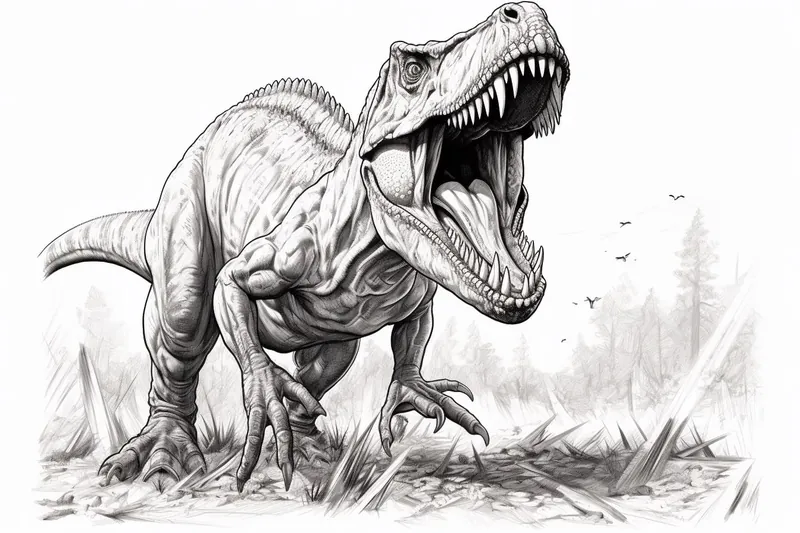
Materials You'll Need
- Pencil
- Paper
- Eraser
Few creatures spark the imagination quite like the Tyrannosaurus rex, often simply called the T-Rex. With its towering stance, formidable jaws, and reputation as one of the fiercest predators to ever walk the Earth, the T-Rex continues to fascinate both young and old. Whether you are a dinosaur enthusiast, an aspiring artist, or someone looking to add an exciting subject to your sketchbook, learning how to draw a tyrannosaurus rex (t-rex) is both a rewarding and educational experience. This prehistoric giant has appeared in countless books, movies, and museum exhibits, making it a staple in pop culture and a favorite subject for artists who love to bring ancient worlds to life.
Drawing a T-Rex offers the perfect opportunity to practice observing distinctive animal features and translating them into strong lines and dynamic shapes. You'll get to experiment with capturing its massive head, sharp teeth, muscular tail, and those iconic tiny arms, all while developing your skills in anatomy, proportion, and texture. This tutorial is designed for artists of all levels, breaking down the process into simple, manageable steps. Whether you are just starting out or looking to refine your technique, you'll find tips on sketching basic forms, adding details, and shading to give your dinosaur a life-like presence. Remember, every great artist started with a single line—so embrace the process, have fun, and let your creativity roar as you learn how to draw a tyrannosaurus rex (t-rex)!
Materials Required
Before we begin, gather the following materials:
- Pencil
- Eraser
- Drawing paper
- Fine-tip black marker
- Colored pencils or markers (optional)
Now that we have our materials ready, let's dive into the steps involved in drawing a T-Rex.
How to Draw a Tyrannosaurus Rex: a Step-by-step Guide
Step 1: Gather Your Materials
- Gather all the necessary materials for drawing, including paper, pencil, eraser, and any coloring materials you may want to use.
Step 2: Start with Basic Shapes
Tip: As you draw your T-Rex, consider using reference images of real reptiles to study their textures and proportions; this can enhance the realism of your artwork. Pay special attention to the way light interacts with different surfaces, as capturing highlights and shadows can bring your dinosaur to life. Experiment with varying pencil pressures to create depth, and don't hesitate to make adjustments as you refine your drawing—art is an iterative process!
- Begin by sketching the basic shapes to outline the body of the Tyrannosaurus Rex. Start with an oval for the head, a large oval for the body, and smaller ovals for the limbs.
Step 3: Add Details to the Head
- Add details to the head by drawing the mouth, eye sockets, and the characteristic ridges on top of the skull. Pay attention to the shape of the jaw and the sharp teeth.
Step 4: Outline the Body
- Use the large oval as a guide to outline the body of the T-Rex. Add the neck, back, and tail, making sure to capture the massive and powerful appearance of the dinosaur.
Step 5: Draw the Limbs
- Sketch the limbs of the Tyrannosaurus Rex, paying attention to the muscular structure and the sharp claws on its feet. Make sure the proportions are correct to support the weight of the dinosaur.
Step 6: Refine the Details
- Refine the details of the T-Rex by adding scales to its skin, defining the muscles, and adding texture to different body parts. Take your time to make the dinosaur look realistic and intimidating.
Step 7: Erase Guidelines
- Use an eraser to carefully erase any guidelines or rough sketches that are no longer needed. This will help clean up the drawing and make the T-Rex stand out.
Step 8: Add Color (Optional)
- If you wish to add color to your drawing, use colored pencils, markers, or paints to bring your Tyrannosaurus Rex to life. Consider using earth tones and greens to mimic its natural habitat.
Step 9: Final Touches
- Take a step back and review your drawing of the Tyrannosaurus Rex. Make any final adjustments or additions to enhance the overall appearance and ensure it looks fierce and realistic.
Step 10: Sign and Date Your Artwork
- Once you are satisfied with your drawing, don't forget to sign and date your artwork. This will give your piece a personal touch and mark its completion.
Did You Know?: Recent studies suggest that the mighty T-Rex may have had a surprisingly sensitive snout, packed with nerve endings similar to those found in a crocodile's face! This would have allowed it to gently explore its environment, care for its young, or even sense subtle movements in its prey. As you draw your T-Rex, imagine how this mix of power and sensitivity shaped its behavior—try emphasizing the unique texture and structure around its nose to reflect this fascinating adaptation. Adding these small details can give your artwork an extra layer of realism and help bring your prehistoric predator to life!
Conclusion
In conclusion, drawing a Tyrannosaurus Rex can be a challenging yet rewarding artistic endeavor. By breaking down the process into simple shapes, focusing on proportions and details, and practicing regularly, artists of all skill levels can create impressive and lifelike representations of this iconic dinosaur. Remember to have fun with the process and experiment with different techniques to truly bring your T-Rex drawings to life. With dedication and patience, anyone can master the art of drawing this fearsome creature.
Fun Facts About Tyrannosaurus Rex (T-Rex)
- The Tyrannosaurus rex lived about 68 to 66 million years ago during the Late Cretaceous period.
- T-Rex could grow up to 40 feet long and weigh around 9 tons, making it one of the largest land predators ever.
- The name "Tyrannosaurus rex" means "tyrant lizard king" in Latin.
- T-Rex had a bite force estimated at over 12,000 pounds, one of the strongest of any terrestrial animal ever.
- Despite its tiny arms, T-Rex's limbs were extremely strong and may have helped it hold prey or aid in mating.
- Some scientists believe T-Rex juveniles may have had feathers for insulation and display.
- T-Rex teeth were up to 12 inches long and continuously replaced throughout its life.
Suggestions for Scenes and Settings for Tyrannosaurus Rex (T-Rex) Drawings
- [A T-Rex roaring atop a rocky cliff at sunset](https://yonderoo.com/how-to-draw-a-sunset/), silhouetted against a dramatic sky.
- A curious T-Rex inspecting a nest of hatching dinosaur eggs in a lush prehistoric forest.
- A T-Rex chasing a herd of smaller dinosaurs across a muddy riverbank during a rainstorm.
- A T-Rex pausing to drink from a crystal-clear lake, with its reflection shimmering in the water.
- A playful scene with a juvenile T-Rex exploring a vibrant Cretaceous flower field.
- A T-Rex standing guard over its territory, surrounded by volcanic mountains and spewing geysers.
- A T-Rex engaging in a territorial display with another T-Rex under a sky filled with meteor showers.
- A feathered T-Rex basking in the early morning light amid giant ferns and cycads.
- A T-Rex interacting with ancient flying reptiles (pterosaurs) soaring overhead near a cliff's edge.
- A futuristic twist: a T-Rex encountering human explorers or robots in a time-travel adventure setting.