How to Draw a Sea Lion
Learn how to draw a sea lion with this step-by-step tutorial. From sketching the basic shapes to adding fine details, this guide will help you capture the grace and beauty of these fascinating animals.
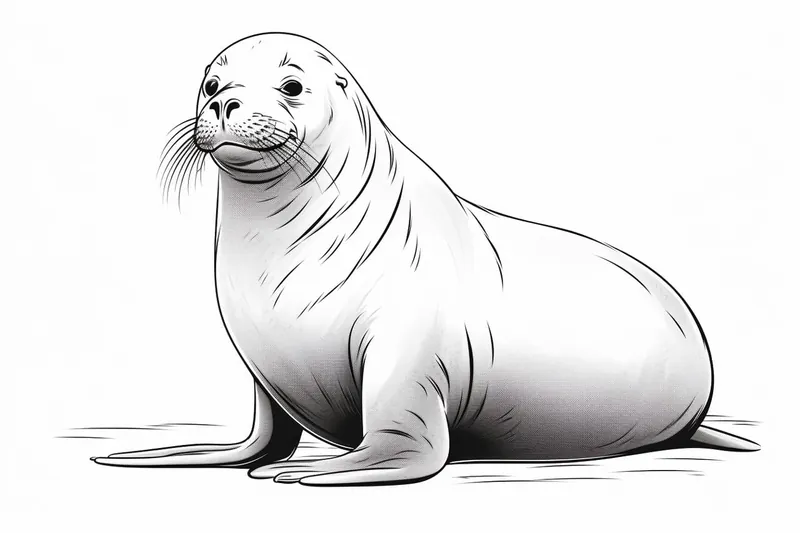
Materials You'll Need
- Pencil
- Paper
- Eraser
Sea lions are remarkable marine mammals known for their playful personalities, streamlined bodies, and expressive faces. Found along coastlines and in zoos and aquariums around the world, they captivate audiences with their intelligence and agility—whether gliding through the waves or basking on rocky shores. Their unique blend of strength and charm makes them a popular subject in wildlife art. Learning how to draw a sea lion is not only a fun artistic challenge, but also a wonderful way to deepen your appreciation for these fascinating animals and the natural world they inhabit.
There are plenty of reasons you might be interested in learning how to draw a sea lion. Perhaps you want to expand your portfolio of wildlife sketches, create a vibrant ocean scene for a school project, or simply develop your skills in drawing animal anatomy and textures. This tutorial is designed for artists of all levels. Beginners will benefit from step-by-step guidance that breaks down the sea lion's body into simple shapes, while more experienced artists can focus on refining details like the flippers, whiskers, and fur texture. Along the way, you'll practice foundational techniques such as basic sketching, proportion, shading, and adding realistic features—skills that are valuable for drawing all kinds of animals.
Don't worry if you've never drawn a sea creature before—this tutorial will guide you every step of the way. With patience and practice, you'll soon discover that learning how to draw a sea lion can be both rewarding and enjoyable. So gather your materials, set aside some creative time, and let's dive into bringing this graceful marine animal to life on your page!
Materials Required
Before we dive into the drawing process, it's essential to gather the necessary materials. Here's a list of what you'll need:
- Paper: Choose a high-quality drawing paper that can handle different types of media, such as graphite or colored pencils.
- Pencils: A set of graphite pencils in various hardness (HB, 2B, 4B, 6B) will allow you to achieve different tones and shading effects.
- Eraser: A kneaded eraser works best for this type of drawing as it allows for easy corrections and subtle highlights.
- Blending Tool: You can use a blending stump, tortillon, or even a soft cloth to blend and smudge the graphite for smooth transitions.
- Reference Image: Find a clear and detailed reference photo of a sea lion that you can use for guidance throughout the process.
Now that you have all the necessary materials let's dive into the step-by-step process of drawing a sea lion.
Step 1: Sketch the Basic Shapes
Start by lightly sketching the basic shapes that make up the sea lion's body. Begin with an oval for the head, a large oval for the body, and smaller ovals for the flippers. Take your time and don't worry about precision at this stage. Focus on capturing the overall proportions and pose of the sea lion.
Step 2: Refine the Shapes
Using the initial shapes as a guide, refine the outline of the sea lion's body. Pay close attention to the curves and contours. The head should gradually slope into the body, and the flippers should curve outwards. Take your time with this step, as it lays the foundation for the rest of the drawing.
Step 3: Add Facial Features
In this step, we'll focus on the sea lion's face. Begin by adding the eyes on either side of the head. They should be large and round, with a small indication of a highlight to bring them to life. Add a small, triangular-shaped nose just below the eyes. Lastly, draw a curved line to represent the mouth, slightly smiling to capture the sea lion's playful expression.
Step 4: Add Details to the Body
Now it's time to add the details that make the sea lion unique. Start by sketching the ears on either side of the head, just above the eyes. They should be small and pointed. Next, draw the whiskers using short, curved lines that extend from the sides of the nose. Finally, add a few lines to indicate the texture and folds of the sea lion's skin.
Step 5: Refine the Outline
In this step, we'll refine the outline of the sea lion's body, paying close attention to the curves and contours. Use your reference photo to guide you in capturing the unique shape of the sea lion. Take your time with this step, as it will add depth and dimension to your drawing.
Step 6: Add Value and Texture
Now it's time to add value and texture to your drawing. Start by shading the darker areas such as the areas under the flippers, along the neck, and underneath the body. Use a softer pencil (4B or 6B) to achieve a darker value. Gradually build up the shading, paying attention to the direction of the fur and the overall form of the sea lion's body.
Step 7: Blend and Smudge
To achieve a smooth and realistic look, use a blending tool such as a blending stump or tortillon to blend the graphite. Gently smudge the shading, paying attention to the direction of the fur and the contour of the body. This technique will help create a soft and seamless transition between light and dark areas.
Step 8: Refine and Add Final Details
In this final step, take a step back and evaluate your drawing as a whole. Make any necessary adjustments to the proportions and values. Add fine details such as wrinkles, folds, and texture to the sea lion's skin using a sharp pencil. Don't forget to add a few highlights using an eraser to make certain areas pop and create a sense of depth.
Congratulations! You've successfully drawn a sea lion. With practice, you'll be able to capture the grace and beauty of these incredible creatures in your own unique style.
Tip: To capture the sea lion's playful essence, begin by using a medium pencil, like a 2B or 4B, for your initial sketch; these softer pencils allow for smooth, expressive lines. Start with basic shapes—an oval for the body, circles for the head and flippers—to establish the proportions before adding details. Pay special attention to the sea lion's unique facial features; use a lighter hand to create the gentle curves of its snout and the placement of its eyes, which should convey a sense of curiosity. As you refine your drawing, switch to a finer pencil, like a 6B, to add texture to the fur and define the whiskers, using short, quick strokes to mimic the softness of their coat. Finally, consider using a blending stump to gently soften areas of shading, enhancing the three-dimensional quality of your drawing and bringing your sea lion to life!
Conclusion
Drawing a sea lion can be a captivating and rewarding experience. By following this step-by-step tutorial, you've learned the techniques required to bring these fascinating creatures to life on paper. Remember to be patient with yourself and enjoy the process. So grab your pencils, reference photo, and let your imagination run wild as you create your own masterpiece of a sea lion.
Fun Facts About Sea Lion
- Sea lions are known for their playful behavior and intelligence, often seen performing tricks in aquariums and zoos.
- Unlike true seals, sea lions have external ear flaps and can rotate their hind flippers forward to walk on land.
- There are seven species of sea lions found in various parts of the world, including the California, Steller, and Australian sea lions.
- Sea lions can dive up to 900 feet deep and hold their breath for up to 20 minutes while hunting for food.
- [They primarily eat fish and squid, but their diet can also include octopus](https://yonderoo.com/how-to-draw-an-octopus/) and crustaceans.
- Male sea lions, called bulls, can weigh up to 1,000 pounds, while females are much smaller.
- Sea lions use their whiskers, or vibrissae, to detect vibrations and movements of prey in the water.
- They are highly social animals, often gathering in large groups called colonies or rafts.
Suggestions for Scenes and Settings for Sea Lion Drawings
- A sea lion basking on a sunlit rocky shore, with waves crashing in the background.
- [A playful sea lion swimming underwater, surrounded by swirling schools of fish and kelp forests](https://yonderoo.com/how-to-draw-the-ocean/).
- A mother sea lion with her pup cuddled together on a sandy beach.
- A group of sea lions performing tricks at a zoo or aquarium, balancing balls or jumping through hoops.
- A sea lion interacting with curious seagulls or other coastal birds on the shoreline.
- A dramatic scene of a sea lion leaping gracefully out of the water with droplets sparkling in the air.
- A close-up portrait focusing on the expressive face, whiskers, and big, soulful eyes of a sea lion.
- A vibrant sunset scene with a silhouette of a sea lion perched on a rock, gazing at the horizon.
- An Arctic-inspired setting with a sea lion resting on floating ice or swimming near snow-capped cliffs.
- A whimsical scene of a sea lion wearing a festive party hat or playful costume for a children's illustration.