How to Draw a Lion Head
Learn how to draw a lion head in this step-by-step tutorial. Create a captivating lion drawing with clear instructions and expert guidance on materials and techniques.
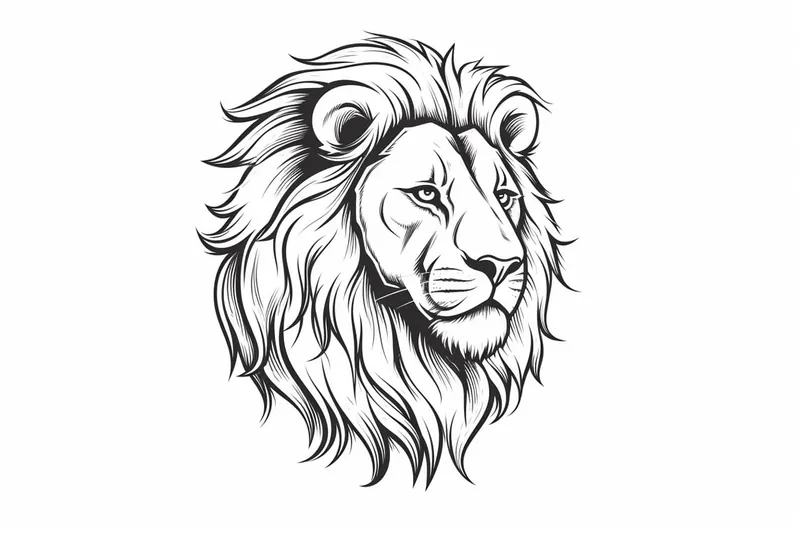
Materials You'll Need
- Pencil
- Paper
- Eraser
Lions have long captivated artists and admirers alike with their regal appearance and commanding presence. Known as the "king of the jungle," these magnificent animals symbolize strength, courage, and nobility in cultures around the world. The lion's head, with its expressive eyes, detailed mane, and powerful jawline, is an especially popular subject in art because it offers an opportunity to capture both the wild beauty and the intense spirit of this iconic creature. Learning how to draw a lion head allows you to explore the intricacies of animal anatomy while creating a striking piece that stands out in any portfolio or sketchbook.
Many artists, whether beginners or more advanced, are drawn to the challenge of depicting a lion's head. The structure of the face, the texture of the mane, and the subtle yet fierce expression require observation and careful technique, making this a rewarding subject to tackle. By mastering how to draw a lion head, you'll develop your skills in shading, proportion, and creating lifelike textures. This tutorial breaks down the process into manageable, step-by-step instructions, ensuring that artists at any skill level can follow along and achieve impressive results. So grab your pencils and let's embark on this artistic adventure—remember, every great drawing starts with a single line, and with patience and practice, you'll soon be able to bring the majestic lion to life on your page!
Materials Required
Before we begin, gather the following materials:
- Drawing paper or sketchbook: Choose a size that suits your preference, but ensure it's suitable for sketching with pencils or pens.
- Pencils: Use a range of pencils (HB, 2B, 4B, etc.) to achieve different levels of darkness and shading.
- Eraser: Select a soft eraser that won't damage the paper and is easy to remove pencil marks with.
- Blending tools: Consider using a blending stump or tortillon to smudge and blend pencil lines for a smooth appearance.
- Reference image: Find a high-quality photo or printout of a lion head for guidance during the drawing process.
Now that you have your materials ready, let's get started on drawing a captivating lion head!
Step 1: Basic Outline
Begin by lightly sketching a circle in the center of the page. This circle will serve as the basis for the lion's head and will help maintain proportion throughout the drawing. The circle should be slightly tilted to add a dynamic look to the lion's face.
Step 2: Facial Features
Tip: As you draw the lion's head, take the time to frequently step back and assess your work from a distance; this will help you spot any proportion or alignment issues that may not be visible up close. Additionally, consider using a mirror to reflect your drawing, as this technique can provide a fresh perspective and enhance your ability to make necessary adjustments for a more balanced and lifelike representation.
Next, draw two almond-shaped eyes within the upper half of the circle. Position them close together, leaving enough room above for the lion's forehead. Add a small dot inside each eye to represent the pupils.
Beneath the eyes, sketch a wide, triangular nose with curved lines at the corners. Extend the lines to form the nostrils. Connect the nose to the eyes with a curved line on each side to create the bridge of the lion's nose.
Step 3: Mouth and Chin
To draw the lion's mouth, start by sketching a curved line that connects the bottom of the nose to the side of the circle. This line should curve upwards slightly at the end. Then, draw a pair of lines, slightly curved upwards, to form the lion's mouth.
Beneath the mouth, add a small triangular shape to represent the chin. This triangle should be centered and slightly larger than the nose.
Step 4: Ears and Mane
On both sides of the circle, draw the lion's ears. The ears should be elongated triangles that angle slightly backward. Position them slightly above the eyes and point them upwards.
Next, it's time to sketch the lion's magnificent mane. Start at the top of the head, just above the ears, and draw several curved lines that flow outward and downward. Make these lines uneven and varying in length to add texture and depth to the mane. Continue sketching the mane until it covers the lion's neck and part of the shoulders for a regal appearance.
Step 5: Final Details and Shading
Now that the main structure of the lion head is complete, it's time to add some final details and shading to bring the drawing to life.
Begin by refining the facial features. Add eyelids above the eyes, giving the lion a focused and intense gaze. Define the nose further by adding more detail to the nostrils and bridge. Use fine, short lines to indicate fur around the mouth and chin, giving the lion a natural and realistic look.
Next, focus on shading to add depth and dimension. Observe your reference image to identify areas of light and shadow. Use a variety of pencils to create different values, with darker shading in areas like the mane and underneath the chin. Gradually build up the shading, blending with a tortillon or blending stump as needed to achieve a smooth transition between light and dark areas.
Conclusion
Congratulations! You have successfully learned how to draw a lion head. By following these step-by-step instructions, you have created a captivating and realistic representation of a lion's fierce expression. Remember to practice and experiment with different techniques to further enhance your skills as an artist.
Drawing a lion head allows you to explore the power and beauty of these magnificent creatures. Embrace the process, enjoy the journey, and continue to challenge yourself in your artistic endeavors.
Fun Facts About Lion Heads
- The lion's mane, a defining feature of the lion head, helps protect it during fights and signals health and virility to other lions.
- Lion heads are often used as symbols of strength and royalty in art and architecture.
- The expressive eyes of a lion head are adapted for night vision, allowing lions to hunt effectively in the dark.
- Lion head sculptures have adorned ancient buildings and fountains for centuries.
- The mane around a lion's head can vary in color from blond to black, influenced by age, genetics, and testosterone levels.
- In heraldry, the lion head is a common motif representing bravery and nobility.
- Lion heads are a popular subject in tattoo art, symbolizing courage and leadership.
- The structure of a lion's head, with its powerful jaw and sharp teeth, allows it to take down large prey.
- Ancient Egyptians revered the lion head, associating it with the goddess Sekhmet.
Suggestions for Scenes and Settings for Lion Head Drawings
- Close-up portrait of a lion's head crowned with wildflowers or jungle foliage for a majestic yet gentle look.
- Lion head emerging from swirling clouds or mist, evoking a dreamlike or mythical atmosphere.
- A roaring lion's head with its mane transforming into flames or waterfalls, blending animal and elemental themes.
- Lion head adorned with tribal or ancient jewelry, drawing inspiration from African or mythological motifs.
- Half-lion, half-mechanical head, combining organic textures with steampunk or cyberpunk elements.
- [Peaceful lion head resting amidst tall grasses, with butterflies or birds](https://yonderoo.com/how-to-draw-a-bird/) perched gently on its mane.
- Profile view of a lion's head silhouetted against a rising or setting sun, creating a dramatic, powerful scene.
- Lion head surrounded by abstract geometric shapes or patterns, emphasizing modern design aesthetics.
- A wise, old lion head with a graying mane, conveying a sense of age, wisdom, and experience.
- Lion head reflected in water, with the reflection subtly morphing into another animal or symbolic image.