How to Draw a Spiderweb
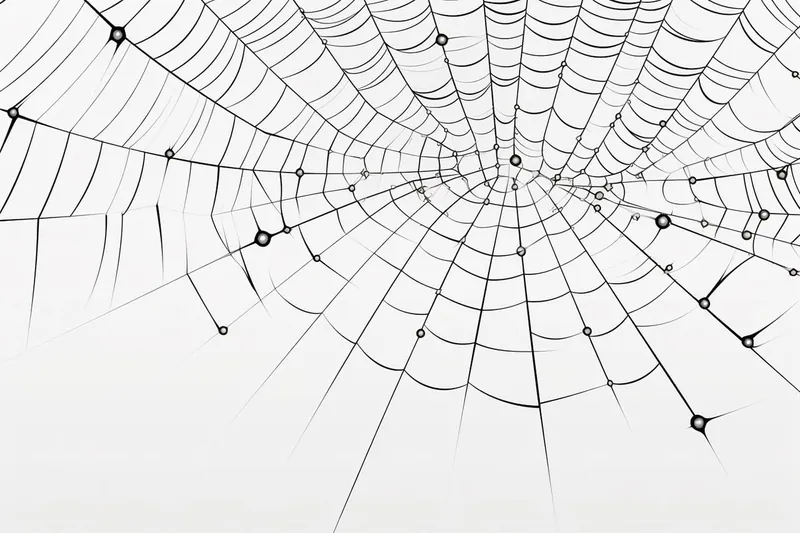
Learn how to draw a spiderweb in this step-by-step guide. Follow along with an expert artist and create realistic and captivating spiderweb illustrations.
Materials You'll Need
- Pencil
- Paper
- Eraser
Spiderwebs are one of nature's most delicate and mesmerizing creations, woven by spiders with remarkable precision and artistry. Their intricate, geometric designs have fascinated artists and observers for centuries, symbolizing everything from mystery and creativity to resilience and interconnectedness. Whether featured in Halloween decorations, storybook illustrations, or natural history artworks, spiderwebs offer a unique subject for creative exploration. Learning how to draw a spiderweb not only allows you to capture their elegant beauty, but also helps you appreciate the subtle complexity of these natural wonders.
There are many reasons you might want to learn how to draw a spiderweb. They make excellent additions to themed artwork, such as spooky autumn scenes or enchanted forest landscapes, and can be used to create striking backgrounds or focal points in your drawings. Spiderwebs are also perfect for practicing line work, symmetry, and developing patience with fine details. Whether you are an aspiring illustrator, a student working on a nature project, or just someone who enjoys doodling intricate patterns, mastering the art of drawing a spiderweb will add a versatile skill to your creative toolkit.
This tutorial is designed for artists of all skill levels, from beginners to more experienced creators. The process of learning how to draw a spiderweb involves breaking down the web's structure into simple shapes and lines, making it accessible even if you're new to drawing. Along the way, you'll practice techniques like drawing straight and curved lines, maintaining even spacing, and using light sketching before inking your final design. As you progress through the steps, you'll gain confidence in your ability to capture detail and symmetry, which are essential skills for many other art projects as well.
So, gather your favorite drawing materials and get ready to have fun as you discover how to draw a spiderweb with ease. Remember, every artist's web will be unique—don't worry about making it perfect! Embrace the process, enjoy experimenting with different patterns, and let your creativity shine. With a little patience and practice, you'll soon be able to create stunning spiderweb illustrations that you'll be proud to share.
Materials Required
To get started with your spiderweb drawing, gather the following materials:
Once you have your materials ready, you're all set to bring your spiderweb to life!
Step 1: Start with the Center Point
Begin by lightly drawing a small dot in the center of your paper or sketchbook. This dot will serve as your spider's hub, from which the web will expand. Keep in mind that the size of the dot will determine the overall size of your spiderweb.
Step 2: Draw the Radiating Lines
From the center dot, draw several straight lines that radiate outward in different directions. These lines will act as the foundation for your spiderweb's spokes. It's crucial to vary the lengths and angles of these lines to create an authentic and natural-looking web.
Step 3: Connect the Radiating Lines
Now, starting from the outer ends of the radiating lines, draw curved lines to connect them together. These lines will form the framework of your spiderweb. Keep in mind that the curved lines should be evenly spaced and gradually increase in length as you move outward to create a symmetrical and balanced design.
Step 4: Add the Spiral Threads
Once the framework is complete, it's time to add the spiral threads that make up the web. Starting from the center, lightly sketch a spiral shape that wraps around the radiating lines. The spiral should become wider as it moves outward, following the structure of the framework. Don't worry about making the lines perfect at this stage; we will refine them later.
Step 5: Refine the Spiral Threads
Using your fine-tipped black pen or marker, carefully trace over the spiral threads, making them bolder and more defined. Pay attention to the spacing between the lines, ensuring they are evenly distributed. As you work, gradually erase the underlying pencil lines to clean up the drawing.
Step 6: Add Detail to the Spiderweb
To add depth and detail to your spiderweb, lightly shade some areas within the spiral threads to create shadows. This shading will give the illusion of a three-dimensional web. Be mindful of the light source when determining the areas that require shading.
Step 7: Finalize the Drawing
Congratulations! You have successfully drawn a spiderweb. Experiment with different sizes, shapes, and patterns to create unique spiderweb designs that suit your artistic style. With practice, you will develop the skills to draw intricate spiderwebs effortlessly.
Tip: When drawing a spiderweb, start by lightly sketching a series of radiating lines, like spokes on a wheel, using a ruler or straightedge for extra precision. Then, connect these lines with gently curved arcs to create the signature web pattern—try to keep the spacing between each arc consistent for a more natural look. Use a sharp pencil or fine-tipped pen so your lines stay crisp and delicate, just like a real web. If you want to add realism, vary the thickness of some lines and let a few arcs sag slightly, as spiderwebs are rarely perfectly symmetrical in nature.
Conclusion
Drawing a spiderweb may initially seem challenging, but by following these step-by-step instructions, you can create a stunning spiderweb illustration. Remember to start with a center point, draw radiating lines, connect them with curved lines, add the spiral threads, refine the lines, and add detail and shading. With practice and patience, you'll be able to create intricately detailed spiderwebs that will captivate your audience. So, grab your materials, let your creativity flow, and enjoy the process of drawing a spiderweb!
Fun Facts About Spiderwebs
- Spiderwebs are made from silk produced by specialized glands called spinnerets.
- Some spider silks are stronger than steel of the same diameter.
- There are several types of spiderwebs, including orb webs, funnel webs, and sheet webs.
- Spiderwebs can capture not only insects but also pollen, dust, and even water droplets.
- Some spiders eat their own webs to recycle the silk proteins.
- Spider silk is so flexible that it can stretch up to five times its original length without breaking.
- Not all spiders spin webs; some, like wolf spiders, hunt their prey directly.
- Spiderwebs have inspired innovations in materials science and engineering.
- Some orb-weaver spiders rebuild their webs every night.
Suggestions for Scenes and Settings for Spiderweb Drawings
- A classic spiderweb glistening with morning dew, set among blades of grass at sunrise.
- A large, intricate web stretched between two ancient tree branches in a misty enchanted forest.
- A spooky spiderweb in the corner of an abandoned attic, with old, dusty objects nearby.
- A tiny spider weaving its web on a windowpane, with raindrops and city lights in the background.
- A spiderweb as the centerpiece of a Halloween scene, complete with jack-o'-lanterns and flying bats.
- An underwater-inspired spiderweb, woven between coral branches and decorated with tiny bubbles.
- A fantasy scene where a fairy or tiny creature is caught or resting gently in a sparkling web.
- A symmetrical web suspended on a fence, with autumn leaves caught in its threads.
- A close-up of a spiderweb with a rainbow sheen, created by sunlight refracting through the silk.
- A web in the corner of a garden shed, with gardening tools and colorful flowers nearby.