How to Draw a Roach
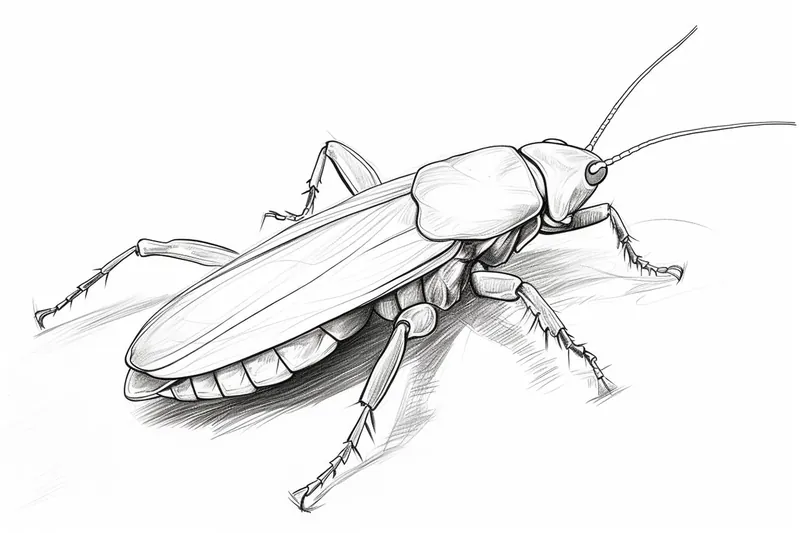
Learn how to draw a roach with this step-by-step drawing tutorial. Create a realistic and detailed roach drawing that will impress everyone.
Materials You'll Need
- Pencil
- Paper
- Eraser
Roaches, often misunderstood and overlooked, are fascinating creatures with unique anatomical features that make them an interesting subject for artists. With their distinctive oval-shaped bodies, long antennae, and segmented legs, roaches present a wonderful opportunity to practice drawing natural forms and intricate details. Whether you're interested in scientific illustration, want to add a touch of realism to your artwork, or simply enjoy exploring the beauty in everyday creatures, learning how to draw a roach can help you develop a greater appreciation for the complexity of insects while honing your observation skills.
Mastering how to draw a roach is a great way to challenge yourself artistically. This tutorial is designed to be accessible for artists of all skill levels, from beginners just starting out to more experienced illustrators looking to expand their portfolio of natural subjects. You'll learn to break down the roach's anatomy into manageable shapes, gradually building up detail and texture to achieve a realistic effect. Along the way, you'll develop techniques such as careful line work, shading, and attention to proportion, all of which are essential skills for drawing any living creature.
Don't be intimidated by the idea of drawing a roach; instead, see it as an opportunity to push your creativity and attention to detail. With a bit of patience and the right guidance, you'll find that drawing insects can be both rewarding and surprisingly enjoyable. Grab your materials, follow along with each step, and before you know it, you'll have created a lifelike roach drawing that shows off your artistic growth. Let's get started and discover just how interesting and fun drawing a roach can be!
Materials Required
Before we begin, let's gather all the materials you will need for this drawing:
- Paper: A sketchbook or any type of drawing paper will work just fine. You can also use a recycled paper for practice.
- Pencil: Choose a pencil of your preference. A medium-soft graphite pencil is recommended for this drawing.
- Eraser: Make sure to have a good quality eraser handy, as it will be useful for correcting any mistakes along the way.
- Pencil Sharpener: Keep a pencil sharpener nearby to ensure that your pencil is always sharp and ready for precision work.
Now that we have all our materials prepared, let's begin the process of drawing a roach!
Step 1: Outline the Basic Shape
Start by lightly sketching a horizontal oval shape on your paper. This will serve as the body of the roach. Position it slightly towards the top center of your paper, leaving enough space for the head and antennae.
Step 2: Draw the Head and Antennae
Using the oval shape as a guide, draw a smaller oval shape towards the front of the roach's body. This will be the head. Then, extend two curved lines from the head to form the antennae. Roaches have long, thin antennae, so make sure to represent that in your drawing.
Step 3: Add Details to the Head
Next, draw two small circles for the roach's eyes on either side of the head. Within each eye, draw a smaller circle to represent the pupil. Roaches have a distinct shape to their head, so make sure to add a small triangle-like shape just below the eyes. This will give your roach a more realistic appearance.
Step 4: Draw the Body Segments
Moving on to the body, divide the oval shape into several segments by drawing curving lines horizontally across it. Roaches have a segmented body, so this step is crucial in capturing their unique characteristics.
Step 5: Add Legs and Details
Now it's time to draw the legs. Roaches have six legs, with three on each side of their body. Start by drawing thin, straight lines extending from the bottom of each body segment. Make sure that the legs are evenly spaced. You can add a slight curve to the legs to make them look more natural. Finally, add small triangular shapes at the end of each leg to represent the feet.
Step 6: Finalize the Details
To give your roach drawing some finishing touches, add a few more details. Draw small, curved lines along the body segments to represent the roach's exoskeleton. You can also draw some additional lines to create texture and depth. Take your time and observe the details of a real roach to make your drawing as accurate as possible.
Tip: To capture the intricate details of a roach effectively, start by using a fine-tipped pencil, like a 0.5 mm mechanical pencil, to sketch the basic shapes of its body and limbs. Focus on the oval form for the body and use light, loose lines to outline the long, segmented legs and antennae; this will allow you to adjust proportions easily before committing to darker lines. Once you have the structure down, switch to a softer pencil, such as a 2B or 4B, for shading, paying close attention to the light source in your reference image—this will add depth and realism. Additionally, utilize cross-hatching techniques to create texture on the roach's exoskeleton, emphasizing its glossy surface. Lastly, don't forget to include small details like the fine hairs on the legs and the joints, as these features will enhance the lifelike quality of your drawing.
Conclusion
Congratulations! You have successfully learned how to draw a roach. By following these step-by-step instructions and using your creativity, you were able to create a realistic and detailed roach drawing. Remember, practice makes perfect, so don't hesitate to try drawing roaches from different angles and positions. Keep challenging yourself and exploring the world of insect drawing. Happy sketching!
Fun Facts About Roach
- There are over 4,500 species of roaches worldwide, but only about 30 are considered pests to humans.
- Roaches can live for up to a week without their head, relying on their open circulatory system and spiracles for breathing.
- Some roach species can survive without food for a month, but only a week without water.
- Roaches have been around for over 300 million years, making them one of the oldest living insect groups.
- They can squeeze through gaps as small as a quarter of their body height thanks to their flexible exoskeleton.
- Roaches communicate with each other using chemicals called pheromones.
- Some species, like the Madagascar hissing cockroach, make a hissing sound by forcing air through their spiracles.
- Roaches can run up to three miles per hour, making them one of the fastest insects on land.
- They play an important role in ecosystems by breaking down decaying organic matter.
Suggestions for Scenes and Settings for Roach Drawings
- A close-up scientific illustration of a roach crawling over a leaf, emphasizing its anatomy and textures.
- A whimsical scene of a roach wearing a tiny explorer's hat, navigating through a jungle of grass blades.
- A roach illuminated by moonlight as it scurries across a kitchen counter, casting interesting shadows.
- An imaginative "Roach City" where several bugs interact within the cracks and crevices of a brick wall.
- A stylized, patterned composition focusing on the symmetry of roach wings and body segments.
- A cross-section view showing a roach in its underground burrow, surrounded by soil textures and roots.
- A fantasy scene where a roach is the main character in a miniature world, using found objects as shelter.
- An educational poster featuring a labeled diagram of a roach's body parts, with callouts for each segment.
- A humorous take: a roach at a "bug café," sipping from a droplet of water on a sugar cube table.
- A dramatic action shot of a roach escaping from a falling boot, capturing motion and tension.