How to Draw a Newfoundland
Learn how to draw a Newfoundland with this step-by-step tutorial for beginners. Capture the strength and beauty of this gentle giant in your pencil drawing.
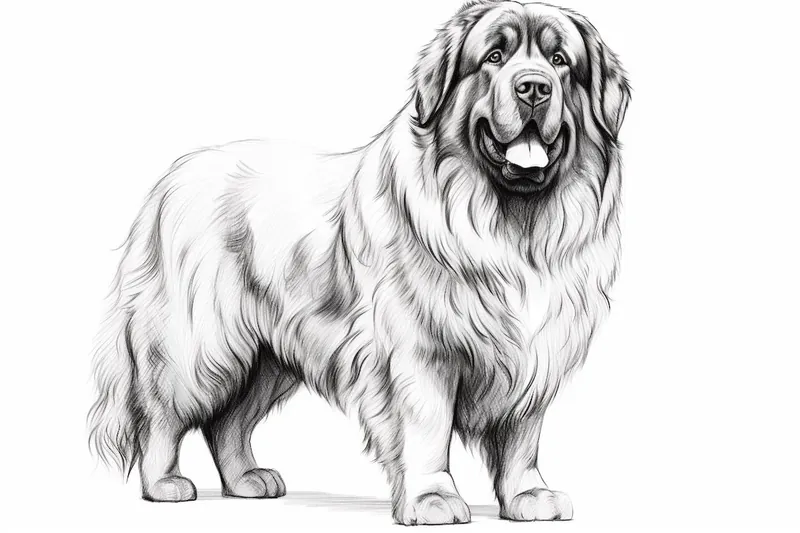
Materials You'll Need
- Pencil
- Paper
- Eraser
If you've ever admired the majestic presence of a Newfoundland dog, you're certainly not alone. Known for their immense size, thick water-resistant fur, and gentle, affectionate nature, Newfoundlands are beloved companions and working dogs alike. These gentle giants are often associated with heroism and loyalty, renowned for their history as lifesaving water rescue dogs. Their expressive faces, soulful eyes, and distinctive fluffy coats make them a delightful—and rewarding—subject for artists of all ages and skill levels. Whether you have a Newfoundland of your own or simply appreciate their charm, learning how to capture their likeness on paper can be a truly enjoyable experience.
This tutorial on how to draw a Newfoundland is perfect for anyone eager to develop their drawing skills while celebrating one of the most iconic dog breeds. You might want to draw a Newfoundland to create a heartfelt portrait of a beloved pet, practice realistic animal drawing techniques, or simply add a new subject to your artistic repertoire. We'll break down the process into manageable steps, focusing on sketching the breed's distinctive body shape, fluffy coat, and expressive features. While this lesson is suitable for beginners, it also offers helpful tips for more experienced artists looking to refine their technique—especially when it comes to rendering texture and capturing the unique character of this gentle giant. Remember, every drawing is a step forward in your artistic journey, so relax, enjoy the process, and let's explore how to draw a Newfoundland together!
Materials Required
Here are the materials you will need to draw a Newfoundland:
- Drawing paper
- Pencils (preferably graphite pencils of varying hardness, such as HB, 2B, and 4B)
- Eraser
- Pencil sharpener
- Blending stump (optional, for shading)
Make sure you have these materials ready before you begin. Now, let's move on to the step-by-step instructions for drawing a Newfoundland.
Step 1: Start with Basic Shapes
To begin, lightly sketch a large oval shape for the body of the Newfoundland. This oval should be slightly tilted to one side to give a more dynamic pose. Next, add a smaller oval shape above the body to represent the head. Connect the two shapes with a curved line for the neck.
Step 2: Outline the Body
Using the basic shapes as a guide, start outlining the body of the Newfoundland with more defined lines. Pay attention to the shape of the body and the position of the limbs. Newfoundland dogs have a thick, muscular body, so make sure to capture that in your drawing.
Step 3: Draw the Facial Features
Now it's time to focus on the face of the Newfoundland. Start by drawing two almond-shaped eyes. Add small dots inside the eyes to represent the pupils. Then, draw a triangular shape for the nose, and a line underneath it for the mouth. Newfoundland dogs have droopy jowls, so make sure to emphasize that in your drawing.
Step 4: Add the Ears and Fur
Tip: As you work through the steps of drawing a Newfoundland, take the time to analyze reference images closely, paying particular attention to the breed's unique proportions and features. Use these images not only as a guide for shape but also to understand how light interacts with the fur, which can greatly enhance the realism of your shading. Periodically stepping back from your drawing to compare it to the reference can help you maintain accuracy and ensure that the distinctive bulk and character of the Newfoundland are effectively captured.
Next, draw the Newfoundland's ears on either side of the head. These ears are long and usually hang down. Pay attention to the shape and size of the ears as they can vary among individual dogs. Once you have the ears in place, start adding the fur to the body. Newfoundland dogs have a thick double coat, so use short, curved lines to represent the fur texture.
Step 5: Define the Features
Now it's time to refine your drawing by adding more details. Start by adding fur details to the face, such as the eyebrows and the beard. Pay attention to the direction of the fur and add texture accordingly. Next, draw the Newfoundland's paws, making sure to capture the shape and size accurately.
Step 6: Shading and Depth
To give your drawing more depth and dimension, it's time to add shading. Start by identifying the light source in your drawing. This will determine where the highlights and shadows should be. Use your pencils of varying hardness to create gradients and smooth transitions between light and dark areas. Remember to blend the shading using a blending stump or your finger for a more realistic look.
Step 7: Final Details
In this final step, focus on adding any remaining details to your drawing. Add texture to the fur by using short, overlapping lines. Pay attention to the folds and wrinkles in the Newfoundland's skin, especially around the neck and jowls. Don't forget to add some whiskers around the mouth area. Take your time, and don't rush the process. Remember, practice makes perfect!
Mistake Alert: One of the most common mistakes when drawing a Newfoundland is making the dog's body look too lean or compact, rather than capturing its true bulk and powerful build. This often happens because beginners underestimate how much space the thick fur and large chest occupy, resulting in a figure that resembles a generic dog rather than this distinctive breed. To avoid this, pay close attention to reference images and block out the main shapes with generous, rounded lines before adding any details. Don't be afraid to exaggerate the width of the neck, chest, and hindquarters—these areas should look sturdy and well-padded with fur. Stepping back periodically to compare your sketch to your reference can help you catch and correct any proportions before moving on to finer details.
Conclusion
Congratulations on completing your drawing of a Newfoundland dog! We hope you enjoyed this tutorial and that it helped you develop your drawing skills. Drawing animals can be challenging, but with practice and patience, you can achieve great results. Remember to take breaks, step back, and observe your drawing from different angles to ensure accuracy. So keep practicing, and soon you'll be able to draw not only Newfoundlands but a variety of animals with ease.
Fun Facts About Newfoundland
- The Newfoundland is famous for its gentle temperament and is often called a "gentle giant."
- Newfoundlands are natural swimmers, thanks to their webbed feet and water-resistant double coat.
- These dogs have a long history as lifesaving water rescue dogs.
- The breed originated in Newfoundland, Canada, and was used by fishermen to haul nets and rescue people from the sea.
- Newfoundlands can weigh up to 150 pounds, making them one of the largest dog breeds.
- The most famous Newfoundland, "Seaman," accompanied Lewis and Clark on their historic expedition.
- Newfoundlands are known for their sweet disposition and are excellent family dogs.
- The breed's thick, water-resistant coat requires regular grooming to prevent matting.
- Newfoundlands are often used in therapy and assistance work due to their calm and patient nature.
Suggestions for Scenes and Settings for Newfoundland Drawings
- A Newfoundland dog leaping into a lake to perform a dramatic water rescue, with splashes and ripples around it.
- A gentle Newfoundland sitting patiently beside a child, showcasing their affectionate and protective nature.
- A close-up portrait focusing on the soulful eyes and expressive, fluffy face of a Newfoundland, highlighting fur texture.
- A Newfoundland pulling a wooden cart through a snowy landscape, referencing their traditional working role.
- A family of Newfoundlands playing together in a grassy backyard, capturing movement and joyful interaction.
- A Newfoundland relaxing in a cozy living room, perhaps resting its head on a favorite toy or blanket.
- A heroic scene of a Newfoundland guiding a lost hiker through a foggy forest, emphasizing loyalty and bravery.
- A Newfoundland dog shaking off water after a swim, with droplets flying in all directions for a dynamic effect.
- An elegant Newfoundland at a dog show, standing proud with its thick, glossy coat groomed to perfection.
- A whimsical scene of a Newfoundland wearing a raincoat and boots, prepared for a walk in the rain.