How to Draw a Musk Ox
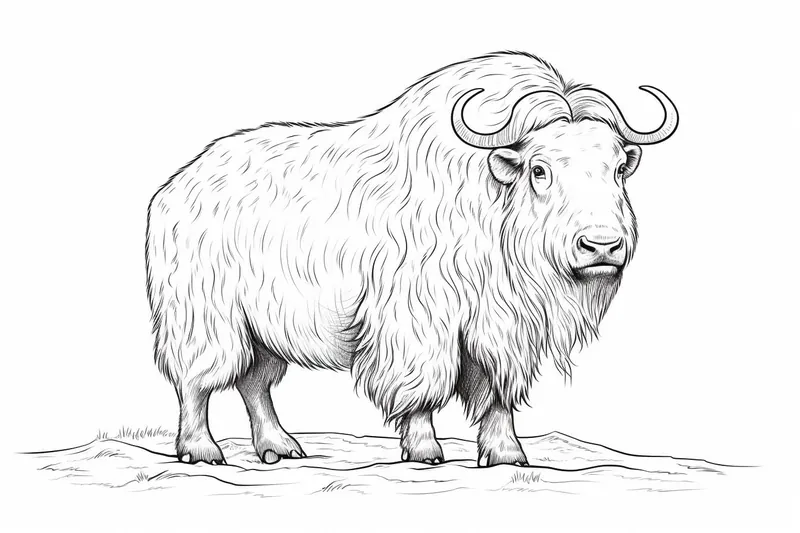
Learn how to draw a musk ox with this step-by-step tutorial. Follow expert instructions to create a realistic representation of this magnificent creature.
Materials You'll Need
- Pencil
- Paper
- Eraser
The musk ox is a fascinating and iconic animal, well-adapted to the harsh, arctic tundra. Known for its shaggy coat, curved horns, and strong, sturdy build, the musk ox has roamed the cold northern landscapes for thousands of years. Its appearance is both rugged and majestic, making it an intriguing subject for artists who want to capture the beauty and resilience of wildlife. Learning how to draw a musk ox gives you the opportunity to explore unique animal anatomy and textures, from the thick fur that keeps it warm to the distinctive shape of its horns. This subject is perfect for anyone interested in wildlife art, natural history illustration, or simply looking to expand their drawing repertoire with a distinctive and powerful animal.
There are many reasons you might want to learn how to draw a musk ox. Perhaps you are inspired by arctic wildlife, want to improve your skills with drawing fur and texture, or are looking for a creative challenge. This tutorial is suitable for artists of all levels, including beginners who are eager to learn the basics of animal drawing, as well as more advanced artists wishing to refine their observation and rendering skills. As you follow each step, you will develop techniques for blocking in shapes, capturing proportions, and adding details that bring your musk ox to life. Don't worry if you're new to drawing—patience and practice are key, and every attempt helps you grow as an artist. So gather your materials, and let's embark on this creative journey together. With a little guidance and enthusiasm, you'll soon have your very own musk ox illustration to be proud of!
Step 1: Basic Outline
Start by lightly sketching the basic outline of the musk ox using your pencil. Begin with a large oval shape for the body and a smaller oval shape for the head. Connect these shapes with a curved line to create the neck. Remember to keep the lines loose and light for easy erasing later on.
Step 2: Facial Details
Next, let's focus on the facial features of the musk ox. Use reference images to guide you as you draw the eyes, nose, and mouth. Pay attention to the placement of these features and their proportions. The eyes should be slightly oval-shaped, and the nose should be wide and rectangular.
Step 3: Shaggy Mane
The musk ox is known for its long, shaggy mane. To depict this, draw a series of curved lines around the head, following the shape of the head and neck. These lines should be irregular and rough to create the appearance of fur. Take your time and add as much detail as you'd like to the mane.
Step 4: Body and Limbs
Tip: When drawing your musk ox, frequently step back to assess your proportions and overall composition; this perspective can help you catch any disproportionate areas and ensure that the bulk of the body is accurately represented. Additionally, working with a variety of reference images can provide insights into different angles and details that will enhance the realism of your drawing, especially when it comes to capturing the unique texture of the musk ox's fur and the robust shape of its body.
Now, let's move on to the body and limbs of the musk ox. Use your reference image to guide you as you draw the shape of the body. Pay attention to the curves and contours of the musk ox's form. Once you have the body shape, add the limbs by drawing thick, curved lines for the legs. Remember to draw the hooves at the end of each leg.
Step 5: Adding Texture and Detail
To make your musk ox drawing more realistic, we need to add texture and detail. Start by lightly sketching short, curved lines throughout the body and limbs to represent the fur. The musk ox has a thick coat, so don't be afraid to add depth and dimension to your drawing. Use reference images to guide you in capturing the texture accurately.
Step 6: Fine-tuning and Shading
Once you are satisfied with the overall structure and texture, it's time to focus on fine-tuning your drawing and adding shading. Use your pencil to carefully darken the lines and add more definition to the features of the musk ox. Pay attention to the variations in light and shadow, especially on the face and body. Use your eraser to create highlights and bring out the natural shine of the musk ox's fur.
Step 7: Background and Final Touches
To complete your musk ox drawing, consider adding a simple background to provide context. It could be a grassy field, a mountainous landscape, or any environment you envision for your musk ox. Use your imagination and let your creativity flow. Once you are satisfied with the background, take a step back and assess your drawing. Make any final adjustments or touches you feel are necessary.
Congratulations! You have successfully drawn a musk ox. With practice and perseverance, your drawing skills will continue to improve. Keep experimenting and exploring different techniques to develop your own unique style.
Mistake Alert: A common mistake when drawing a musk ox is making its body too slender or elongated, which can make the animal look more like a generic cow or bison rather than the compact, barrel-chested creature it truly is. This happens because beginners often underestimate the bulk provided by the thick fur and dense build. To avoid this, focus on exaggerating the width of the torso and keeping the legs short and sturdy beneath that mass. When sketching your outline, compare the width of the body to the length, and visualize how the fur creates a soft, rounded silhouette—don't be afraid to make your musk ox look even wider than you think! Checking reference photos can help reinforce just how robust and squat their proportions are.
Conclusion
Drawing a musk ox may seem challenging at first, but with the right guidance and practice, you can create a stunning representation of this powerful animal. Remember to start with a basic outline, focus on the facial details and shaggy mane, add texture and detail, and finish with shading and final touches. By following these steps, you will be able to capture the essence and beauty of the musk ox in your artwork.
So grab your materials, find a comfortable space, and let's begin drawing! The musk ox is waiting to come to life on your paper.
Fun Facts About Musk Oxen
- The musk ox is not actually an ox but is more closely related to goats and sheep.
- Musk oxen have a thick, woolly undercoat called qiviut, which is one of the warmest natural fibers in the world.
- Both male and female musk oxen have long, curved horns.
- When threatened by predators, musk oxen form a defensive circle with their horns facing outward.
- Musk oxen can survive temperatures as low as -40°C thanks to their dense fur.
- They primarily eat grasses, mosses, and lichens found on the Arctic tundra.
- Musk oxen were once extinct in Alaska but were successfully reintroduced in the 1930s.
- The name "musk ox" comes from the strong musky odor emitted by males during the mating season.
- Musk oxen have been roaming the Arctic for thousands of years, surviving since the last Ice Age.
- They engage in head-butting contests to establish dominance within the herd.
- Musk oxen live in herds typically ranging from 12 to 24 individuals, with social hierarchies for both males and females.
- They can weigh up to 400 kg (about 880 pounds) and stand about 5 feet (150 cm) tall at the shoulder.
Suggestions for Scenes and Settings for Musk Ox Drawings
- A lone musk ox standing resilient against a swirling arctic blizzard, its shaggy fur whipping in the wind.
- A small herd of musk oxen forming a defensive circle, protecting their young from an unseen predator on the tundra.
- A close-up portrait of a musk ox's face, highlighting the textures of its fur and the strength in its curved horns.
- A musk ox grazing peacefully among wildflowers during the brief arctic summer, with mountains in the background.
- A dramatic silhouette of a musk ox at sunrise or sunset, its outline glowing against the colorful sky.
- Young musk ox calves playfully butting heads while adults look on in a snowy landscape.
- A musk ox crossing a shallow, icy stream, its reflection visible in the cold water below.
- An ancient cave painting scene, reimagining how early humans might have depicted musk oxen alongside other Pleistocene animals.
- A whimsical musk ox adorned with northern lights in the sky above, blending realism with fantasy elements.
- An explorer's journal sketch of a musk ox encounter, with handwritten notes and field observations framing the drawing.