How to Draw a Hospital
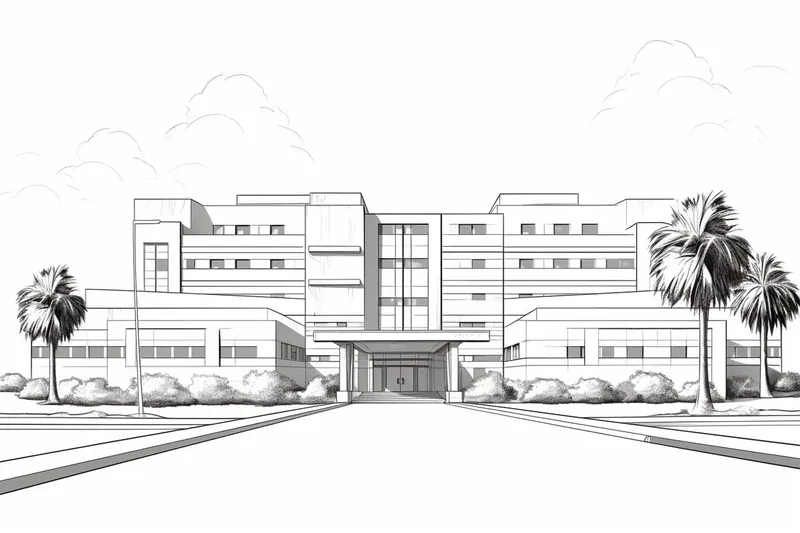
Learn how to draw a hospital with this step-by-step guide. From sketching the basic structure to adding details and coloring, create a charming hospital illustration.
Materials You'll Need
- Pencil
- Paper
- Eraser
Hospitals are more than just buildings; they are symbols of care, hope, and healing within our communities. Learning how to draw a hospital can be a rewarding artistic exercise that helps you understand architectural forms, perspective, and the subtle details that make structures recognizable and meaningful. Whether you are an art student aiming to enhance your technical skills or a hobbyist who enjoys capturing scenes from everyday life, this tutorial will guide you through the process of illustrating a hospital with clarity and confidence.
In this step-by-step guide on how to draw a hospital, you will explore key drawing techniques such as perspective drawing, line work, and shading to create depth and dimension. The tutorial is suitable for beginners who want to practice basic shapes and proportions, as well as intermediate artists looking to refine their architectural rendering skills. By focusing on the hospital's distinctive features—like its signage, windows, and entrance—you will learn how to bring a sense of realism and personality to your drawing.
Tip: As you work through each step of your hospital drawing, take frequent breaks to step back and evaluate your progress from a distance; this will help you identify areas that need refinement and ensure your proportions and details are accurately represented. Consider keeping your reference images nearby for quick comparison, which can significantly enhance the realism and accuracy of your illustration.
So, gather your favorite pencils, erasers, and paper, and prepare to embark on an enjoyable creative journey. With patience and practice, you will not only produce a detailed hospital drawing but also build confidence in your ability to depict complex structures. Remember, every great artist starts with simple steps, and this tutorial will support you every step of the way. Let's get started and bring your hospital drawing to life!
Materials Required
Before we dive into the drawing process, make sure you have the following materials at hand:
- Drawing paper: Choose a sheet that is suitable for your preferred drawing medium, such as pencil or pen.
- Pencils: A set of graphite pencils with different lead grades (2H, HB, 2B, etc.) will allow you to achieve varying shades and depths in your drawing.
- Eraser: A kneaded eraser works best for making adjustments and removing unwanted pencil marks without damaging the paper.
- Sharpener: Keep your pencils sharp to ensure precise lines and details.
- Ruler: A straight edge will come in handy for drawing straight lines and creating accurate proportions.
- Compass: If you want to include a circular element in your hospital drawing, a compass will help you create perfect circles.
- Reference Images: It can be helpful to have a few reference images of hospitals on hand to inspire your drawing and ensure accuracy.
Now that you have all your materials ready, let's move on to the step-by-step process of drawing a hospital.
Step 1: Sketching the Basic Structure
Start by lightly sketching the basic structure of the hospital on your drawing paper. Use a light pencil, such as a 2H, to create loose shapes and lines. Begin with the main building, focusing on the overall shape and proportions. Remember that a hospital typically consists of multiple sections, such as the main entrance, wings, and perhaps a central tower.
Step 2: Adding Details
Once you are satisfied with the basic structure, start adding more details to your hospital. Look at your reference images to gather ideas and inspiration. Pay attention to architectural elements such as windows, doors, and roof lines. Use a slightly darker pencil, like an HB, to define these features more clearly.
Step 3: Including Landscaping and Surroundings
A hospital is often surrounded by landscaping and other elements. Add greenery, trees, and sidewalks to give your drawing a realistic feel. Consider including some parked cars or ambulances to further convey the hospital setting. Don't forget to use your references to guide you in capturing accurate details.
Step 4: Refining Your Lines
Now that you have the basic structure and details in place, go over your initial sketch with a darker pencil, such as a 2B or 4B. Refine your lines, emphasizing the main features of the hospital. Pay attention to areas of shadow and light, as this will help add depth to your drawing.
Step 5: Adding Texture and Shadows
To make your hospital drawing more realistic, start adding texture and shadows. Look closely at the textures of the building materials used in hospitals, such as bricks, glass, and concrete. With a lighter pencil, create subtle shading and textures to mimic these materials. Use your eraser to lighten certain areas and create highlights.
Step 6: Coloring Your Drawing (Optional)
If you want to take your hospital drawing to the next level, consider adding color. Use colored pencils or other coloring mediums to bring life to your artwork. Pay attention to the colors of the building, surrounding landscape, and any signage or logos. Research hospital color schemes to ensure accuracy.
Conclusion
Congratulations! You have successfully completed your hospital drawing. By following these step-by-step instructions and using your artistic skills, you have created a charming illustration of a hospital. Remember to experiment, add your personal touch, and have fun with your drawings. The possibilities are endless!
Fun Facts About Hospital
- The first modern hospital was established in Baghdad in the 9th century, known as the Al-Qarawiyyin Hospital.
- Hospitals use a universal symbol, the red cross, which is protected under international law to signify medical aid.
- The world's largest hospital by bed capacity is the Chang Gung Memorial Hospital in Taiwan, with over 10,000 beds.
- Hospitals often have specialized units like ICUs (Intensive Care Units) designed for critically ill patients requiring constant monitoring.
- Many hospitals have adopted electronic health records (EHR) to improve patient care and data management.
- The concept of triage, sorting patients by urgency, was first developed in military hospitals during the Napoleonic Wars.
- Hospitals play a crucial role in public health emergencies, such as pandemics, by providing treatment and controlling disease spread.
- Architectural design of hospitals often incorporates natural light and green spaces to promote patient recovery and well-being.
Suggestions for Scenes and Settings for Hospital Drawings
- The hospital main entrance bustling with patients, visitors, and medical staff, capturing the flow of daily hospital life.
- A serene hospital garden or courtyard with benches, trees, and flowers, showing a peaceful healing environment.
- An ambulance arriving at the emergency bay, with paramedics rushing a patient inside.
- [[A hospital hallway lined with doors to patient rooms, featuring nurses](https://yonderoo.com/how-to-draw-a-doctor/) and doctors](https://yonderoo.com/how-to-draw-a-doctor/) attending to their duties.
- A panoramic view of the hospital complex from a bird's-eye perspective, highlighting architectural details and layout.
- A night scene of the hospital illuminated by exterior lights, emphasizing shadows and reflections on windows.
- The hospital rooftop helipad with a helicopter landing or taking off, symbolizing urgent medical transport.
- A pediatric ward decorated with colorful murals and toys, creating a warm and welcoming environment for children.
- The hospital reception area with a welcoming desk and seating, focusing on interior architectural elements.
- Medical staff in protective gear outside a specialized treatment unit, illustrating current healthcare challenges.