How to Draw a Cougar
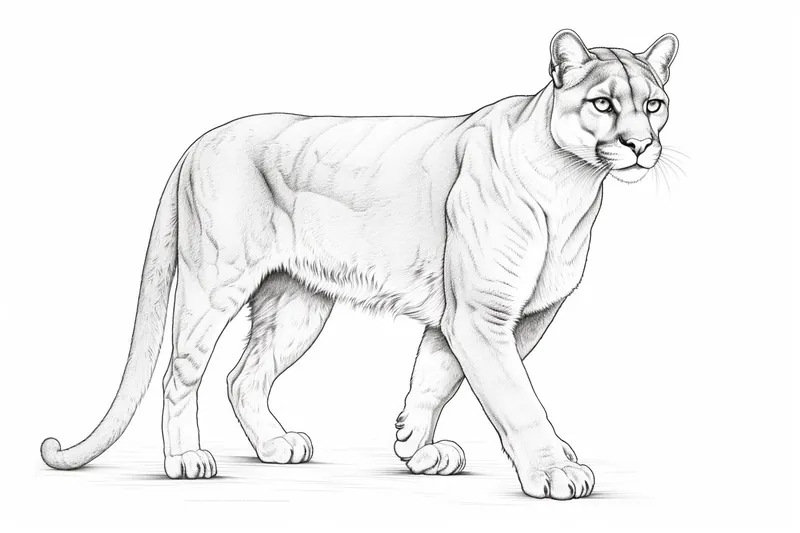
Learn how to draw a cougar with this step-by-step tutorial. Capture the grace and power of this majestic big cat in your own artwork.
Materials You'll Need
- Pencil
- Paper
- Eraser
The cougar, often referred to as the mountain lion, puma, or panther, is one of the most iconic wild cats native to the Americas. Renowned for its sleek, muscular physique and stealthy agility, the cougar is a symbol of strength and grace in nature. With its keen senses and expressive features, this magnificent animal has inspired countless works of art and stories throughout history. Capturing the essence of a cougar in a drawing allows artists to explore both the wild beauty and powerful presence that make this feline so fascinating.
Learning how to draw a cougar can be a rewarding challenge for artists at any level. Whether you are fascinated by wildlife, interested in animal anatomy, or simply want to practice your drawing skills, the cougar offers plenty of opportunities to work on proportions, muscle structure, and expressive details such as its intense gaze and distinctive facial features. This tutorial breaks down the process into manageable steps, making it accessible for beginners while also providing useful techniques for more experienced artists. You'll learn about basic shapes, shading, and texture to achieve a lifelike result.
No matter your experience level, approaching how to draw a cougar will not only improve your observation and technique but also deepen your appreciation for this remarkable animal. Remember, each artist's interpretation is unique—so take your time, enjoy the process, and let your creativity shine as you bring this majestic big cat to life on paper!
Materials Required
To begin drawing a cougar, you will need the following materials:
- Pencil - It is recommended to use a mechanical pencil or a set of drawing pencils with varying lead hardness (e.g., 2B, 4B, and 6B).
- Eraser - A kneaded eraser or a soft vinyl eraser will work best for correcting mistakes and refining details.
- Drawing paper - Choose a smooth surface paper that can handle shading and blending techniques. A heavier weight paper (around 70-90 lb) will prevent smudging and tearing.
Now that you have gathered your materials, let's dive into the step-by-step process of drawing a stunning cougar.
Step 1: Basic Shapes
Start by drawing a large oval shape for the cougar's head. Then, add a smaller circle within the oval to represent the muzzle. Position the circles slightly off-center to give it a more dynamic look. These basic shapes will serve as the foundation for the cougar's facial features.
Step 2: Facial Features
Using the basic shapes as a guide, begin adding the cougar's facial features. Draw two almond-shaped eyes, placing them above the muzzle. Add a small triangle-shaped nose just below the eyes, and a wide mouth slightly curved upwards on both ends. Take your time to capture the cougar's fierce expression and subtle details.
Step 3: Ears and Mane
Next, draw the cougar's ears on either side of the head. Cougars have distinctive rounded ears, so be sure to capture their shape accurately. Extend two curved lines from the top of the head towards the back to create the beginnings of the mane. The mane adds to the cougar's majestic appearance and should flow smoothly along the contours of the head.
Step 4: Body Outline
Now, let's move on to sketching the outline of the cougar's body. Using long, flowing lines, draw an elongated shape starting from the back of the head down towards the back. This line will represent the back and spine of the cougar. Continue the line, curving it smoothly to form the back leg and tail. Add a smaller line in front of the back leg to create the chest and front leg.
Step 5: Legs and Paws
Refine the cougar's legs by adding more details. The cougar has powerful and muscular legs, so emphasize their strength in your drawing. Add curved lines to outline the front and back legs, paying attention to the joints and muscles. Draw oval-shaped paws at the end of each leg, with visible claws. Take your time to make the paws look realistic and in proportion to the body.
Step 6: Tail and Whiskers
Continue refining the cougar's body by adding the tail. The tail should be thick at the base and taper towards the end. Use curved lines to create a sense of movement and grace. Don't forget to draw the distinctive long and curved whiskers on each side of the muzzle. These details will add depth and realism to your cougar drawing.
Step 7: Fur Details
To bring your cougar drawing to life, start adding fur details throughout the body. Cougars have short fur that lies close to their body. Use short, overlapping strokes to create the texture of fur, particularly around the neck, chest, and legs. Gradually build up the fur details, using lighter or darker pencil grades to add depth and shading.
Step 8: Shading and Blending
Now it's time to add shading and depth to your cougar drawing. Use a variety of pencil grades to create contrast and shadow. Start by identifying the areas of the cougar that would be in shadow, such as the underside of the body, under the chin, and behind the ears. Gradually add shading to these areas, using a blending tool or your finger to blend the pencil strokes for a smooth transition.
Step 9: Refining and Final Touches
Take a step back and evaluate your drawing. Look for any areas that need refining or additional detail. Use an eraser to clean up any stray marks or correct any mistakes. Pay attention to the eyes, nose, and other facial features to make sure they accurately reflect the cougar's unique characteristics. Add any final touches or highlights to bring out the cougar's natural beauty.
Tip: To enhance your cougar drawing, consider using reference images to study the animal's anatomy and fur texture closely. Observing real-life cougars or high-quality photographs can provide valuable insights into their proportions, muscle structure, and the subtleties of shading and fur patterns, allowing you to create a more lifelike and dynamic representation in your artwork.
Conclusion
Drawing a cougar requires careful observation of its features and a keen eye for detail. By following these step-by-step instructions, you can create a captivating drawing of this powerful big cat. Remember to take your time, practice, and enjoy the process. With each drawing, you will improve your skills and develop your unique artistic style. So grab your pencils, paper, and let's start capturing the essence of the cougar on the page.
Fun Facts About Cougar
- The cougar is known by many names, including mountain lion, puma, and panther, making it one of the most widely named animals in the world.
- Cougars have the largest range of any wild terrestrial mammal in the Western Hemisphere, stretching from Canada to the southern Andes.
- Despite their size, cougars cannot roar like other big cats; instead, they communicate with hisses, growls, and purrs.
- Cougars are excellent jumpers and can leap up to 18 feet vertically and 40 feet horizontally.
- These solitary cats are highly adaptable and can live in forests, deserts, and even urban areas.
- Cougars are ambush predators, relying on stealth and power to catch their prey, which includes deer, elk, and smaller mammals.
- Female cougars typically give birth to litters of two to four kittens, which are born with spotted coats for camouflage.
Suggestions for Scenes and Settings for Cougar Drawings
- A cougar perched on a rocky outcrop, overlooking a sweeping mountain valley at sunrise.
- A close-up portrait focusing on the cougar's intense gaze and expressive facial features, surrounded by abstract foliage.
- A stealthy cougar prowling through dense forest undergrowth with dappled sunlight filtering through the leaves.
- A mother cougar gently guiding her playful cubs along a riverbank or woodland trail.
- A dynamic scene of a cougar mid-leap across a rushing stream, capturing its agility and power in motion.
- A nighttime setting with a cougar illuminated by moonlight, casting dramatic shadows against a rocky canyon.
- A winter landscape with a cougar navigating snow-covered terrain, its warm fur contrasting with the icy environment.
- A serene moment of a cougar resting atop a fallen log, blending into the natural textures of the forest floor.
- An interaction between a cougar and another animal native to its habitat, such as a deer or an lynx, emphasizing the wild ecosystem.
- A stylized or fantasy-inspired cougar, perhaps with mystical markings or glowing eyes, set in an enchanted forest.