How to Draw a Chinese Dragon
Learn how to draw a Chinese dragon with this step-by-step tutorial. From the basic framework to adding intricate details, become an expert in dragon drawing.
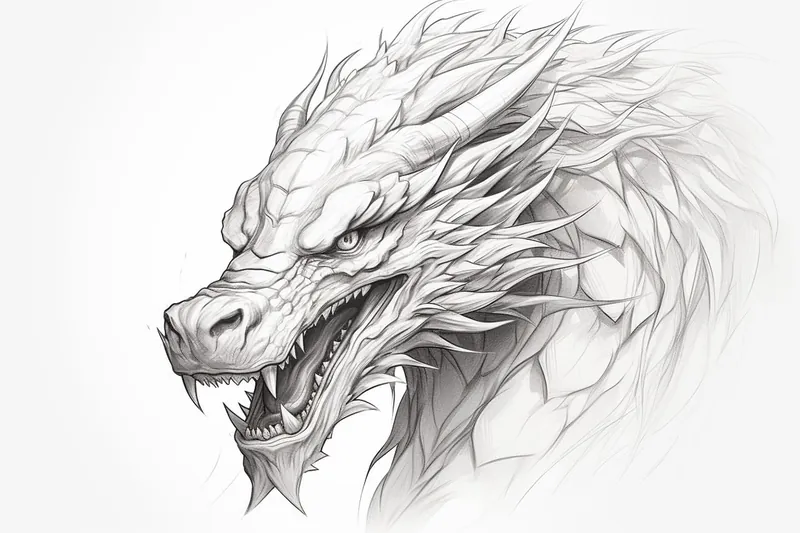
Materials You'll Need
- Pencil
- Paper
- Eraser
Chinese dragons have fascinated artists and storytellers for centuries, revered as powerful and benevolent creatures in East Asian mythology. Unlike their Western counterparts, Chinese dragons are often depicted as long, serpentine beings adorned with beautiful scales, flowing whiskers, and ornate horns. They symbolize wisdom, strength, and good fortune, making them a beloved subject in traditional festivals, decorative arts, and even modern pop culture. Understanding the unique features and cultural significance of Chinese dragons can greatly enrich your drawing and give you a deeper appreciation for this timeless symbol.
Learning how to draw a Chinese dragon is a rewarding way to challenge your creativity and improve your artistic skills. Whether you're captivated by their elegant, twisting forms or you want to add a mythical touch to your sketchbook, mastering this subject can help you develop confidence in drawing complex shapes, dynamic lines, and intricate patterns. This tutorial is suitable for artists of all experience levels; we'll guide you through the basic structure, from the sweeping body curves to the expressive face details, using clear, manageable steps and beginner-friendly techniques.
Tip: As you draw your Chinese dragon, take time to observe and incorporate the unique cultural symbols associated with its features, such as the significance of its scales, claws, and facial expressions. This not only enhances the authenticity of your artwork but also deepens your understanding of the dragon's cultural importance, allowing you to create a more meaningful and visually striking piece. Remember to experiment with different poses and settings to bring your dragon to life!
No matter your skill level, don't be intimidated by the dragon's majestic appearance. With patience and practice, you'll soon discover that learning how to draw a Chinese dragon is both accessible and incredibly fun. Gather your drawing tools, let your imagination soar, and get ready to create your very own mythical masterpiece—one that embodies the spirit and artistry of this legendary creature!
Materials Required
Before we delve into the drawing process, let's gather the necessary materials:
- Pencil: Use a mechanical pencil with HB lead or any other pencil you are comfortable with.
- Paper: Choose a smooth and sturdy paper, such as drawing paper or sketch paper.
- **Eraser:**Have a soft eraser handy for correcting mistakes and refining your drawing.
- Black pen: A fine-tip pen will be useful for outlining and adding details to your dragon.
Now that we have our materials ready, let's begin drawing our Chinese dragon!
Step 1: Basic Framework
To start, lightly sketch a large oval in the center of your paper. This oval will be the dragon's body. Next, draw a smaller circle near one end of the oval. This circle represents the dragon's head. Finally, add two curved lines extending from the oval to form the dragon's neck and tail.
Step 2: Head and Facial Features
Now, let's focus on the dragon's head. Using the circle as a guide, draw the dragon's eyes on either side of the vertical diameter. Chinese dragon eyes are typically almond-shaped. Add a small circle inside each eye to represent the pupils. Beneath the eyes, sketch a curved line for the dragon's snout. From the top of the head, draw two curved lines that flow down to become the dragon's upper jaw. Connect the snout and the upper jaw by drawing a curved line.
Step 3: Dragon's Body and Limbs
Extend the oval shape to complete the dragon's body. Chinese dragons are long and serpentine, so make sure to give your dragon a sinuous and flowing shape. Next, draw the limbs. From the bottom of the body, create two slightly curved lines on each side to represent the front legs. At the end of these lines, draw claw-like shapes. Moving towards the back of the body, add two more sets of lines for the hind legs and claws. Remember to make the hind legs slightly longer than the front legs.
Step 4: Details and Scales
Now that the basic structure is in place, it's time to add detail and texture to your dragon. Start by adding scales along the dragon's body. Chinese dragons are often depicted with fish-like scales. You can achieve this effect by drawing a series of overlapping curved lines that follow the contour of the dragon's body. Make sure to vary the size of the scales to create a realistic and organic look.
Step 5: Wings and Spikes
Chinese dragons are known for their magnificent wings and elaborate spikes along their spine. To draw the wings, begin by sketching two large, curved lines starting from the upper part of the dragon's body. Connect the lines at the bottom using a wavy line to represent the edge of the wing. Add smaller curved lines within the larger shape to create the appearance of individual feathers.
Moving on to the spikes, draw a row of triangular shapes along the top of the dragon's body. These spikes should gradually decrease in size towards the tail. Make sure the spikes are evenly spaced and symmetrical.
Step 6: Finalize Your Drawing
Now that you have sketched the main features of your Chinese dragon, go over the outline with a fine-tip pen. Start by tracing the head and facial features, then move on to the body, limbs, wings, and spikes. Allow the ink to dry, and then erase any remaining pencil lines to clean up your drawing.
Did You Know?: Chinese dragons are unique in that they are composites of several animals, each chosen for its symbolic meaning—traditionally, they have the horns of a stag, the eyes of a demon, the claws of an eagle, the body of a snake, the scales of a carp, and the whiskers of a catfish. These combinations weren't random; each feature represents a specific power or virtue, such as courage, strength, or adaptability. In ancient China, dragons were believed to control the rain and rivers, and emperors often used the dragon as their personal emblem to signify their divine right to rule. When you draw a Chinese dragon, you're not just creating a mythical creature—you're weaving together a tapestry of cultural symbols that have inspired awe and creativity for thousands of years!
Conclusion
Congratulations! You have successfully learned how to draw a Chinese dragon. By following these step-by-step instructions, and with a little practice, you can create your own stunning dragon artwork. Remember to be patient and have fun with the process. Chinese dragons hold a special place in art and culture, and now you can capture their majesty on paper.
Fun Facts About Chinese Dragon
- Chinese dragons are considered symbols of power, strength, and good fortune in Chinese culture.
- Unlike Western dragons, Chinese dragons are typically depicted as long, snake-like creatures with four legs.
- Chinese emperors were often regarded as the incarnation of dragons, symbolizing divine authority.
- The dragon is one of the twelve animals in the Chinese zodiac.
- Chinese dragons are believed to control water, rainfall, typhoons, and floods.
- During the annual Dragon Boat Festival, teams race dragon-shaped boats to honor the mythical creature.
- Chinese dragons are often shown holding a flaming pearl, symbolizing wisdom and prosperity.
- The color and number of claws on a dragon can indicate its rank, with five-clawed dragons reserved for the emperor.
- Chinese New Year celebrations often feature dragon dances to bring good fortune.
- Chinese people have historically called themselves "Descendants of the Dragon".
Suggestions for Scenes and Settings for Chinese Dragon Drawings
- A Chinese dragon soaring above misty mountain peaks at sunrise, with clouds swirling around its long, winding body.
- A majestic dragon coiled protectively around a glowing pearl or orb, symbolizing wisdom and power.
- A festive scene with a dragon weaving through lantern-lit streets during a traditional Chinese New Year celebration.
- A regal dragon emerging from a tranquil lake, its reflection shimmering in the water beneath lotus flowers.
- A playful dragon flying among blooming cherry blossoms, scattering petals with its swirling tail.
- An ancient temple courtyard, where a dragon statue comes to life amidst incense smoke and prayer ribbons.
- A dramatic encounter between a Chinese dragon and a brave hero atop the Great Wall of China under stormy skies.
- A dragon spiraling through a night sky full of stars and moons, its scales catching the moonlight.
- A guardian dragon perched on the roof of a traditional pagoda, watching over a bustling village below.
- A scene showing a dragon teaching young apprentices or children, sharing its wisdom in a mystical bamboo forest.