How to Draw a Blueprint
Learn how to draw a blueprint from start to finish with this step-by-step guide. Gather the necessary materials, measure accurately, and create professional-quality blueprints for your projects.
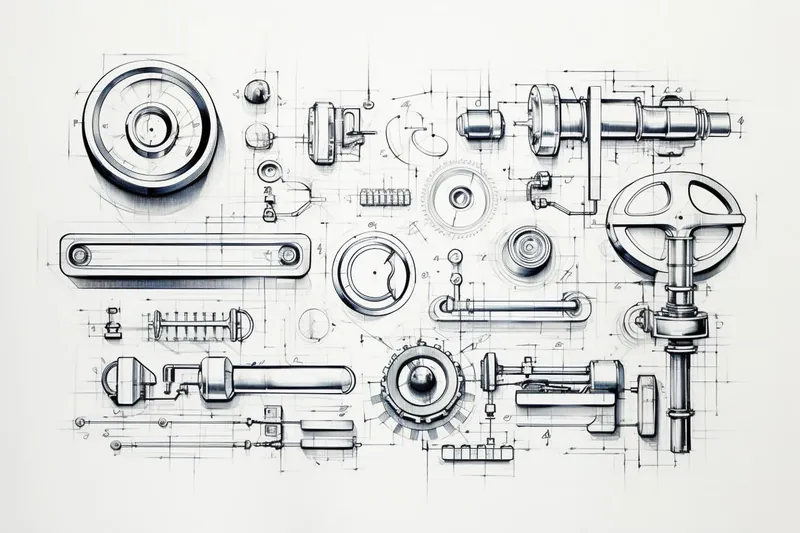
Materials You'll Need
- Pencil
- Paper
- Eraser
Blueprints have long been the backbone of architectural and engineering projects, serving as detailed visual guides that translate complex designs into clear, actionable plans. Whether you're an aspiring architect, an engineering student, or simply someone fascinated by the art of technical drawing, learning how to draw a blueprint is a valuable skill that bridges creativity and precision. Blueprints represent more than just lines on paper—they encapsulate measurements, spatial relationships, and construction details, making them indispensable for turning ideas into physical structures.Drawing a blueprint involves understanding scale, perspective, and technical symbols, which can initially seem challenging but are incredibly rewarding to master. This tutorial is designed for beginners and intermediate artists alike, gradually introducing you to the essential techniques such as drafting accurate measurements, using graph paper effectively, and incorporating standard blueprint symbols. By following this step-by-step guide on how to draw a blueprint, you will develop the confidence to create clear, professional-quality plans that convey your architectural vision with clarity and precision.Embarking on this drawing journey not only enhances your technical skills but also deepens your appreciation for the detailed planning behind every building and structure. With patience and practice, your ability to visualize and draft complex designs will grow, empowering you to take on more sophisticated projects. So gather your materials, prepare your workspace, and get ready to unlock the art and science of blueprint drawing—your path to becoming a skilled technical artist starts here!
Tip: As you work on your blueprint, consider using color-coded symbols or shading to differentiate between various elements like electrical, plumbing, and structural features; this will enhance clarity and make it easier for anyone reviewing your plans to understand the layout and functionality at a glance.
Materials Required
Before we dive into the process, gather the following materials:
- Graph paper: Choose graph paper with a scale that suits your needs. The most common scales are 1/4 inch and 1/8 inch.
- Pencils: Invest in a set of high-quality pencils with various lead hardness options, such as HB, 2B, and 4B.
- Erasers: Purchase both a soft eraser for large areas and a kneaded eraser for precision work.
- Rulers: Get a straightedge ruler, a T-square for horizontal lines, and an L-square for vertical lines and right angles.
- Compass: This tool is necessary for drawing circles and arcs. Choose one with adjustable arms for different sized circles.
- **Protractor:**A protractor is essential for measuring and drawing angles accurately.
- Architect's scale: This specialized ruler is necessary for reading measurements on your blueprint.
Now that you have your materials ready, let's get started.
Step 1: Gather Information and Measurements
The first step in creating a blueprint is gathering all the necessary information and measurements. This includes the dimensions of the space, existing structures, and any specific requirements or features. Use a measuring tape or laser measurement device to get accurate measurements.
Step 2: Determine the Scale
Once you have your measurements, decide on a scale for your blueprint. Common scales include 1/4 inch, 1/8 inch, or 1/16 inch. The scale determines the ratio between the measurements on your drawing and the actual size of the space. Be sure to choose a scale that will fit on your selected graph paper.
Step 3: Set Up Your Drawing Area
Start by drawing a border around your graph paper using a straightedge ruler. This border will define the boundaries of your drawing area. Make sure to leave enough space for all the required elements of your blueprint.
Step 4: Draw the Floor Plan
Begin by drawing the floor plan of the space. Start with the exterior walls, ensuring that they are parallel and perpendicular to each other. Use your ruler and T-square for straight lines and your L-square for right angles.
Next, add the interior walls and any other structural elements such as columns or beams. Use the same techniques of straight lines and right angles.
Step 5: Include Doors and Windows
Once the walls are in place, add doors and windows to your blueprint. Use your ruler to draw accurate lines for the openings. Remember to use the appropriate scale to ensure the dimensions are proportional to the rest of the drawing.
Step 6: Add Furniture and Fixtures
If your blueprint includes furniture or fixtures, draw them next. Use the measurements provided and the scale you've chosen to accurately represent their size and position. Pay attention to the scale when drawing smaller items like chairs, tables, or appliances.
Step 7: Label and Dimension
Properly labeling and dimensioning your blueprint is crucial for clear communication. Use text labels to identify rooms, areas, and important features. Add dimensions for walls, doors, and windows, indicating their size and position. Make sure all dimensions are clear and easy to read.
Step 8: Use Symbols and Notations
To improve clarity and understanding, incorporate symbols and notations into your blueprint. These can include electrical outlets, plumbing fixtures, or any other specific elements relevant to your design. Consult standard blueprint symbols and create a legend if needed.
Step 9: Clean Up Your Drawing
Now that your blueprint is complete, take the time to clean up your drawing. Use a kneaded eraser to remove any stray lines or smudges. Ensure your drawing is neat and easy to read.
Conclusion
Drawing a blueprint requires attention to detail, accuracy, and practice. By following these step-by-step instructions, you can create professional-quality blueprints for your architectural or engineering projects. Remember to gather all the necessary materials, gather accurate measurements, and choose an appropriate scale. Take time to label, dimension, and use symbols to enhance clarity. With time and practice, you'll be able to produce blueprints that accurately depict your design vision.
So, grab your graph paper, pencils, and rulers, and start creating your first blueprint. With dedication and practice, you'll soon master the art of blueprint drawing.
Fun Facts About Blueprint
- The term "blueprint" originated from a 19th-century printing process that produced white lines on a blue background, making it easy to reproduce technical drawings.
- Before digital design tools, blueprints were the primary method architects and engineers used to communicate complex building plans.
- Blueprints use standardized symbols and notations to represent electrical, plumbing, and structural elements, ensuring universal understanding among professionals.
- Modern blueprints are often created using CAD (Computer-Aided Design) software, which allows for precise scaling and easy modifications.
- The scale on a blueprint is crucial because it translates real-world dimensions into a manageable drawing size, commonly 1/4 inch or 1/8 inch per foot.
- Blueprints are not only used in architecture but also in engineering, manufacturing, and even fashion design to detail precise specifications.
- Historically, blueprints were made using a chemical process called cyanotype, invented by Sir John Herschel in 1842.
Suggestions for Scenes and Settings for Blueprint Drawings
- A futuristic eco-friendly home integrating solar panels and green roofs.
- A multi-level treehouse complex connected by bridges and ladders.
- An urban community center with mixed-use spaces including shops, offices, and public areas.
- A detailed blueprint of a vintage steam locomotive with mechanical components labeled.
- A minimalist tiny house with foldable furniture and space-saving fixtures.
- A public park layout featuring playgrounds, walking paths, ponds, and seating areas.
- An underground subway station showing platforms, tunnels, and emergency exits.
- A conceptual design for a modular office building with flexible interior walls.
- A luxury yacht deck plan highlighting cabins, recreational areas, and navigation controls.
- An ancient castle floor plan with defensive walls, towers, and secret passages.