How to Draw a Bee
Learn how to draw a bee with this step-by-step tutorial. Create a realistic and detailed bee drawing by following these clear instructions from an expert artist.
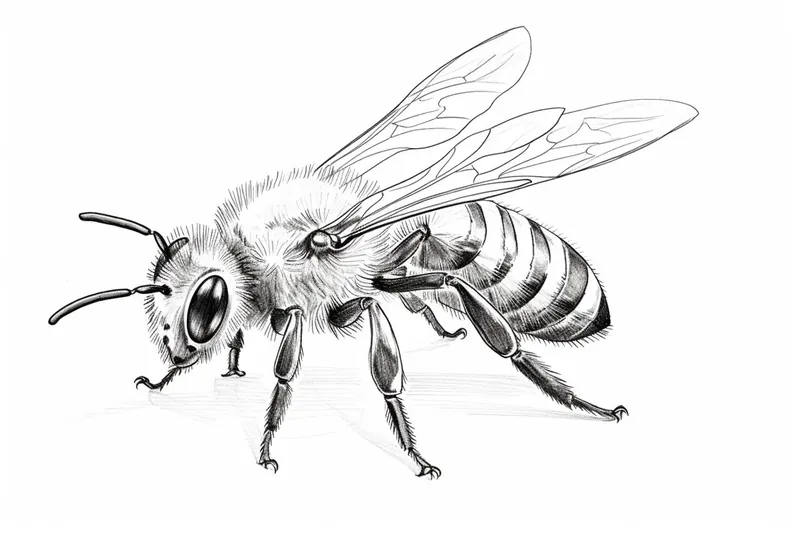
Materials You'll Need
- Pencil
- Paper
- Eraser
Welcome to this comprehensive step-by-step guide on how to draw a bee! Bees are not only essential pollinators in our ecosystem but also captivating subjects for artists due to their unique anatomy, intricate patterns, and vibrant colors. Learning how to draw a bee allows you to explore the delicate balance between realism and artistic interpretation, capturing the essence of these fascinating insects in your artwork. Whether you are a beginner eager to develop your drawing skills or an experienced artist looking to refine your technique, this tutorial is designed to help you create a detailed and lifelike bee illustration.
Drawing a bee involves understanding its basic shapes, textures, and characteristic features such as the segmented body, translucent wings, and the iconic black and yellow stripes. This tutorial will guide you through each stage, from sketching simple shapes to adding shading and intricate details that bring your bee to life. You'll practice techniques like layering, blending, and creating texture with pencils of varying hardness, which are essential skills for capturing the realistic look of the bee's fuzzy body and delicate wings. By the end of this lesson, you'll not only have a beautiful drawing but also a deeper appreciation for the complexity of these tiny creatures.
So, gather your materials and get ready to embark on a creative journey with this detailed tutorial on how to draw a bee. Remember, every artist starts with a single line, and with patience and practice, your skills will grow. Don't worry about perfection — the goal is to enjoy the process and express your artistic vision. Let's bring this busy little pollinator to life on your paper together!
Materials Required
Before we dive into the steps, let's gather the materials you will need:
- Drawing paper or sketchbook
- Pencils (HB, 2B, 4B, and 6B)
- Eraser
- Blending stump or cotton swabs
- Fine-tip black pen or marker (optional)
Now that you have everything ready, let's begin the process of drawing a bee!
Step 1: Basic Shapes
Start by sketching the basic shapes that will serve as a foundation for your bee drawing. Begin with an oval shape for the body and add a smaller circle on top for the head. Remember to keep these shapes light and simple, as they will act as guidelines for positioning the bee's features.
Step 2: Wings
Next, draw the wings on either side of the bee's body. Bee wings have a distinct and delicate structure, resembling a series of connected curves. Begin by sketching two curved lines extending from the bee's body, meeting at a point at the top. Then, add smaller curved lines within each wing, creating a feather-like pattern.
Step 3: Eyes and Antennae
Move on to the bee's face by drawing two large oval shapes for the eyes. Position them towards the front of the head, and leave some space between them. Inside each eye, draw a smaller oval for the pupil. Above the eyes, add two thin, curved lines for the antennae.
Step 4: Stripes and Abdomen
Now, let's add some stripes to the bee's body. Draw several horizontal lines across the oval shape of the bee's abdomen, leaving a small gap between each line. Bees typically have a striped pattern with alternating shades of black and yellow or orange, so keep this in mind while sketching.
Step 5: Legs and Feet
To complete the body, draw six thin and segmented legs extending from the bee's abdomen. Each leg should have three parts, getting narrower towards the end. At the end of each leg, draw small ovals for the bee's feet or claws.
Step 6: Details and Texture
Now that the basic structure of the bee is complete, it's time to add some details and texture to make it look more realistic. Start by refining the shapes and lines of the bee's body, making sure to define the curves and contours. Add small lines and curves along the stripes to give them a textured appearance.
Step 7: Shadows and Shading
To create depth and dimension in your bee drawing, it's important to add shadows and shading. Identify the direction of the light source and imagine where the shadows would fall. Use a darker pencil, such as 4B or 6B, to lightly shade the areas that would be in shadow. Gradually build up the darkness, blending the shading with a blending stump or a cotton swab for a smooth transition.
Step 8: Final Details
To add the finishing touches, focus on the finer details of the bee's face. Darken the eyes by adding shading around the pupils, giving them a sense of depth. Add tiny strokes to accentuate the texture of the wings. Take your time to refine any lines or shapes that need extra attention.
Conclusion
Congratulations, you've successfully learned how to draw a bee! Following these step-by-step instructions, you can create a realistic and detailed bee drawing from start to finish. Remember, practice is the key to improving your drawing skills, so keep going if your first attempt could be better. Keep honing your skills and exploring new techniques to bring your artwork to life. Enjoy the process, and let your creativity soar!
Fun Facts About Bees
- Hive Hierarchy: Within a beehive, there are three types of bees: the queen, drones, and worker bees. The queen is responsible for laying eggs, drones mate with the queen, and worker bees perform various tasks to maintain the hive.
- Incredible Navigation: Bees have an extraordinary ability to navigate. They use the sun as a compass during the day and can even navigate by polarized light on cloudy days. Additionally, they communicate the location of food sources to other bees through a sophisticated dance known as the waggle dance.
- Productive Pollinators: Bees are crucial pollinators, facilitating the reproduction of flowering plants by transferring pollen from male to female flower parts. This process is essential for the production of fruits, vegetables, and seeds.
- Remarkable Memory: Despite their small size, bees have impressive memory capabilities. They can recognize specific flower types and remember their locations, allowing them to efficiently forage for nectar and pollen.
- Winged Architects: Honeybees construct intricate hexagonal wax cells within their hives to store honey, pollen, and eggs. This hexagonal shape maximizes storage space while minimizing the amount of wax required.
- Temperature Regulation: Bees are capable of regulating the temperature within their hive. During hot weather, worker bees collect water and spread it throughout the hive to cool it down. Conversely, they generate heat by vibrating their flight muscles during colder temperatures to maintain warmth.
- Collective Decision Making: When a colony outgrows its current hive, scout bees search for suitable new locations. Once a potential site is found, scout bees return to the hive and perform recruitment dances to convince other bees to inspect the site. Through this collective decision-making process, the colony selects the best location for a new hive.
- Royal Diet: The queen bee is fed a special substance called royal jelly throughout her life, which allows her to grow larger and live longer than other bees in the hive. Royal jelly is secreted from glands in the heads of worker bees.
- Pollination Partnerships: Some plants have evolved specialized relationships with certain species of bees. For example, orchids often have unique adaptations to attract specific bee pollinators, such as intricate flower shapes or fragrances.
- Diverse Bee Species: Bees come in various shapes, sizes, and colors. While honeybees are the most well-known species, there are thousands of other bee species worldwide, each with its unique characteristics and behaviors.
Fun Facts About Bee
- Bees communicate the location of food sources through a unique waggle dance that conveys direction and distance.
- Honeybees create hexagonal wax cells in their hives, an efficient design that maximizes storage space while using minimal wax.
- Bees have an exceptional ability to navigate using the sun and can even detect polarized light patterns on cloudy days.
- The queen bee is fed royal jelly, a special substance that enables her to grow larger and live longer than other bees.
- Bees play a vital role in pollination, supporting the growth of many fruits and vegetables, as explained by the USDA.
- Worker bees regulate hive temperature by collecting water to cool the hive or vibrating their muscles to generate heat, maintaining an optimal environment as detailed by University of Minnesota Extension.
- There are over 20,000 known species of bees worldwide, each with unique behaviors and appearances, according to the Encyclopedia Britannica.
- Bees have remarkable memory skills, enabling them to recognize and remember
Suggestions for Scenes and Settings for Bee Drawings
- A bee collecting nectar from a vibrant, blooming sunflower field under a bright blue sky.
- Close-up of a bee perched delicately on a dewy lavender flower at dawn.
- A busy hive entrance with worker bees flying in and out, showcasing their teamwork.
- A bee hovering over a cluster of wildflowers in a lush meadow with butterflies nearby.
- A stylized, artistic interpretation of a bee with exaggerated stripes and translucent wings in a surreal garden setting.
- A queen bee surrounded by her loyal worker bees inside a honeycomb structure with hexagonal cells visible.
- A bee navigating through raindrops on a green leaf after a gentle rain shower.
- A whimsical scene of a bee wearing tiny glasses and holding a map, symbolizing its incredible navigation skills.
- A bee performing the waggle dance on a textured hive surface to communicate with other bees.
- A nighttime scene of a bee resting on a flower illuminated by moonlight and soft glowing fireflies.