How to Draw a Barn Owl
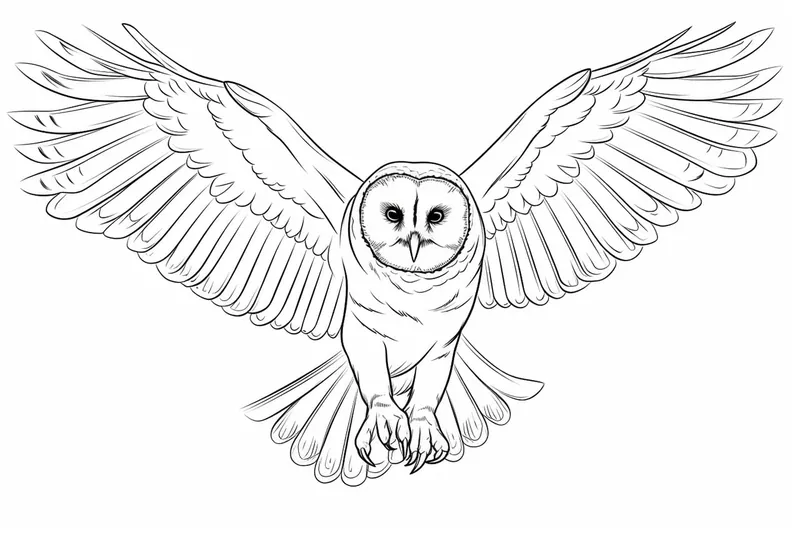
Learn how to draw a barn owl step-by-step with this detailed drawing tutorial. Capture the beauty of this majestic bird with easy-to-follow instructions.
Materials You'll Need
- Pencil
- Paper
- Eraser
The barn owl is one of the most enchanting and recognizable birds in the world, instantly identified by its heart-shaped face, soulful dark eyes, and elegant plumage. Admired for its silent flight and nocturnal hunting prowess, the barn owl has long captured the imagination of artists, naturalists, and storytellers alike. Learning how to draw a barn owl not only allows you to appreciate the unique features of this mysterious bird but also helps you develop your observation skills and attention to detail as you recreate its delicate feathers and striking facial disc.
This tutorial is designed for artists of all skill levels, from beginners eager to master basic shapes and shading to more experienced creators seeking to refine their technique. Drawing a barn owl offers a wonderful opportunity to practice sketching organic forms, layering textures, and refining proportions—skills that are valuable for rendering all kinds of wildlife. Whether you want to enhance your nature journal, create a standout piece for your portfolio, or simply relax and enjoy the meditative process of drawing, you'll find that following these step-by-step instructions on how to draw a barn owl will boost your confidence and creativity.
Gather your favorite art supplies and get ready to embark on a creative journey into the world of this captivating nocturnal bird. Remember, every artist's hand is unique—don't be afraid to add your own flair as you work through each stage. With practice and patience, you'll soon be able to capture the barn owl's graceful essence on paper. Let's begin and see where your artistic adventure takes you!
Materials Required
Before we begin, make sure you have the following materials ready:
- Pencil: A medium-soft graphite pencil will work well for sketching.
- Eraser: A kneaded eraser is recommended for easy removal of mistakes.
- Drawing paper: Choose a smooth and sturdy paper that can handle your chosen medium.
- Colored pencils or markers (optional): If you want to add color to your drawing, have some colored pencils or markers on hand.
Now that you have all your materials ready, let's dive into the step-by-step process of drawing a barn owl.
Step 1: Basic Shape
Start by lightly sketching the basic shape of the owl's head using simple geometric forms. Draw a circle for the head and a smaller oval shape for the body. These shapes will serve as the foundation for the rest of your drawing.
Step 2: Facial Features
Next, let's add the owl's facial features. Draw two large circles for the eyes, positioning them towards the front of the head. Inside each eye, add a smaller circle for the pupils. Then, draw a curved line for the beak, extending it slightly below the eyes. Finally, sketch two small lines near the bottom of the face to indicate the owl's beak tufts.
Step 3: Feathers and Details
Now, it's time to add the intricate details of the owl's feathers. Start by adding feather-like lines around the face, gradually working your way outwards. Pay attention to the direction of the feathers, creating texture and depth as you go. Remember to keep your lines light and loose, as we will refine them later.
Step 4: Body and Wings
Extend the oval shape you drew earlier to create the owl's body and wings. Use curved lines to give the body a rounded and fluffy appearance. Add some lines to indicate the division between the feathers on the body and the wings. Don't worry about perfection at this stage; we'll refine the details in the next steps.
Step 5: Refining the Face
Now let's refine the owl's face. Darken the outline of the eyes and make them more defined. Add some shading around the eyes using short, light strokes to create the appearance of feathers. Darken the beak and beak tufts, adding some texture to make them look realistic.
Step 6: Details and Shading
Proceed to add more details to the body and wings. Use a combination of short, curved lines to create the appearance of feathers. Pay attention to the contours of the owl's body and make sure to vary the length and direction of your lines to add depth and realism. Shade the areas that appear darker, such as the underside of the wings and the body's shadowed areas.
Step 7: Final Touches
Take a step back and evaluate your drawing. Make any necessary adjustments to the proportions or details. Erase any guidelines that are still visible. Use your pencil to add final touches, such as enhancing the contrast in certain areas or adding additional shading for more depth. This is also the time to decide if you want to leave your drawing in black and white or add color using colored pencils or markers.
Did You Know?: Barn owls have some of the most specialized hearing abilities in the animal kingdom—thanks to their asymmetrical ear placement, they can pinpoint the location of prey in complete darkness using only sound! Their heart-shaped facial disc acts like a satellite dish, channeling the faintest rustles and squeaks straight to their ears. This remarkable adaptation allows barn owls to hunt with incredible accuracy, even when their prey is hidden under grass or snow. As you draw their unique face, imagine how each curve and contour isn't just beautiful, but also perfectly designed for survival.
Tip: To capture the barn owl's unique features effectively, start by using a light pencil, such as a 2H, to sketch the basic shapes of its body and face. Focus on the heart-shaped outline of the face and the proportions of the body, paying close attention to the placement of the eyes, which are a defining characteristic. Once you're satisfied with the outline, switch to a softer pencil (like a 4B or 6B) for shading, especially around the facial disc and under the wings, to create depth and texture. Use a blending stump or your finger to smooth out the pencil marks, mimicking the soft feathers of the owl. Finally, don't forget to add fine details with a white gel pen or colored pencil to highlight areas like the eyes and the tips of the feathers, bringing your barn owl drawing to life!
Conclusion
Congratulations, you have successfully drawn a barn owl! By following these step-by-step instructions, you have created a stunning representation of this beautiful bird. Remember, practice makes perfect, so don't hesitate to try this tutorial multiple times to improve your skills. Whether you choose to leave your drawing in black and white or add vibrant colors, your barn owl drawing will undoubtedly be a masterpiece. Enjoy the process and happy drawing!
Of course, what's a barn owl without a barn? Check out our guide on how to draw a barn.
Fun Facts About Barn Owl
- The barn owl's heart-shaped face helps funnel sound to its ears, giving it exceptional hearing for hunting in the dark.
- Barn owls are found on every continent except Antarctica, making them one of the most widespread birds in the world.
- Unlike most owls, barn owls do not hoot; instead, they make eerie screeches and hissing sounds.
- The barn owl's feathers are specially adapted for silent flight, allowing it to sneak up on prey undetected.
- Barn owls can eat up to 1,000 mice each year, making them valuable for natural pest control.
- They have asymmetrical ears, which helps them pinpoint the exact location of sounds in total darkness.
- Barn owls have excellent low-light vision, but rely even more on their hearing to hunt at night.
- The average lifespan of a wild barn owl is about 4 years, though some can live much longer in captivity.
- Barn owls swallow their prey whole.
Suggestions for Scenes and Settings for Barn Owl Drawings
- A barn owl perched atop an old wooden fence under a full moon, with fields stretching into the distance.
- A close-up portrait of a barn owl's face, emphasizing its heart-shaped facial disc and deep, dark eyes.
- A barn owl in mid-flight, wings outstretched, gliding silently over a misty meadow at dusk.
- A young barn owl peeking out from the rafters inside an old barn, surrounded by hay and rustic beams.
- A barn owl hunting at night, swooping low over tall grasses, with a small mouse in its talons.
- A pair of barn owls sitting together on a tree branch, feathers fluffed against a chilly night breeze.
- A barn owl silhouetted against a star-filled sky, with an ancient tree in the foreground.
- A barn owl nestled inside a hollow tree trunk, surrounded by autumn leaves and woodland textures.
- A whimsical scene of a barn owl wearing a tiny wizard hat, perched on a stack of spell books in a moonlit library.
- An expressive study of barn owl wing patterns, focusing on the delicate layering and texture of the feathers.