How to Draw Shoulders
Learn how to draw shoulders with this step-by-step tutorial. Understand the anatomy, follow basic construction lines, and add volume and details to create realistic shoulder drawings. Improve your art skills and master the art of drawing shoulders.
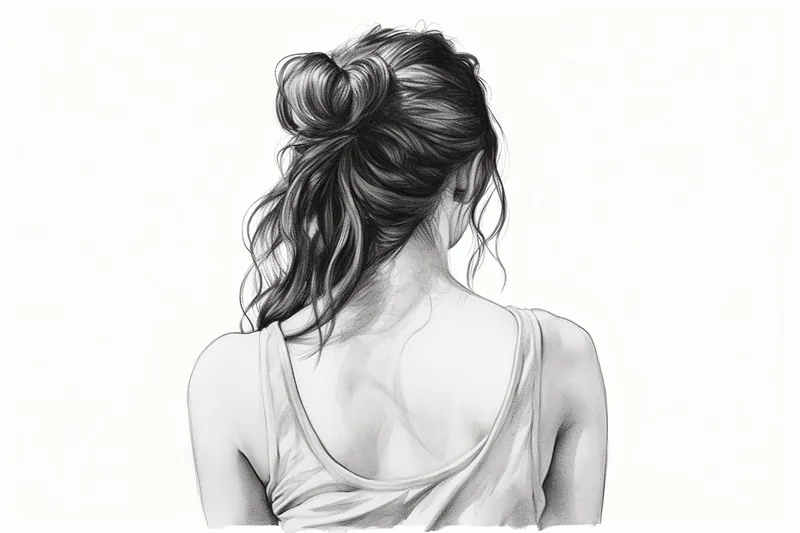
Materials You'll Need
- Pencil
- Paper
- Eraser
Shoulders play a vital role in defining the overall posture, movement, and anatomy of the human body. They connect the arms to the torso and serve as a critical point of articulation, impacting how natural and dynamic your figure drawings appear. Whether you're sketching a character in motion or capturing a relaxed pose, mastering the structure and form of shoulders is essential for creating believable and expressive artwork. Understanding how to draw shoulders accurately can also enhance your ability to illustrate clothing, muscles, and gestures, making your characters come alive on the page.
Many artists find shoulders challenging because of their complex anatomy and the way they change with different arm positions and body types. The shoulder is not a simple, static shape—it comprises bones, muscles, and connective tissues that interact in subtle ways. Learning how to draw shoulders means paying attention to proportions, the underlying skeletal structure (such as the clavicle and scapula), and how muscles like the deltoids create contour and volume. By breaking down these elements step by step, you can build a solid foundation and avoid common mistakes, such as making the shoulders too stiff or disproportionate.
This tutorial is designed for artists at any level, from beginners who are just starting to explore figure drawing to more advanced creators looking to refine their anatomical accuracy. We'll cover essential techniques, including gesture drawing, basic shapes, and shading, to help you capture both the form and function of the shoulders. Understanding how to draw shoulders is not only a valuable skill for portrait and character artists, but it also opens up opportunities for experimenting with different poses, styles, and even costume design. With practice, you'll notice a significant improvement in the realism and expressiveness of your drawings.
Don't be discouraged if shoulders seem tricky at first—every artist faces this challenge at some point! The key is to observe, practice, and break the process down into manageable steps. By following along with the tips and methods in this guide, you'll soon gain the confidence to add lifelike, dynamic shoulders to your sketches and illustrations. Let's dive in and discover the secrets to drawing shoulders with accuracy and ease!
Materials Required
To begin drawing shoulders, you will need the following materials:
- Drawing paper: Choose a smooth and sturdy paper that can handle pencil or pen strokes without tearing easily.
- Pencils: Have a range of pencils with different grades, such as 2B, 4B, and 6B. These will allow you to create varied tones and shading.
- Eraser: A kneaded eraser is recommended, as it can be molded into different shapes and provides precise erasing.
- Blending tools: You can use blending stumps, tortillons, or even cotton swabs to achieve smooth and seamless shading.
- Reference images: It is helpful to have visual references of shoulders and anatomy to study and understand the structure.
Now that you have gathered your materials, let's dive into the step-by-step process of drawing shoulders.
Step 1: Understanding the Anatomy
Before drawing any body part, it is crucial to have a basic understanding of its underlying anatomy. The shoulder is a complex joint composed of several bones, muscles, and ligaments. It consists of the clavicle (collarbone), scapula (shoulder blade), and the humerus (upper arm bone). Familiarize yourself with these structures by studying anatomical references, allowing you to understand how they relate to one another.
Step 2: Basic Construction Lines
Start by drawing a simple framework to establish the overall shape and position of the shoulders. Draw two oval shapes to represent the scapula bones, one on each side. These ovals should be slightly tilted and positioned symmetrically. Next, connect the scapula ovals with two curved lines to represent the collarbone. These lines should follow the natural curve of the shoulders.
Step 3: Adding Volume and Shape
Now that you have the basic framework, it's time to add volume to the shoulders. Think of the shoulders as three-dimensional forms rather than flat shapes. Start by adding rounded forms to the scapula bones, using soft curves to give them a realistic appearance. Then, add volume to the collarbone by making it slightly thicker towards the center and tapering towards the ends.
Step 4: Establishing the Shoulder Width
To determine the width of the shoulders, imagine a vertical line in the middle of the body. Generally, the shoulders should be approximately two heads wide. Use this proportion as a guideline to draw the outer edges of the shoulders, making sure they are symmetrical.
Step 5: Adding Muscles and Details
To make the shoulders look more realistic, it's important to add the major muscles and details. Some key muscles to include are the deltoids, trapezius, and pectoralis major. Study the anatomy of these muscles and their placement on the shoulder to accurately depict them in your drawing. Pay attention to the curves and contours of the muscles, as they will contribute to the overall shape of the shoulder.
Step 6: Shading and Texturing
Tip: To enhance the realism of your shoulder drawings, consider practicing with live models or using video references to observe how shoulders move and shift in various poses. Pay attention to the subtle curves and natural angles created by the shoulder muscles and the way they interact with the arms and torso. This observation will help you translate the dynamic and fluid nature of shoulders into your artwork, making your figures appear more lifelike and expressive.
Now that you have the underlying structure and details in place, it's time to add shading and texture to your drawing. Start by determining the direction of the light source and create areas of light, shadow, and mid-tones accordingly. Use your range of pencils to create gradual transitions between these tonal values, giving depth and dimension to the shoulders. Don't forget to blend the shaded areas using your blending tools to achieve a smooth and realistic appearance.
Conclusion:
Drawing shoulders can be a daunting task, but with practice and an understanding of the underlying anatomy, it becomes more accessible. By following the step-by-step instructions provided in this article, you now have the knowledge and techniques to draw shoulders with confidence. Remember to study anatomy references, pay attention to detail, and practice regularly to improve your skills. With patience and perseverance, you will be able to create realistic and well-proportioned shoulders in your drawings.
Fun Facts About Shoulders
- The shoulder is the most mobile joint in the human body, allowing for a wide range of motion in almost every direction.
- The main muscle responsible for the rounded shape of the shoulder is the deltoid.
- The shoulder joint is formed by three bones: the clavicle, scapula, and humerus.
- Shoulder dislocations are the most common type of joint dislocation.
- The rotator cuff is a group of four muscles that stabilize the shoulder.
- Humans have a unique shoulder structure that enables overhead throwing, a trait rare among primates.
- The scapula, or shoulder blade, can move in six different directions.
- Shoulder impingement syndrome is a common cause of pain for athletes, especially swimmers and throwers.
- The shoulder girdle connects the arms to the trunk and is essential for upper body strength.
Mistake Alert: A common mistake when drawing shoulders is making them appear too stiff and boxy, often because beginners rely on straight lines or rigid shapes to represent the joint. This happens when you overlook the subtle curve and slope of the shoulder line, as well as the way the deltoid muscle wraps around the top of the arm. To avoid this, observe real-life references or pose in front of a mirror to study how the shoulders naturally slope and round off at the edges. Try sketching the underlying clavicle and scapula first, then build up the muscles with gentle curves rather than harsh angles—this will help your shoulders look more natural and flexible, adding life and realism to your figure drawings.
Suggestions for Scenes and Settings for Shoulders Drawings
- A character stretching their arms above their head, emphasizing the extension and movement of the shoulder muscles.
- A figure lifting a heavy object, showcasing the pronounced deltoids and tension in the shoulders.
- A swimmer performing a butterfly stroke mid-motion, capturing the dynamic rotation and flexion of the shoulders.
- A relaxed portrait with one shoulder slightly raised, illustrating subtle asymmetry and gesture.
- A fantasy warrior in armor, focusing on how shoulder pads and clothing interact with the underlying anatomy.
- A dancer caught in a dramatic pose, with shoulders twisted or tilted to convey expressive movement.
- A close-up anatomical study of the shoulder region, labeling the clavicle, scapula, and deltoid muscles.
- A group of athletes preparing for a race, each with different shoulder widths and builds for diversity.
- A seated figure with arms crossed, highlighting the foreshortening and overlapping forms of the shoulders.
- A character carrying a backpack or shoulder bag, demonstrating how weight affects shoulder posture and muscles.