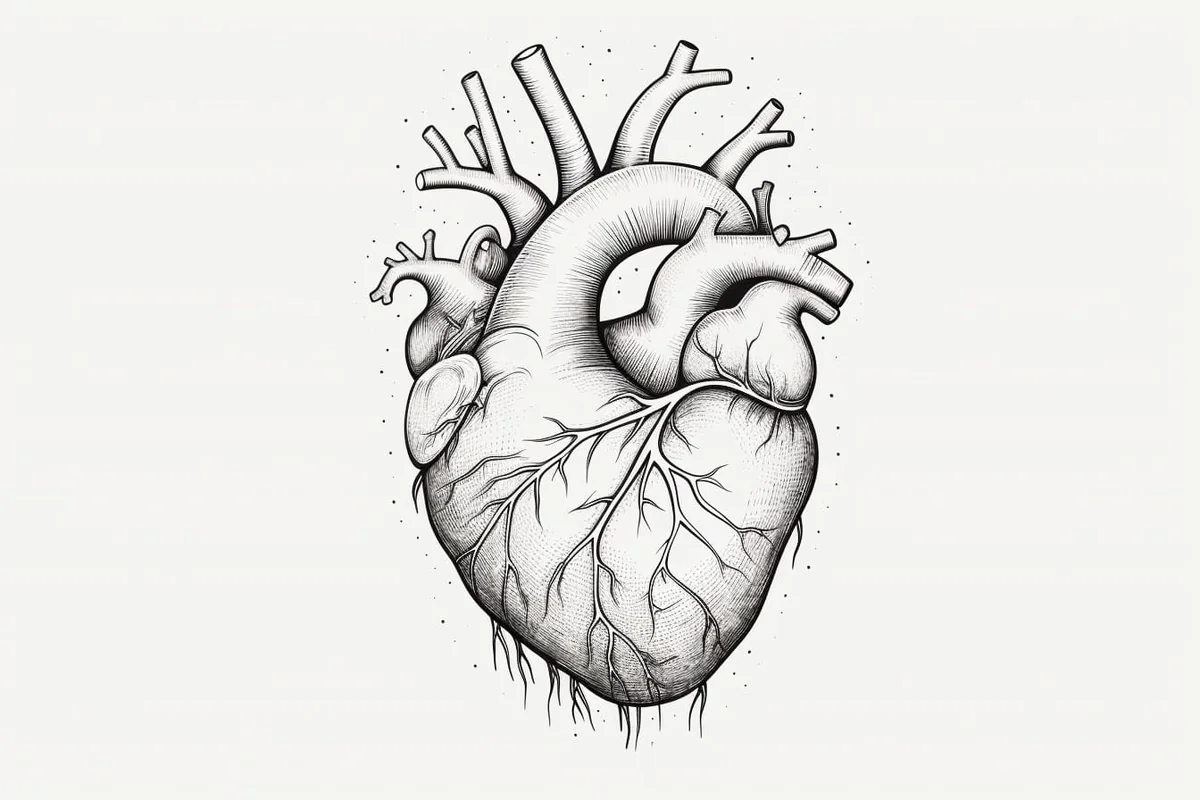
How to Draw an Anatomical Heart
Learn how to draw a detailed anatomical heart in this step-by-step guide. From sketching the basic shape to adding intricate details, this tutorial will help yo
Materials You'll Need
- Drawing paper
- Pencil (HB or 2B)
- Eraser
- Colored pencils
- Markers
- Blending stump
Welcome to an exciting and educational artistic journey where we explore the detailed and fascinating subject of the human heart. In this tutorial, you will learn how to draw an anatomical heart—a complex organ that not only symbolizes love and emotion but also plays a crucial role in sustaining life by circulating blood throughout the body. The anatomical heart differs significantly from the simplified heart shape often seen in art; it features intricate structures such as chambers, valves, veins, and arteries, each contributing to its function and form. Understanding these details will deepen your appreciation of both anatomy and the artistic process.
Drawing an anatomical heart is a rewarding challenge suitable for intermediate artists who want to improve their observation skills and mastery of fine detail. This exercise will help you develop techniques such as shading to create volume, capturing textures, and accurately rendering proportions. As you work through the tutorial, you'll gain insight into the heart's anatomy—like the left and right ventricles, atria, and major blood vessels—which will enrich your drawing and provide a scientific context to your artwork. This blend of art and science makes the experience not only creatively satisfying but intellectually stimulating as well.
Whether you are an art student, a medical illustrator, or simply passionate about drawing, this guide on how to draw an anatomical heart will equip you with the skills and knowledge to create a detailed, lifelike representation of this vital organ. Embrace the complexity and beauty of the heart with patience and curiosity, and remember that every stroke brings you closer to mastering the art of anatomical drawing. So, gather your drawing tools and let's begin this inspiring exploration where creativity meets biology, turning the heart into a captivating subject on your canvas.
Materials Required
To draw an anatomical heart, you will need the following materials:
-
Pencil for sketching and outlining
-
Eraser for correcting mistakes
-
Fine-tip pens for adding details
-
Colored pencils or markers for adding color if desired
-
Reference images of anatomical hearts for accuracy
-
Optional: blending tools such as blending stumps or tortillons for shading and blending
These materials will help you create a detailed and accurate drawing of an anatomical heart.
How to Draw an Anatomical Heart: a Step-by-step Guide
Step 1: Gather Your Materials
Gather all the necessary materials for drawing an anatomical heart. You will need a pencil, eraser, paper, and reference images of an anatomical heart for accuracy.
Step 2: Sketch the Basic Shape
Start by lightly sketching the basic shape of the anatomical heart. Draw an oval shape for the main body of the heart, and add two smaller oval shapes at the top for the atria.
Step 3: Add Details
Add the details of the heart chambers and valves. Draw the ventricles at the bottom of the heart with thicker walls compared to the atria. Include the aorta and pulmonary arteries emerging from the top of the heart.
Step 4: Draw the Veins and Arteries
Sketch the veins and arteries connected to the heart. Include the superior and inferior vena cava entering the right atrium, and the pulmonary veins entering the left atrium. Draw the aorta branching out from the left ventricle.
Step 5: Add Texture and Shading
Add texture to the heart by drawing veins and muscle fibers on the surface. Use hatching and cross-hatching techniques to create shading and depth, emphasizing the 3D structure of the heart.
Step 6: Refine and Erase Guidelines
Refine the details of the heart, paying attention to proportions and anatomical accuracy. Erase any unnecessary guidelines and overlapping lines to clean up the drawing.
Step 7: Final Touches
Add any final touches to enhance the drawing, such as highlighting certain areas to create a sense of realism. Take your time to fine-tune the drawing until you are satisfied with the result.
Step 8: Sign and Date
Sign your artwork and date it to mark the completion of your anatomical heart drawing. Congratulations on completing your detailed and accurate representation of an anatomical heart!
Conclusion
In conclusion, drawing an anatomical heart can be a challenging yet rewarding artistic endeavor. By following the step-by-step instructions outlined in this article and practicing regularly, artists can develop their skills in depicting this intricate and symbolic organ with accuracy and creativity. Remember to pay attention to details, shapes, and shading to bring your anatomical heart drawing to life. With dedication and patience, anyone can master the art of drawing this complex organ and create compelling and meaningful artwork. Keep practicing and exploring different techniques to enhance your artistic abilities and create stunning anatomical heart illustrations.
Fun Facts About Anatomical Heart
-
The human heart beats around 100,000 times a day, pumping approximately 2,000 gallons of blood daily. American Heart Association
-
The heart consists of four chambers: two atria and two ventricles, each playing a vital role in blood circulation. Britannica
-
The heart has its own electrical system that controls heartbeat rhythm, allowing it to beat independently of the brain.
-
Coronary arteries supply the heart muscle with oxygen-rich blood, essential for its continuous function.
-
The heart is roughly the size of a fist and weighs between 8 to 12 ounces in adults. Mayo Clinic
-
Even when removed from the body, the heart can continue to beat due to its intrinsic electrical activity. NCBI Bookshelf
-
The heart adjusts its pumping rate and strength based on the body's needs, such as during exercise or stress. American Heart Association
-
The heart pumps oxygen and nutrients to every cell in the body and removes waste products, making it essential for life. National Heart, Lung, and Blood Institute
Suggestions for Scenes and Settings for an Anatomical Heart Drawings
-
An anatomical heart surrounded by blooming flowers, symbolizing the beauty and fragility of life.
-
An anatomical heart integrated into a steampunk-inspired mechanical contraption, representing the balance between nature and technology.
-
An anatomical heart floating in outer space, with planets and stars in the background, conveying a sense of interconnectedness and vastness.
-
An anatomical heart depicted as a mystical crystal, emitting a soft glow and surrounded by ethereal mist, evoking a sense of magic and wonder.
-
An anatomical heart entwined with twisting tree roots, merging with nature and symbolizing growth and resilience.
-
An anatomical heart suspended underwater, with colorful marine life swimming around it, showcasing the delicate balance of life in the ocean.
-
An anatomical heart covered in intricate geometric patterns, symbolizing the complexity and interconnectedness of the human body.
-
An anatomical heart depicted within a surreal dreamscape, with floating islands and surreal creatures, exploring the depths of imagination and creativity.
-
An anatomical heart integrated into a vintage pocket watch, with gears and cogs visible, symbolizing the passage of time and the importance of cherishing each moment.
-
An anatomical heart portrayed as a fiery phoenix rising from the ashes, symbolizing transformation and renewal.