How to Draw a Train on Tracks
Learn how to draw a train on tracks with this step-by-step tutorial. From basic shapes to adding shading and detail, become an expert at train drawing.

Materials You'll Need
- Pencil
- Paper
- Eraser
Trains are not just a mode of transportation—they are symbols of exploration, progress, and nostalgia. Their powerful engines, intricate details, and the rhythmic lines of the tracks beneath them make trains a popular and rewarding subject for artists of all ages. Drawing a train on tracks allows you to capture the dynamic movement and mechanical elegance of these remarkable machines, while also practicing perspective, proportion, and detail work. Whether you are fascinated by the history of steam locomotives or the sleek design of modern trains, learning how to draw a train on tracks lets you bring these impressive vehicles to life on paper.
Many people are drawn to train art because it combines technical structure with creative storytelling. You might want to illustrate a bustling railway scene, create a vintage postcard, or simply challenge yourself with a subject that offers both straight lines and curved forms. This tutorial is designed for artists of all skill levels, from beginners looking to improve their basic shapes and perspective, to more advanced artists hoping to refine their detail work and shading techniques. In this step-by-step guide, you'll learn how to draw a train on tracks by breaking down the process into manageable stages, focusing on composition, perspective, and adding realistic features that make your drawing stand out.
Don't worry if trains seem complicated at first—patience and practice are key. By following along, you'll discover that with a few simple techniques, you can achieve a striking and accurate train drawing. Grab your pencils and drawing paper, and get ready to embark on a creative journey. Remember: every artist starts somewhere, so be proud of your progress and most importantly, have fun as you learn how to draw a train on tracks!
Materials Required
Before we begin, gather the following materials:
- Sketchbook or drawing paper
- Pencils (HB, 2B, and 4B)
- Eraser
- Ruler
- Reference images of trains
Step 1: Start with the Basic Shapes
To begin, let's lay down the foundation of our train drawing by sketching some basic shapes. Start by drawing a rectangle for the body of the train. Then, attach a smaller rectangle to the front for the cabin. Lastly, add two circles for the wheels on each side of the train.
Step 2: Define the Train's Body
Using the basic shapes as a guide, start adding more details to the train's body. Refine the shape of the main rectangle by rounding the corners and adding curved lines to represent the windows. Add a door on the side of the train and some smaller details like vents or lights. Remember to use light, loose pencil strokes at this stage, as we'll be refining these lines later on.
Step 3: Draw the Details
Now, let's focus on the smaller details that bring our train drawing to life. Add more refined lines to show the different sections of the train, such as the engine, passenger cars, and cargo compartments. Don't forget to include smaller details like handrails, steps, and any other unique features your reference image may show.
Step 4: Add the Wheels and Tracks
Next, draw the wheels of the train. Use your reference image to guide you in capturing the accurate shape and size. Draw the wheels so they appear firmly attached to the train's body. Now, for the train to be on tracks, we need to draw the tracks themselves. Start by using a ruler to create two parallel lines on either side of the train. Add crossbars between these lines at regular intervals to complete the tracks.
Step 5: Refine the Train's Outline
Now that the basic shapes and details are in place, it's time to refine the outline of our train drawing. Use a darker pencil (such as 2B or 4B) to trace over the more important lines, making them bolder and more defined. As you refine the outline, pay close attention to the curves and contours of the train to capture its three-dimensional form.
Step 6: Add Shading and Texture
To make your train drawing appear more realistic, we'll add shading and texture. Begin by determining the direction of the light source in your reference image. Use this information to shade the train accordingly, creating areas of light and shadow. Pay attention to the subtle variations in value and texture, especially on the metallic surfaces, windows, and wheels.
Step 7: Create Depth with Shadows
To further enhance the three-dimensional effect of your train drawing, add shadows. Shadows help ground the train and give it a sense of place on the tracks. Observe your reference image to identify where the shadows fall and how they interact with the train and surrounding environment. Use a darker pencil to create these shadows, gradually building up the tone as needed.
Step 8: Final Touches
Now that you've completed the main elements of the train drawing, take a step back and evaluate the overall composition. Look for any areas that may need refinement or additional detail. Make any necessary adjustments to ensure your train appears well-balanced and visually appealing. You can also add some background elements, like trees or buildings, to provide context for your drawing.
Tip: To enhance your train drawing, consider incorporating a light source and understanding its direction early in the process; this will guide your shading and shadows, ensuring they are consistent throughout the piece. By establishing the light source first, you can effectively create depth and realism, making your train appear more dynamic and anchored to the tracks. Regularly refer back to your reference images to maintain accuracy and detail in both the train and its surroundings.
Mistake Alert: A common mistake when drawing a train on tracks is forgetting to apply consistent perspective to both the train and the rails, which can make the train look like it's floating or misaligned with the tracks. This often happens because artists focus on the train's details and shape, but neglect to anchor the wheels properly onto the rails or forget that both the train and tracks should follow the same vanishing point(s). To avoid this, sketch your horizon line and vanishing point first, then use light guidelines to plot both the rails and the train's base so they recede together in space. Double-check that the wheels actually rest on the rails, and adjust the spacing of the tracks so they appear to get closer together as they go into the distance—this will make your scene look grounded and realistic!
Conclusion
Drawing a train on tracks may seem complex at first, but by breaking it down into simple steps, you'll find it much more manageable. Remember to practice regularly and have patience with yourself as you develop your drawing skills. With time, you'll be able to create beautiful train drawings that capture the excitement of rail travel. So grab your pencils, reference images, and start on your train drawing adventure today!
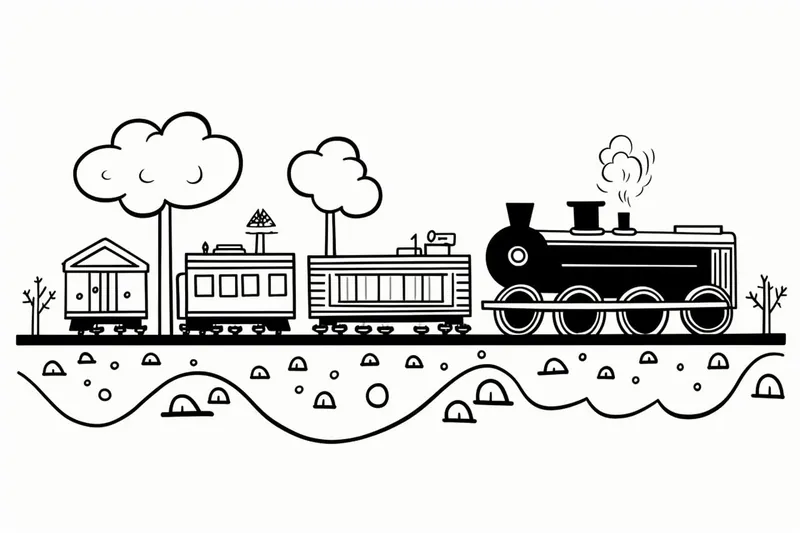
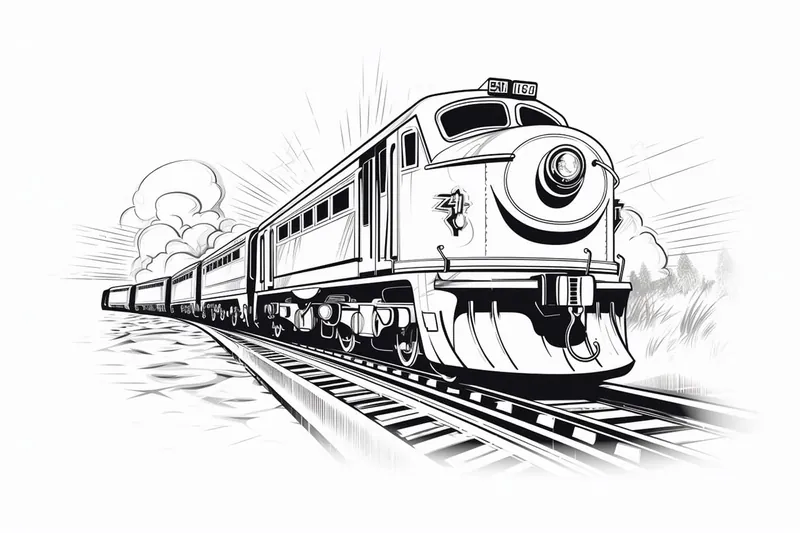
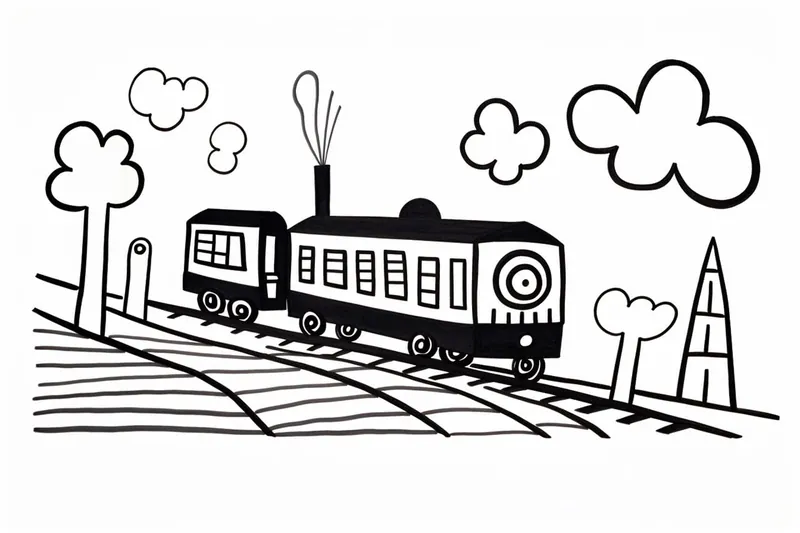
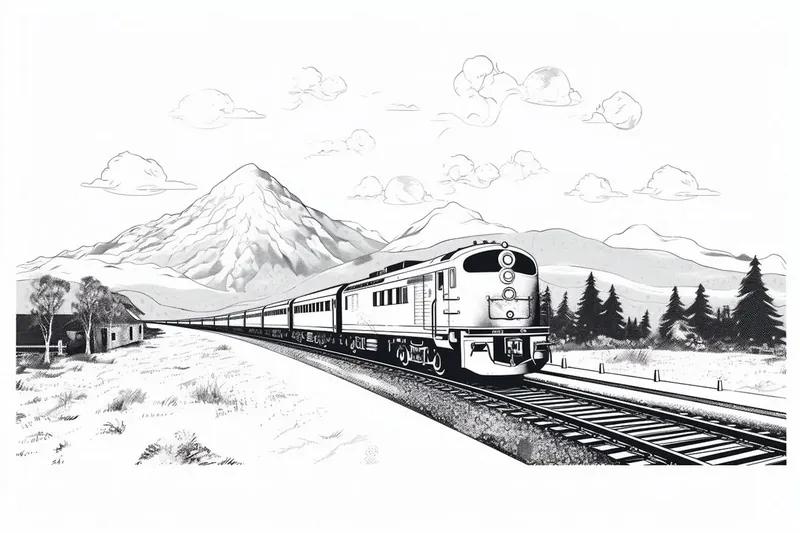
Gallery of Train on Tracks Drawings
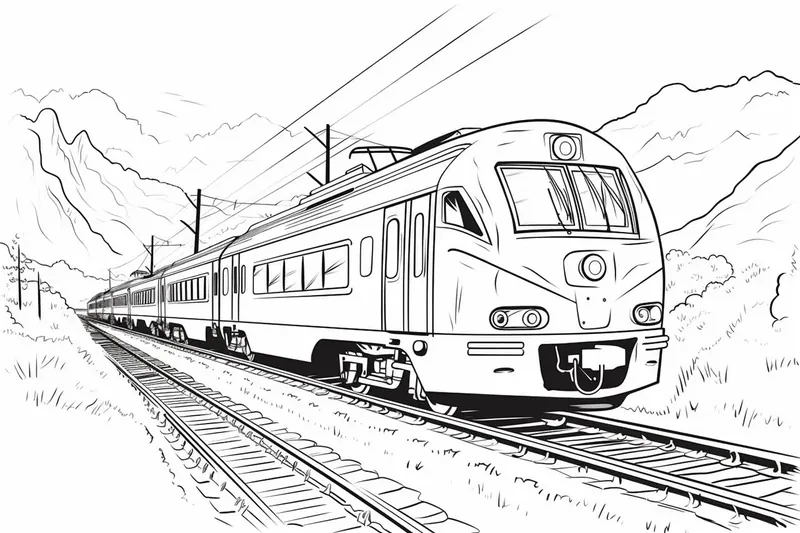
Fun Facts About Train on Tracks
- The first full-scale working railway steam locomotive was built in 1804 by Richard Trevithick, revolutionizing train travel on tracks worldwide.
- Modern high-speed trains, like Japan's Shinkansen, can travel at speeds over 200 mph, making them some of the fastest vehicles on tracks.
- Railway tracks are carefully engineered with a slight tilt, called "cant," to help trains safely navigate curves.
- The longest train ever recorded was a BHP iron ore train in Australia, stretching nearly 4.6 miles, according to Guinness World Records.
- Train wheels are slightly conical, not flat, which helps keep trains centered on the tracks.
- Railroad tracks are made from high-quality steel and are often welded together to create seamless rails for smoother rides.
- Some of the earliest train art dates back to the 19th century, capturing the excitement of the new rail age.
- Perspective drawing techniques are essential for accurately depicting trains on tracks, as the rails appear to converge in the distance.
Suggestions for Scenes and Settings for Train on Tracks Drawings
- A vintage steam locomotive chugging through a misty mountain landscape at sunrise.
- A sleek high-speed train racing along modern tracks with a city skyline in the background.
- A countryside scene with an old-fashioned passenger train passing fields of wildflowers and grazing animals.
- A dramatic night scene with a train illuminated by headlamps, crossing a tall bridge over a rushing river.
- A festive holiday train decorated with lights and wreaths, traveling through a snowy forest.
- An abandoned, rusted train sitting on overgrown tracks with nature slowly reclaiming the area.
- A bustling train station, showing multiple trains on parallel tracks with passengers waiting on the platform.
- A whimsical fantasy train traveling on tracks suspended in the clouds or winding through a magical forest.
- A dramatic perspective shot of train tracks disappearing into the distance as a train approaches from afar.
- A steam engine emerging from a dark tunnel, with smoke billowing and dramatic lighting.