How to Draw a Tow Truck
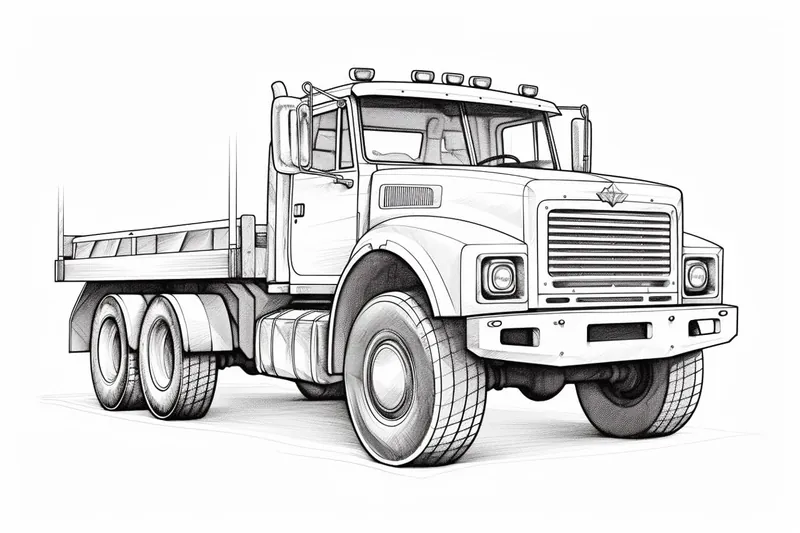
Learn how to draw a tow truck step-by-step with this easy-to-follow tutorial. Perfect for beginners and aspiring artists. Get ready to unleash your creativity!
Materials You'll Need
- Pencil
- Paper
- Eraser
Tow trucks are powerful and essential vehicles designed to transport disabled or improperly parked cars, making them a common sight on city streets and highways alike. Their distinctive features—like the sturdy boom, winch, and rugged build—make them fascinating subjects for artists who enjoy drawing vehicles or industrial machinery. Learning how to draw a tow truck gives you the opportunity to practice depicting complex shapes, mechanical details, and the interplay between form and function, all of which can enrich your understanding of perspective and technical illustration.
Whether you are a beginner eager to expand your repertoire or a more experienced artist who wants to refine their skills with intricate subjects, this step-by-step guide on how to draw a tow truck is perfect for you. You'll be guided through breaking down the tow truck into simple geometric shapes, adding the key components, and building up details to create a dynamic and realistic final drawing. Drawing vehicles like tow trucks not only helps improve your observation and proportion skills, but also boosts your confidence in tackling more challenging artistic projects in the future.
Don't worry if you're new to drawing or if this is your first time working with such a complex subject—this tutorial is designed to be approachable and easy to follow. By the end, you'll have gained valuable experience and created a tow truck illustration you can be proud of. So, grab your favorite drawing materials and get ready to unleash your creativity as we learn how to draw a tow truck together!
Materials Required
Before we dive into the step-by-step instructions, make sure you have the following materials handy:
- Pencil: Use a regular graphite pencil for sketching the initial outline and details of the tow truck.
- Eraser: Keep an eraser nearby to correct any mistakes or to make changes to your drawing.
- Paper: Use a clean, white sheet of paper that is suitable for drawing. You can also use a sketchbook if you prefer.
- Markers or colored pencils (optional): If you want to add color to your tow truck drawing, have markers or colored pencils ready.
Now that you have all the necessary materials, let's begin creating your masterpiece!
Step 1: Sketch the Basic Shape
Start by lightly sketching the basic shape of the tow truck using your pencil. Begin with a rectangular shape for the main body of the truck. Then, add a smaller rectangular shape on top to represent the driver's cabin. Don't worry about any details at this point; just focus on getting the proportions and overall shape right.
Step 2: Add Wheels and Details
Next, draw four small circles underneath the main body of the truck to represent the wheels. Then, add a larger circle behind the wheels as the front bumper. Sketch two rectangles on either side, towards the back of the truck, to represent the towing apparatus. Continue adding small details, such as headlights and side mirrors, to make your tow truck more realistic.
Step 3: Refine the Outline
Now that you have the basic structure in place, start refining the outline of your tow truck. Use your pencil to darken the lines and make them more prominent. Pay attention to the shape of the cabin, the curves of the bumper, and the angles of the towing apparatus. Take your time and make sure everything is proportionate and aligned correctly.
Step 4: Add Details and Features
In this step, we will add more intricate details and features to our tow truck drawing. Begin by drawing the door handles, windshield wipers, and any logos or insignias on the body of the truck. Add a ladder or steps at the back of the truck, and draw the towing hook or mechanism with precision. Remember to keep referring to reference images or real-life tow trucks to ensure accuracy.
Step 5: Finalize the Outline
Now that you have added all the necessary details, go ahead and finalize the outline of the tow truck. Use your pencil to carefully go over the lines, making them bold and confident. Pay close attention to the curves, angles, and proportions of the various components of the truck. Don't rush this step, as getting the outline right will greatly enhance the overall appearance of your drawing.
Step 6: Add Shading and Texture
To make your tow truck drawing more visually appealing and realistic, it is important to add shading and texture. Use your pencil to lightly shade the different areas of the truck, creating depth and volume. Pay attention to areas that would naturally be in shadow, such as the underside of the vehicle or the spaces between the various parts. Gradually build up the shading, making it darker in areas that require more contrast.
Step 7: Optional - Add Color
If you want to take your tow truck drawing to the next level, you can add color using markers or colored pencils. Start by selecting appropriate colors for different parts of the truck, such as the body, the wheels, and the details. Apply the colors carefully and gradually, blending them where necessary to achieve a smooth and cohesive look. Take your time with this step, as coloring can greatly enhance the visual impact of your drawing.
Step 8: Final Touches
Lastly, step back and take a look at your masterpiece. Are there any areas that need further refinement or adjustments? Use your eraser to clean up any stray lines or smudges. Add any final touches or details that you may have missed. And voila! You have successfully drawn a tow truck.
Tip: To effectively capture the unique structure of a tow truck, start by breaking it down into basic geometric shapes, such as rectangles for the cabin and chassis, and triangles for the roof. Use a ruler for precision, especially when drawing straight edges and the boom, which should be an elongated rectangle tapering towards the end. Pay close attention to the proportions—tow trucks can seem bulky, so emphasize the width and depth by lightly shading or adding texture to the body. As you move to the details, like the wheels and the winch, consider using reference images to observe how light interacts with the surfaces, allowing you to create a sense of depth. Finally, don't rush through the line work; take your time to refine the outlines and ensure they reflect the truck's robust nature.
Conclusion
Drawing a tow truck may seem challenging at first, but with this step-by-step tutorial, you have learned the techniques and skills needed to create a realistic and detailed illustration. Remember to practice regularly and don't be afraid to make mistakes. Drawing is all about experimentation and finding your own unique style. So, keep honing your skills, and soon you'll be able to draw any vehicle with ease.
We hope you enjoyed this tutorial on how to draw a tow truck. Happy drawing!
Fun Facts About Tow Truck
- The first tow truck was invented in 1916 by Ernest Holmes Sr. in Chattanooga, Tennessee, after he was inspired by a car accident recovery.
- There are several types of tow trucks, including flatbed, hook and chain, wheel-lift, and integrated, each designed for specific towing needs.
- Tow trucks are essential for clearing accident scenes and keeping roads safe.
- Some heavy-duty tow trucks can haul vehicles weighing over 50 tons.
- The "Move Over" law in many states requires drivers to change lanes or slow down when approaching a tow truck with flashing lights.
- Tow trucks are often equipped with advanced technology like GPS and onboard cameras for efficient dispatching.
- Flatbed tow trucks are preferred for transporting luxury or all-wheel-drive vehicles to prevent damage.
- The world's largest tow truck, the Rotator, can rotate its boom 360 degrees.
- Tow truck operators face one of the most dangerous jobs in the U.S., with a high rate of roadside accidents.
Suggestions for Scenes and Settings for Tow Truck Drawings
- A tow truck rescuing a stranded car on a busy city street at night, with glowing streetlights and reflective safety gear.
- An old, rusty tow truck parked in a rural junkyard, surrounded by overgrown grass and abandoned vehicles.
- A bright and colorful cartoon tow truck helping a small car in a cheerful suburban neighborhood.
- A powerful tow truck pulling a large delivery truck out of a snowy ditch on a wintry mountain road.
- A futuristic tow truck with advanced machinery lifting a hover car in a sci-fi metropolis.
- A tow truck in action at a race track, quickly removing a crashed race car during a high-speed event.
- An emergency scene where a fire engine and tow truck work together to clear an accident on the highway.
- A tow truck decorated for a parade, covered in colorful banners and balloons, driving through a festive crowd.
- An overhead view of a tow truck maneuvering around tight corners in a crowded parking garage.
- A tow truck driver assisting a family with a flat tire on a remote desert road under a dramatic sunset sky.