How to Draw a Tarsier
Learn how to draw a tarsier with this step-by-step tutorial. Capture the essence of this unique primate through detailed instructions and practice your drawing skills.
Materials You'll Need
- Pencil
- Paper
- Eraser
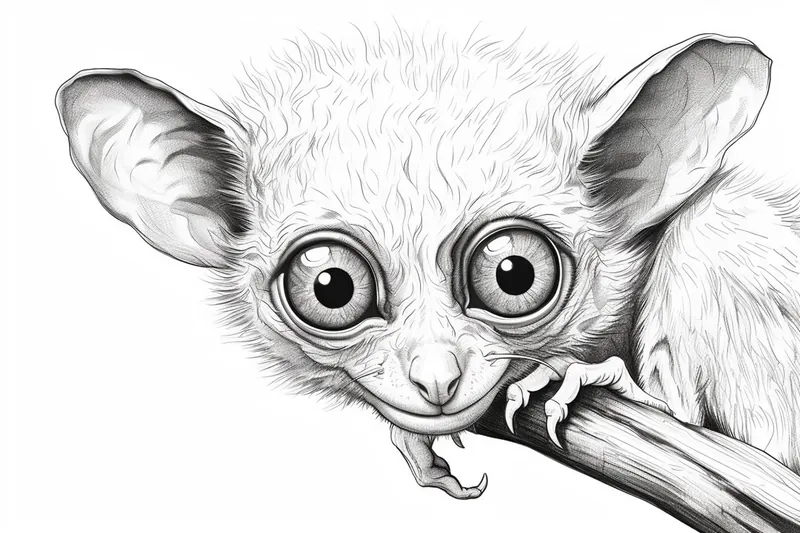
Tarsiers are among the most enchanting and mysterious primates in the animal kingdom, known for their enormous, expressive eyes and tiny, nimble bodies. Native to Southeast Asia, these nocturnal creatures captivate wildlife enthusiasts and artists alike with their unique appearance and endearing mannerisms. Their round heads, elongated fingers, and ability to leap great distances make tarsiers a fascinating subject to study and draw. Learning how to draw a tarsier not only allows you to appreciate their delicate features but also helps you practice observing and recreating the intricate details found in nature.
Whether you're an aspiring artist looking to broaden your portfolio of animal drawings or simply a fan of unique wildlife, drawing a tarsier can be both a fun and rewarding challenge. This step-by-step tutorial is designed for artists of all skill levels, from beginners eager to learn the fundamentals of animal anatomy and texture, to more experienced illustrators who want to refine their shading and detailing techniques. Along the way, you'll develop your skills in capturing proportion, expression, and the fine structure of fur and eyes—essential techniques for realistic animal drawing.
Don't worry if this is your first time drawing a primate or tackling such a distinctive subject. With a bit of patience and careful observation, you'll soon discover how enjoyable it is to bring a tarsier to life on the page. So gather your materials, follow each step closely, and let your creativity shine as you learn how to draw a tarsier. Remember, every artist improves with practice—so relax, have fun, and enjoy the process!
Materials Required
Before we begin, make sure you have the following materials ready:
- A drawing pencil (preferably 2B or 4B)
- An eraser
- A sharpener
- Drawing paper or a sketchbook
- Reference image of a tarsier (you can find one online or use a wildlife photography book)
Now that you have your materials ready, let's dive into the steps to draw a tarsier.
Step 1: Outline the Basic Shapes
Start by lightly sketching the basic shapes that make up the tarsier's body. Begin with a large circle for the head and two smaller circles for the eyes. Add a curved line below the head for the body, and sketch four lines extending from it for the limbs. Don't worry about details at this stage; focus on capturing the proportions and overall form of the tarsier.
Step 2: Refine the Facial Features
Next, let's start refining the facial features of the tarsier. Using the reference image as a guide, carefully sketch the shape of the eyes, paying attention to the placement and size. Add a small circle within each eye for the pupils. Then, draw a rounded shape below the eyes to create the snout. Connect the snout with a curved line to form the mouth, and indicate the nostrils with two small dots.
Step 3: Add Ears and Fur
Tarsiers are known for their large ears, so let's add them to our drawing. Sketch two triangular shapes on top of the head, pointing slightly upward. Pay attention to the placement and size of the ears in relation to the head and facial features. Once the ears are in place, lightly indicate the fur texture by adding short, soft strokes around the head and body.
Step 4: Outline the Limbs and Hands
Tip: As you draw your tarsier, take frequent breaks to step back and evaluate your work from a distance; this will help you spot any proportion issues or areas that need refinement. Additionally, consider using a mirror to reflect your drawing, as this can provide a fresh perspective and highlight details you may have overlooked, ultimately enhancing the realism and character of your artwork.
Now it's time to define the limbs and hands of the tarsier. Use the initial lines as a guide and refine them by adding more detail. Pay attention to the proportions and shape of each limb, making sure they are in proportion to the body. Tarsiers have long fingers, so show this by drawing the fingers slightly longer than the palm. Indicate the joints by using small ovals or circles.
Step 5: Refine the Body and Tail
With the limbs and hands complete, let's focus on refining the body and tail. Use curved lines to define the shape of the body, making sure to capture the tarsier's slim and agile build. Add details such as muscle definition or fur texture to make the drawing more realistic. Extend a long, thin tail from the back of the body, tapering it to a point at the end. Pay attention to the positioning and curvature of the tail, as it contributes to the tarsier's balance and agility.
Step 6: Add Facial Details
Now that we have the basic structure in place, it's time to add the finer details to bring our tarsier to life. Using more precise lines, sketch the shape of the eyes, paying attention to the placement, size, and curvature of the eyelids. Add a highlight to each eye to give it a sparkling look. Define the shape of the ears, adding some internal details such as folds or tufts of fur. Use short, diagonal strokes to indicate the fur texture around the face.
Step 7: Finalize the Details
In this final step, take the time to refine all the smaller details of your tarsier drawing. Add more fur texture throughout the body, using short strokes to create a soft and realistic appearance. Pay attention to the folds and wrinkles of the skin, especially around joints and the face. Use your eraser to clean up any stray lines or smudges, ensuring that your drawing looks polished and precise.
And there you have it! You've successfully completed a drawing of a tarsier. Remember, practice makes perfect, so don't be discouraged if your first attempt isn't exactly as you imagined. Keep practicing, experimenting with different techniques, and soon you'll be able to capture the spirit of this amazing creature with ease.
Did You Know?: Tarsiers have the largest eyes relative to body size of any mammal—each eye is about the same size as their entire brain! These enormous eyes help them see exceptionally well at night, making them expert nocturnal hunters. Interestingly, tarsiers can't move their eyes in their sockets, so instead, they can rotate their heads nearly 180 degrees to look around—much like owls. As you draw a tarsier, pay close attention to the size and placement of those captivating eyes; capturing their unique proportions will instantly make your artwork more true to life and full of character.
Conclusion
Drawing a tarsier may seem challenging at first, but with the right approach and a little practice, anyone can create a stunning representation of this fascinating primate. By following the steps outlined in this tutorial, you have learned how to capture the proportions, details, and unique features of a tarsier on paper. So grab your pencils, let your imagination run wild, and enjoy the process of bringing these incredible animals to life through your art!
Fun Facts About Tarsier
- Tarsiers have the largest eyes relative to body size of any mammal, each eye is about the same size as their brain.
- These primates can rotate their heads nearly 180 degrees, similar to an owl.
- Tarsiers are exclusively carnivorous, feeding on insects, birds, and small vertebrates.
- They are native to Southeast Asia, especially the Philippines, Borneo, and Sumatra.
- Tarsiers can leap up to 40 times their own body length in a single bound.
- Unlike most primates, tarsiers do not have a tapetum lucidum (the reflective layer in eyes).
- Tarsiers communicate using ultrasonic calls that are inaudible to humans.
- They have elongated fingers and toes with pads that help them grip branches tightly.
Suggestions for Scenes and Settings for Tarsier Drawings
- A tarsier perched on a slender bamboo stalk, illuminated by moonlight in a dense tropical rainforest.
- A close-up portrait of a tarsier clinging to a mossy tree branch, its enormous eyes reflecting the surrounding jungle.
- A mother tarsier with her baby nestled on her back, surrounded by lush ferns and orchid flowers.
- A tarsier leaping gracefully between tree branches, mid-air, with a blurred background to suggest rapid movement.
- A group of tarsiers interacting at dusk, silhouetted against the vibrant colors of a Southeast Asian sunset.
- A tarsier hunting insects at night, with glowing fireflies providing magical points of light around it.
- A whimsical scene with a tarsier wearing a tiny explorer's hat, peering curiously at a map in a jungle clearing.
- A young tarsier playing with fallen tropical fruits on the forest floor, surrounded by colorful leaves.
- A detailed study of a tarsier's hand grasping a branch, highlighting its elongated fingers and delicate anatomy.
- A tarsier resting in the hollow of a tree, peeking out cautiously at passing animals on the forest path.