How to Draw a Spiral Galaxy
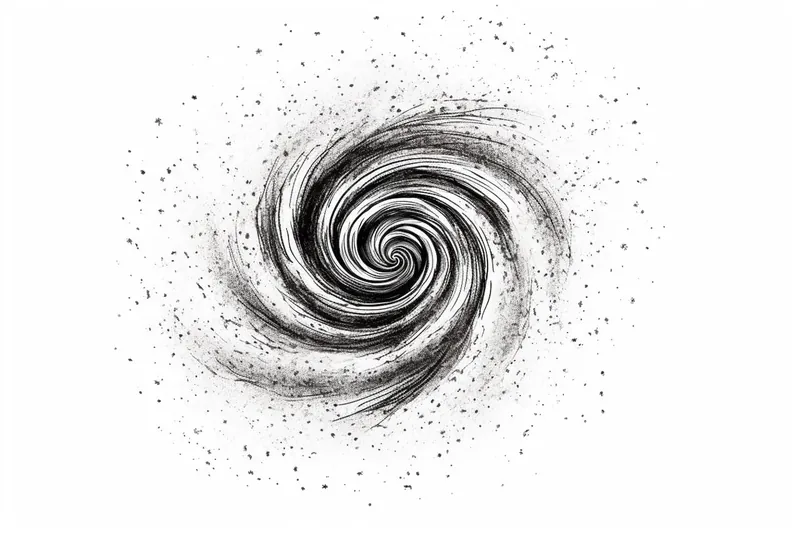
Learn how to draw a spiral galaxy in this step-by-step tutorial. Create your own celestial masterpiece with pencils and blending techniques.
Materials You'll Need
- Pencil
- Paper
- Eraser
Have you ever gazed into the vast expanse of the night sky and been captivated by the swirling beauty of a spiral galaxy? These magnificent cosmic structures, composed of billions of stars, interstellar dust, and glowing gas clouds, are among the universe's most stunning phenomena. Drawing a spiral galaxy allows artists to explore the intricate patterns of nature on a grand scale, blending scientific wonder with creative expression. Whether you're fascinated by astronomy or simply love the challenge of capturing complex forms, learning how to draw a spiral galaxy can be a deeply rewarding artistic endeavor.In this tutorial, we'll break down the process into manageable steps that suit artists of various skill levels, from beginners eager to explore space art to more experienced illustrators looking to refine their techniques. You'll learn how to depict the graceful, swirling arms and the dense core of a spiral galaxy using shading, blending, and texturing methods. These techniques will help you convey depth and movement, bringing your drawing to life. The skills you develop here can also be applied to other celestial or natural subjects, broadening your artistic repertoire.So, if you're ready to embark on a creative journey through the cosmos, this guide on how to draw a spiral galaxy is the perfect place to start. With patience, practice, and a bit of imagination, you'll be able to create your own breathtaking representation of these galactic wonders. Grab your pencils and let's begin crafting a masterpiece that captures the awe-inspiring beauty of the universe!
Materials Required
Before we begin, let's gather all the materials you will need for this drawing:
- Drawing paper
- Pencil set (HB, 2B, 4B, 6B)
- Eraser
- Blending stump or cotton swabs
- Colored pencils or pastels (optional)
Now that we have everything we need, let's dive into the step-by-step process of drawing a spiral galaxy.
Step 1: Sketch the Center
Start by drawing a small circle near the center of your paper. This will serve as the core of your spiral galaxy. Keep the lines light and loose, as we will be refining the details in the later steps.
Step 2: Create the Spiral Arms
From the center circle, start drawing curved lines that radiate outward. These lines will represent the spiral arms of the galaxy. Make the lines gradually wider as they extend further away from the center. Remember, spiral galaxies have multiple arms, so feel free to add as many as you like. Experiment with different shapes and lengths to make your galaxy unique.
Step 3: Add Details to the Arms
Now it's time to add some intricate details to the spiral arms. Start by drawing smaller curved lines within the arms to give them a more textured look. These lines can overlap and intersect with each other to create depth and complexity. Don't worry about making them perfect – imperfections add character to your galaxy.
Step 4: Add Stars and Nebulae
Next, let's bring your galaxy to life by adding stars and nebulae. Use your pencil to dot the areas between the spiral arms with small, scattered marks. Vary the sizes and densities of the dots to create a realistic distribution of stars. For the nebulae, draw cloud-like shapes around the arms using curving lines. These nebulae will add a touch of color and mystery to your galaxy.
Step 5: Blend and Shade
To add depth and dimension to your drawing, use a blending stump or a cotton swab to gently blend the shading in the spiral arms. This will create a smooth transition from light to dark. Pay attention to the areas where the arms overlap or intersect – these areas should appear darker and more defined.
Step 6: Darken the Core
Now, let's give more emphasis to the center of the galaxy. Using a softer pencil (4B or 6B), shade the core area to make it darker than the rest of the galaxy. This will create a focal point and make the arms appear to radiate from the center. Use light, circular motions to blend the shading and create a smooth transition.
Step 7: Optional Coloring
If you want to add a pop of color to your drawing, grab your colored pencils or pastels. Choose vibrant shades of blue, purple, and pink to represent the gas and dust in the galaxy. Apply the colors lightly, allowing the pencil strokes to blend naturally. Focus on the nebulae and areas where the arms overlap to add more dimension and visual interest.
Conclusion
Congratulations! You have successfully learned how to draw a spiral galaxy. By following these step-by-step instructions, you've captured the beauty and majesty of the cosmos on paper. Remember, each galaxy is unique, so don't be afraid to experiment and let your creativity shine. Keep practicing, and soon you'll be able to create your own stunning galaxies. Happy drawing!
Fun Facts About Spiral Galaxies
- Spiral galaxies, like the Milky Way, contain billions of stars arranged in a flat, rotating disk with spiral arms.
- The spiral arms are sites of active star formation, glowing brightly due to young, hot stars.
- [[[[[[[[[[Spiral galaxies are classified into types (Sa, Sb, Sc) based on the tightness of their arms and the size of their central bulge.](https://mcdonaldobservatory.org/sites/default/files/pdfs/teachers/HubbleClassificationSheet.pdf)](https://mcdonaldobservatory.org/sites/default/files/pdfs/teachers/HubbleClassificationSheet.pdf)](https://mcdonaldobservatory.org/sites/default/files/pdfs/teachers/HubbleClassificationSheet.pdf)](https://mcdonaldobservatory.org/sites/default/files/pdfs/teachers/HubbleClassificationSheet.pdf)](https://mcdonaldobservatory.org/sites/default/files/pdfs/teachers/HubbleClassificationSheet.pdf)](https://mcdonaldobservatory.org/sites/default/files/pdfs/teachers/HubbleClassificationSheet.pdf)](https://mcdonaldobservatory.org/sites/default/files/pdfs/teachers/HubbleClassificationSheet.pdf)](https://mcdonaldobservatory.org/sites/default/files/pdfs/teachers/HubbleClassificationSheet.pdf)](https://mcdonaldobservatory.org/sites/default/files/pdfs/teachers/HubbleClassificationSheet.pdf)McDonald Observatory](https://mcdonaldobservatory.org/sites/default/files/pdfs/teachers/HubbleClassificationSheet.pdf)
- The central bulge of a spiral galaxy often contains older stars and a supermassive black hole.
- Our own Milky Way is a barred spiral galaxy, meaning it has a central bar-shaped structure of stars.
- Spiral galaxies can collide and merge with other galaxies, sometimes transforming into elliptical galaxies.
- The swirling pattern of spiral arms is maintained by density waves that move through the galaxy, compressing gas and triggering star formation.
- Spiral galaxies are among the most common types of galaxies observed in the universe. ESO
Suggestions for Scenes and Settings for Spiral Galaxy Drawings
- A spiral galaxy viewed from a distant spaceship window, with futuristic control panels framing the scene.
- A close-up of a spiral galaxy's core, showcasing glowing stars and swirling dust clouds in vibrant colors.
- The spiral galaxy reflected on the surface of an alien ocean under a starry sky.
- A spiral galaxy merging with another galaxy, illustrating dynamic cosmic interactions and star formation.
- A fantasy landscape where a spiral galaxy is visible in the sky during a magical night, with mythical creatures observing it.
- An astronaut floating in space, sketching a spiral galaxy on a digital tablet with the real galaxy glowing behind them.
- A spiral galaxy integrated into the branches of a giant cosmic tree, blending nature and space themes.
- An ancient observatory on a mountaintop, with a telescope pointed toward a brilliantly detailed spiral galaxy.
- A time-lapse style drawing showing the evolution of a spiral galaxy from formation to maturity, with multiple stages depicted.
- A spiral galaxy seen through a cosmic portal or wormhole, hinting at interdimensional travel or alternate universes.