How to Draw a Spinosaurus
Learn how to draw a Spinosaurus with this step-by-step guide. Capture the beauty and details of this dinosaur with the help of an expert artist.
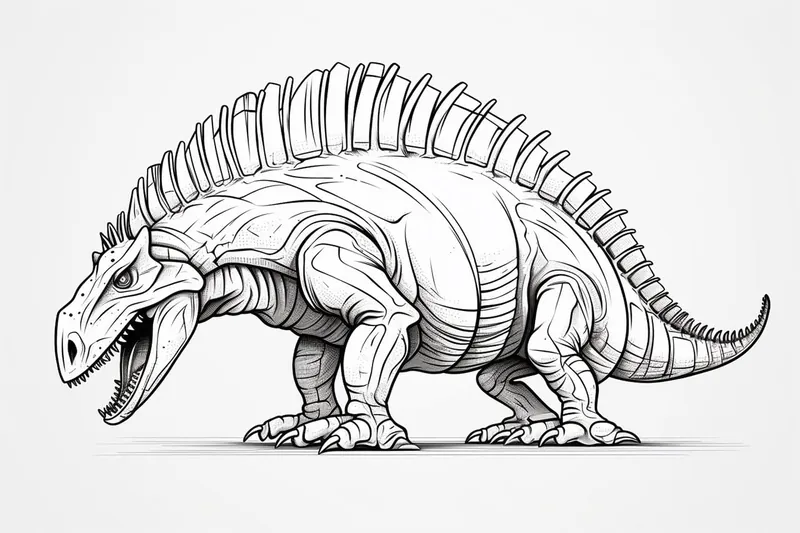
Materials You'll Need
- Pencil
- Paper
- Eraser
The Spinosaurus is one of the most fascinating and distinctive dinosaurs to have ever roamed the Earth. Known for its enormous size, crocodile-like snout, and the impressive sail on its back, this prehistoric predator has captured the imagination of paleontologists and dinosaur enthusiasts alike. Drawing a Spinosaurus not only allows you to explore the unique features that set this dinosaur apart from its relatives, but it also gives you a chance to bring a creature from millions of years ago back to life through your own creativity and interpretation.
Learning how to draw a Spinosaurus is a rewarding challenge for artists of all skill levels. You might want to draw a Spinosaurus to enhance your dinosaur art collection, create an educational project, or simply practice your observation and shading techniques with a subject that offers dramatic shapes and textures. This tutorial will guide you step-by-step, breaking down the Spinosaurus into basic shapes before adding realistic details like its elongated jaw, powerful limbs, and signature sail. Whether you're just starting out or looking to refine your drawing skills, you'll find helpful tips for capturing the dynamic pose and fierce expression of this ancient predator.
Don't worry if you're new to dinosaur drawing—this guide is designed to be approachable and easy to follow, yet still offers room for creative expression and advanced techniques for those seeking a challenge. Grab your favorite drawing materials, get comfortable, and let's embark on this artistic journey together. By the end, you'll not only have learned how to draw a Spinosaurus, but you'll also gain the confidence to tackle other complex creatures. Let your imagination roam and enjoy the process of bringing one of history's most extraordinary dinosaurs to life on your page!
Materials Required:
Before we begin, make sure you have the following materials ready:
- Pencil
- Eraser
- Drawing paper
- Fine-tip markers or pens (optional)
- Colored pencils or markers (optional)
Having these materials on hand will ensure that you have everything you need to complete the drawing.
Step 1: Basic Proportions
To start, lightly sketch the basic proportions of the Spinosaurus. Begin with a circle for the head and then add a long oval shape for the body. Connect the head and body with a slightly curving neck line. Remember, at this stage, you're only drawing basic shapes, so keep the lines light and simple.
Step 2: Outline the Body
Using the basic shapes as a guide, start outlining the body of the Spinosaurus. Pay attention to the curves and angles of its long neck, back, and tail. Remember, the Spinosaurus had a sail-like structure on its back, so make sure to include that in your drawing. Keep your lines fluid and confident.
Step 3: Add Details
Now that you have the basic outline, it's time to add some details to bring the Spinosaurus to life. Start by sketching the head and adding the characteristic long and narrow snout. Then, add the eyes, nostrils, and mouth. Don't forget to include the sharp teeth!
Next, focus on the details of the sail on its back. The sail had many bony spines, so make sure to add those along the length of the sail. Take your time with this step, as the spines contribute to the unique appearance of the Spinosaurus.
Step 4: Refine the Shape
Once you have added the necessary details, take a step back and assess the overall shape of your drawing. Make any adjustments needed to ensure the proportions are accurate and the shape is well-defined. Erase any unnecessary lines and refine the contours of the Spinosaurus.
Step 5: Add Texture and Shading
To add depth and realism to your drawing, it's time to add texture and shading. Use your pencil to create small, quick strokes that mimic the scales of the dinosaur. Start by shading the body, paying attention to areas where shadows would naturally fall. Gradually build up the shading, using darker tones for the areas that are in shadows.
Step 6: Finalize the Drawing
Tip: As you work through the drawing steps, consider using reference images of Spinosaurus and its environments to enhance your understanding of its proportions and textures. Observing real-life examples or artistic interpretations can inspire your shading techniques and help you capture the dinosaur's unique features more accurately, adding depth and realism to your artwork.
Now that you have added texture and shading, take a moment to evaluate your drawing. Make any final adjustments or additions to enhance the overall appearance of the Spinosaurus. If you prefer, you can also use fine-tip markers or pens to outline and define certain areas of the drawing.
Did You Know?: Recent discoveries suggest that Spinosaurus may have been the first known swimming dinosaur! Unlike most other large theropods, it had paddle-like feet and a long, crocodile-shaped snout filled with conical teeth—ideal for catching slippery fish. Its famous sail may have helped it regulate body temperature or attract mates, but it also made Spinosaurus instantly recognizable, even in the murky waters it called home. When drawing Spinosaurus, think about including hints of its semi-aquatic lifestyle, such as webbed feet or a slightly streamlined body, to make your artwork even more authentic and dynamic.
Challenge: For this drawing challenge, take your Spinosaurus to the next level by illustrating it in a dynamic scene that showcases its unique environment—perhaps a lush prehistoric riverbank or a dramatic volcanic landscape! Consider depicting the Spinosaurus in action, perhaps hunting or interacting with other dinosaurs, to convey movement and emotion. Challenge yourself to include various elements such as water splashes, dense foliage, or even the sky filled with storm clouds, all while focusing on the intricate details of the Spinosaurus itself. Use this opportunity to explore different perspectives, such as a low angle looking up at the dinosaur or a bird's-eye view that highlights its impressive sail. Remember, the goal is to push your creativity and have fun while bringing this magnificent creature to life in a vibrant and engaging setting!
Conclusion
Congratulations on completing your Spinosaurus drawing! By following these step-by-step instructions, you have successfully captured the majestic beauty of this fascinating dinosaur. Remember, practice makes perfect, so don't hesitate to try drawing the Spinosaurus multiple times to improve your skills. Happy drawing!
Fun Facts About Spinosaurus
- Size and Length: Spinosaurus was one of the largest known carnivorous dinosaurs, potentially reaching lengths of up to 50-60 feet (15-18 meters) from snout to tail. This makes it larger than other famous predators like Tyrannosaurus rex and Giganotosaurus.
- Distinctive Sail: One of the most distinctive features of Spinosaurus was the sail-like structure on its back. This sail was formed by elongated neural spines extending from its vertebrae and may have served several purposes, including thermoregulation, display, or possibly even propulsion in water.
- Aquatic Adaptations: Recent evidence suggests that Spinosaurus was well-adapted to a semi-aquatic lifestyle. Its long, narrow skull, conical teeth, and likely webbed feet indicate that it spent a significant amount of time in water, possibly hunting fish and other aquatic prey.
- Dietary Preferences: While Spinosaurus was primarily a carnivore, its diet likely consisted of a variety of prey, including fish, small dinosaurs, and other aquatic animals. Its elongated jaws and conical teeth were well-suited for catching slippery prey like fish.
- Discovery and Fossil Record: The first Spinosaurus fossils were discovered in Egypt in the early 20th century by German paleontologist Ernst Stromer. Unfortunately, many of these original fossils were destroyed during World War II, leading to gaps in our understanding of this dinosaur.
- Bipedal and Quadrupedal: Spinosaurus is believed to have been capable of both bipedal and quadrupedal locomotion. While it likely walked on two legs on land, it may have moved on all fours while in water, using its powerful limbs to propel itself through aquatic environments.
- Convergent Evolution with Crocodiles: Some researchers believe that Spinosaurus may have exhibited convergent evolution with modern crocodiles, developing similar adaptations for life in aquatic habitats. This includes features such as a long, streamlined body, dense bones for buoyancy, and sensory adaptations for underwater hunting.
- Habitat: Spinosaurus inhabited the lush river deltas and wetland environments of what is now North Africa during the Late Cretaceous period, approximately 112 to 93 million years ago.
- Iconic Encounter: In popular culture, Spinosaurus gained widespread recognition after its dramatic encounter with a Tyrannosaurus rex in the movie "Jurassic Park III." While the accuracy of this portrayal has been debated, it has undoubtedly cemented Spinosaurus as one of the most iconic dinosaurs in modern media.
- Ongoing Research: Spinosaurus continues to be a subject of intense study and debate among paleontologists. New discoveries and analyses are shedding light on its biology, behavior, and evolutionary significance, challenging previous assumptions and leading to exciting new insights into this enigmatic dinosaur.
Fun Facts About Spinosaurus
- Spinosaurus is considered the largest known carnivorous dinosaur, even bigger than Tyrannosaurus rex.
- It had a distinctive sail on its back, formed by elongated neural spines.
- Spinosaurus is believed to have been semi-aquatic, spending much of its time in water.
- Its long, crocodile-like snout and conical teeth were perfect for catching fish.
- The first Spinosaurus fossils were discovered in Egypt in 1912 by Ernst Stromer.
- Many original Spinosaurus fossils were destroyed during World War II, which has made its reconstruction challenging.
- Recent studies suggest Spinosaurus may have walked on all fours when on land.
- Spinosaurus lived in what is now North Africa during the Cretaceous period.
- It is one of the few dinosaurs known to have adaptations for swimming, such as dense bones for buoyancy.
Suggestions for Scenes and Settings for Spinosaurus Drawings
- Depict a Spinosaurus wading through a lush, prehistoric river, catching a giant fish with its crocodile-like snout.
- Draw a dramatic showdown between a Spinosaurus and a rival predator, such as a Carcharodontosaurus, in a dense Cretaceous jungle.
- Illustrate a Spinosaurus basking on a sunlit riverbank, displaying its impressive sail to attract a mate or intimidate rivals.
- Show a Spinosaurus swimming underwater, using its strong limbs and sail for propulsion as it chases after a school of fish.
- Imagine a family group of Spinosauruses moving through a floodplain, with juveniles learning to hunt in shallow pools.
- Create a scene where a Spinosaurus is scavenging the remains of a carcass, surrounded by smaller prehistoric creatures hoping for leftovers.
- Draw a Spinosaurus during a torrential rainstorm, its sail silhouetted against flashes of lightning and dark, dramatic clouds.
- Illustrate a peaceful moment as a Spinosaurus rests in the shade of ancient ferns and cycads, surrounded by dragonflies and early birds.
- Capture a tense moment as a Spinosaurus cautiously approaches a watering hole, wary of hidden dangers like crocodile-like Sarcosuchus.
- Imagine a Spinosaurus in a vibrant, stylized environment, emphasizing the unique textures and colors of its sail, scales, and habitat.