How to Draw a Soccer Cleat
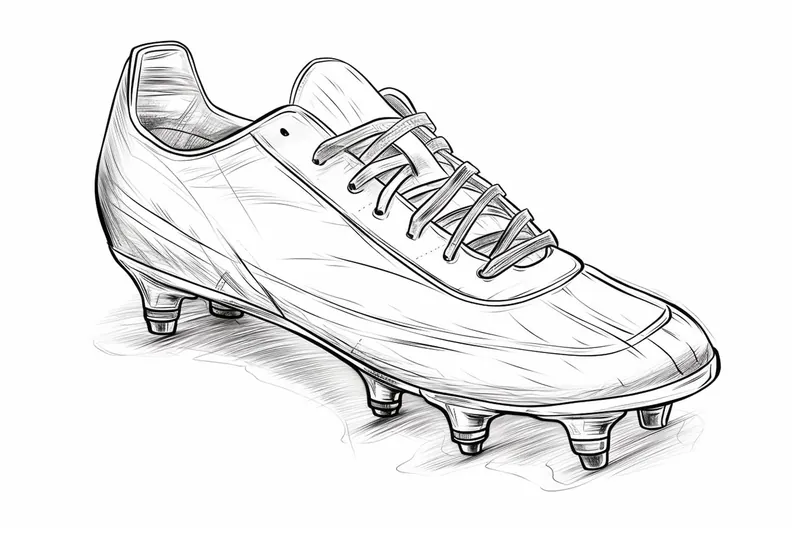
Learn how to draw a realistic soccer cleat with this step-by-step drawing tutorial. Improve your art skills and create detailed drawings of sports equipment.
Materials You'll Need
- Pencil
- Paper
- Eraser
Soccer cleats are an essential piece of equipment for any soccer player, designed specifically to provide grip, comfort, and support on the field. Their unique structure—with textured uppers, laces, and distinctive studs on the sole—makes them both functional and visually interesting. Drawing a soccer cleat not only allows you to appreciate its design and engineering, but also provides a great opportunity to practice your observation skills and attention to detail. Whether you're a sports enthusiast, an aspiring designer, or simply love sketching footwear, learning how to draw a soccer cleat can be both fun and rewarding.
In this tutorial, you'll find clear, step-by-step instructions that break down the process of drawing a realistic soccer cleat from basic shapes to refined details. This guide is suitable for artists of all skill levels, from beginners who are just starting to learn proportion and perspective, to more experienced creators looking to master the subtleties of materials and shading. You'll explore techniques such as outlining, texturing, and adding highlights to bring your drawing to life. By following along and practicing how to draw a soccer cleat, you'll not only expand your artistic abilities but also gain confidence in depicting everyday objects with accuracy and style.
So, gather your materials, get comfortable, and let your creativity take the lead! Remember, every artist improves with practice, and each attempt brings you closer to mastering new techniques. Let's dive in together and create a dynamic, realistic soccer cleat drawing that you can be proud of.
Materials Required
To complete this drawing, you will need the following materials:
- Pencil: Use a medium or hard graphite pencil (HB, 2H, or 4H) for the initial sketching and shading.
- Eraser: Have a kneaded eraser or a vinyl eraser on hand for correcting mistakes and creating highlights.
- Paper: Use good quality drawing paper that can handle graphite pencils.
- Ruler: Have a ruler or a straight edge to help with drawing straight lines and measuring proportions.
- Reference Image: Find a clear image or photograph of a soccer cleat to use as a reference for your drawing.
Now that we have gathered our materials, let's move on to the step-by-step instructions.
Step 1: Sketch the Basic Shape
Start by lightly sketching the basic shape of the soccer cleat using your pencil. Pay attention to the overall proportions and shape of the cleat. Focus on getting the outline right before adding any details. Use light, loose strokes at this stage to allow for easy adjustments later on.
Step 2: Add the Laces and Eyelets
Next, draw the laces and eyelets on the cleat. Start by lightly sketching the vertical lines that represent the eyelets. Then, draw the horizontal lines for the laces, crisscrossing them over the eyelets. Take your time to ensure the laces are evenly spaced and accurately represented.
Step 3: Draw the Sole and Studs
Now, let's work on the sole and studs of the soccer cleat. Draw the outline of the sole, making it slightly thicker than the upper part of the cleat. Add the studs by drawing small round shapes at the bottom of the sole. These studs provide traction and stability.
Step 4: Refine the Shape and Add Details
Refine the shape of the soccer cleat by adding more details. Pay attention to any curves, ridges, or indentations on the cleat's surface. Use light, curved lines to indicate these shapes, making sure to capture the overall form. Add any branding or logos present on the cleat as well.
Step 5: Shade and Add Texture
Now it's time to add shading and texture to give the drawing depth and realism. Observe the reference image for areas of highlights and shadows. Use your pencil to gradually build up the values, starting with light shading and gradually darkening areas where needed. Pay attention to the texture of the material and how it reflects light.
Step 6: Finalize the Drawing
Put the finishing touches on your drawing by adding any necessary details and refining the shading. Take a step back and evaluate the overall composition to ensure everything looks balanced and accurate. Make any necessary adjustments to the proportions or shading before moving on to the final step.
Step 7: Erase Guidelines and Refine
Carefully erase any visible guidelines and construction lines. Pay attention to the areas where the eraser may smudge the graphite and use a clean sheet of paper or a tissue to prevent unwanted smudging. Take this opportunity to refine any areas that need extra attention, such as highlights or shadows.
Congratulations! You have successfully drawn a soccer cleat. With practice, you can refine your skills and create even more detailed and realistic drawings of different objects and subjects.
Tip: When drawing a soccer cleat, start by breaking down the shoe into basic geometric shapes: use a rectangle for the body, a triangle for the toe, and circles for the studs. This will help you maintain proper proportions and perspective. Next, pay close attention to the details of the laces and textures—use a fine-tipped pen or pencil to create delicate lines for the laces and cross-hatching to indicate different materials, like leather or mesh. Don't forget to refer to real-life images of soccer cleats for accurate details; this will enhance your understanding of how light interacts with the surfaces. Finally, use a blending tool or your finger to smooth out shading, adding depth and realism to your drawing. Happy sketching!
Conclusion
In this tutorial, we have explored the step-by-step process of drawing a soccer cleat. From sketching the basic shape to adding details and shading, each step contributes to creating a realistic and accurate representation of the cleat. Remember, practice is key to improving your drawing skills, so don't be discouraged if your first attempt isn't perfect. Keep practicing, and you will continue to grow as an artist.
[I hope you found this tutorial helpful. Happy drawing! Now that you know how to draw the shoes, follow our tutorials on drawing a soccer player and how to draw a soccer ball](https://yonderoo.com/how-to-draw-a-soccer-ball/).
Fun Facts About Soccer Cleat
- The first soccer cleats were worn by King Henry VIII in the 16th century.
- Modern soccer cleats are made from lightweight synthetic materials for better performance.
- Studs on soccer cleats provide traction and are regulated by FIFA for safety.
- There are different types of cleats for various playing surfaces, including firm ground, soft ground, and artificial turf.
- The iconic Adidas Predator, introduced in 1994, revolutionized cleat design with rubber elements for better ball control.
- Some professional players customize their cleats for fit and style.
- Cleats with screw-in studs are often used in wet conditions to prevent slipping.
- Children's soccer cleats are designed without metal studs for safety.
Suggestions for Scenes and Settings for Soccer Cleat Drawings
- A close-up of a muddy soccer cleat after a rainy game, with specks of grass and dirt clinging to the studs.
- A pair of soccer cleats hanging by their laces over a locker room bench, with jerseys and sports equipment in the background.
- A dynamic scene showing a soccer cleat in motion, kicking up turf as it strikes a soccer ball during a powerful shot.
- A detailed drawing of a soccer cleat resting on a field line, with the texture of the grass and white paint visible underneath.
- A design-focused prompt: create your own custom soccer cleat with unique patterns, colors, or brand logos.
- A vintage soccer cleat next to a modern one, highlighting differences in materials, shape, and technology.
- A soccer cleat left behind on the field at sunset, casting a long dramatic shadow on the grass.
- A top-down view of a player tying the laces on their soccer cleat, with hands, socks, and shin guards in the frame.
- A close-up of the bottom of the cleat, emphasizing the arrangement and texture of the studs.
- A soccer cleat surrounded by sketchbook doodles and artist tools, blending realism with creative process elements.