How to Draw a Slide
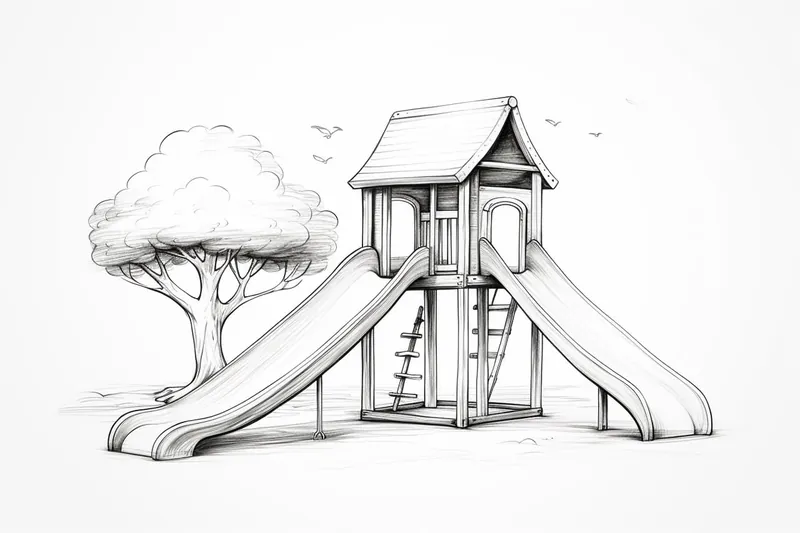
Learn how to draw a slide with this step-by-step drawing tutorial. Create realistic and visually appealing slide drawings using simple instructions.
Materials You'll Need
- Pencil
- Paper
- Eraser
Drawing playground equipment like slides can be a wonderful way to capture the joy and nostalgia associated with childhood play. Slides are iconic structures found in parks and playgrounds, instantly evoking memories of fun, laughter, and outdoor activity. Whether you're an aspiring artist looking to expand your portfolio or simply want to create a charming illustration for a child's room, learning how to draw a slide is a rewarding artistic endeavor that combines basic geometric shapes with perspective techniques.In this tutorial, we'll break down the process of how to draw a slide step-by-step, making it accessible for beginners while still offering challenges that intermediate artists will appreciate. You'll learn how to construct the slide's form using simple lines and shapes, understand how to add depth and dimension through perspective, and apply shading to give your drawing a realistic and visually appealing look. This project is perfect for developing your observation skills and improving your ability to translate three-dimensional objects onto a two-dimensional surface.Drawing a slide is not only fun but also builds confidence in handling structural drawings and enhances your overall drawing skills. As you follow along, remember that practice is key, and every stroke brings you closer to mastery. So, gather your materials and dive into this enjoyable lesson on how to draw a slide — you'll be surprised at how quickly your skills progress and how satisfying it is to see your slide come to life on paper!
Materials Required
Before we begin, gather the following materials:
- A pencil
- A ruler
- Eraser
- Drawing paper
- Coloring materials (optional)
Now that you have the necessary materials, we can move on to the steps of drawing a slide.
Step 1: Sketch the Basic Structure
Start by drawing a trapezoid shape at the center of your paper. This shape will serve as the main structure of the slide. Ensure that the top edge of the trapezoid is slightly curved to represent the slide's surface.
Step 2: Add Depth and Dimensions
Tip: As you work through the drawing steps, don't hesitate to use references, such as photos of actual slides or playgrounds, to guide your proportions and shapes. Observing real-life structures will help you capture realistic details and enhance your understanding of perspective, making your final drawing more dynamic and visually engaging.
To create a more three-dimensional look, draw two vertical lines from the top corners of the trapezoid. These lines will represent the side edges of the slide. Make sure the lines are parallel and evenly spaced.
Next, draw a horizontal line at the base of the trapezoid, connecting the two vertical side edges. This line will serve as the bottom edge of the slide.
Step 3: Sketch the Slide Stairs
Below the trapezoid shape, draw a set of stairs leading up to the top of the slide. Start by drawing a horizontal line that spans the width of the slide. Then, draw evenly spaced vertical lines extending upwards from the horizontal line. These vertical lines will represent the steps of the stairs. Adjust the height and number of steps according to your preference.
Step 4: Add Handrails and Supports
To make the slide look more realistic, sketch a pair of handrails on either side of the slide. Start by drawing two vertical lines extending upward from the top edges of the slide. Then, connect these lines with a curved line at the top, creating a curved handrail shape. Repeat this process on the other side of the slide to complete the handrails.
Next, draw a series of vertical lines connecting the bottom edges of the slide to the ground. These lines will serve as supports for the slide.
Step 5: Refine the Slide Structure
Now that we have the basic structure in place, it's time to refine the slide's shape and add more detail. Use your pencil to carefully go over the lines, making them more defined and smooth. Erase any unnecessary or overlapping lines as you go along.
Step 6: Add Slide Features
To make the slide more visually interesting, let's add some additional features. Draw a shape at the top of the slide to represent the entrance or starting point. This could be a rectangle, circle, or any shape you prefer.
You can also draw small details such as bolts, screws, or patterns on the slide and handrails to enhance its appearance.
Step 7: Finalize Your Drawing
Once you are satisfied with the overall structure and details of your slide, go over the lines with a darker pencil or pen to make them stand out. Erase any remaining sketch lines to clean up your drawing.
Conclusion
Congratulations! You have successfully learned how to draw a slide. By following these step-by-step instructions and using your creativity, you can create a fantastic slide drawing. Remember to have fun and experiment with different colors and textures when coloring your drawing. Enjoy the process and let your artistic skills shine!
Fun Facts About Slides
- The first playground slides were made of wood and appeared in the early 1900s, evolving into safer metal and plastic designs over time.
- Slides help develop children's motor skills and coordination by encouraging climbing and balancing activities.
- The longest slide in the world is located in the Netherlands and measures over 200 meters in length.
- Modern playground slides often use plastic materials to reduce heat absorption and prevent burns during sunny days.
- Slides are designed with specific angles to control speed and ensure a safe, fun experience for children.
- Water slides, a popular variation, originated in the 1940s and have become a staple in water parks worldwide.
- Slides can be found in various cultures and playgrounds globally, symbolizing fun and childhood play universally.
Suggestions for Scenes and Settings for Slide Drawings
- A vibrant playground scene with children laughing and sliding down on a sunny day.
- An autumn park setting with colorful falling leaves around a wooden slide structure.
- A futuristic playground featuring a sleek, metallic slide with glowing accents.
- A backyard slide surrounded by blooming flowers and garden decorations.
- A nighttime scene with a glowing slide under string lights and a starry sky.
- A snowy winter park with children sliding down a slide covered lightly in snow.
- An abstract geometric composition focusing on the shapes and lines of the slide.
- A jungle gym with a slide entwined by vines and tropical plants.
- A seaside playground with a slide shaped like a wave, overlooking the ocean.
- A vintage playground drawing with classic metal slides and old-fashioned swings.