How to Draw a Seal
Learn how to draw a seal with this step-by-step drawing tutorial. Capture the beauty of these adorable creatures with ease and create your own masterpiece.
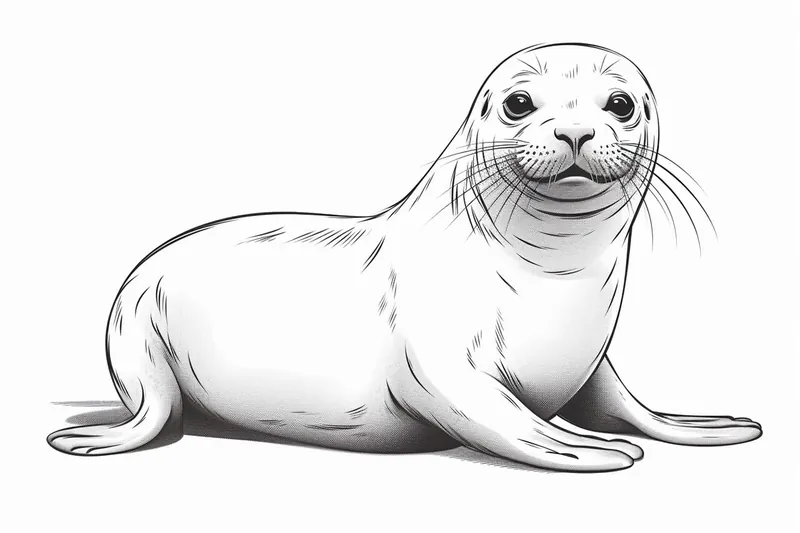
Materials You'll Need
- Pencil
- Paper
- Eraser
Seals are intriguing marine mammals that have captured the hearts of people around the world with their expressive eyes, streamlined bodies, and playful antics on both land and in the water. Belonging to the pinniped family, seals are perfectly adapted to life in chilly ocean environments, gliding gracefully through the waves and basking on rocky shores. Their unique combination of cuteness and elegance makes them a favorite subject for artists and animal lovers alike. Learning how to draw a seal not only allows you to appreciate their form and features, but also helps you improve your observation skills as you pay close attention to their anatomy and movement.
Whether you're an aspiring artist, a student working on a biology project, or someone looking to add a touch of whimsy to your sketchbook, mastering how to draw a seal is a rewarding challenge. Seals offer a great opportunity to practice basic drawing techniques such as outlining simple shapes, shading to create a sense of volume, and capturing textures like smooth fur and glistening eyes. This tutorial is designed for all skill levels—beginners will find the step-by-step approach easy to follow, while more experienced artists can use it to refine their skills or add their own creative flair. Remember, the most important thing is to enjoy the process and let your curiosity guide you. With a bit of patience and practice, you'll soon bring these delightful creatures to life on your own page. Let's get started and see where your creativity takes you!
Materials Required
Before we embark on this drawing adventure, let's make sure we have all the necessary materials handy. Here's what you'll need:
- Drawing paper or sketchbook
- Pencil (preferably HB or 2B)
- Eraser (preferably a kneaded eraser)
- Fine-tip black marker or pen
- Colored pencils or markers (optional)
Now that we have our materials ready, let's move on to the steps of drawing a seal.
Step 1: Sketch the Basic Shapes
Start by lightly sketching the basic shapes that will make up the seal's body. Begin with an oval shape for the head, which will serve as the foundation for the rest of the drawing. Then, draw a larger oval shape underneath for the body, slightly overlapping the head. Remember to keep your pencil strokes light and loose, as these initial shapes will serve as guidelines for the final drawing.
Step 2: Outline the Head and Body
Tip: As you work through the steps of drawing a seal, take frequent breaks to step back and assess your progress from a distance; this will help you spot areas that may need refinement or adjustment in proportions and details. Additionally, don't hesitate to use reference images of seals in various poses to enhance your understanding of their anatomy and movement, which can significantly improve the realism and character of your artwork.
Using the basic shapes as a reference, start outlining the head and body of the seal. Pay attention to the contours and curves of the shapes, as they will define the overall form of the seal. Add a small circle for the eye on one side of the head and a curved line for the mouth. Don't worry about the details just yet; we will refine them in later steps.
Step 3: Add the Flippers and Tail
Next, we'll add the flippers and tail to our seal's body. Draw two curved lines extending from the bottom of the body on each side to represent the flippers. These lines should taper towards the ends. For the tail, draw a curved line extending from the back of the body, slightly bending towards one side. These appendages give the seal its characteristic shape and movement.
Step 4: Define the Facial Features
Now it's time to give our seal some personality by adding the facial features. Refine the shape of the eye by adding a smaller circle inside it to represent the iris. Draw a tiny circle within the iris to indicate the eye's highlight. Next, add a curved line above the eye for the eyebrow ridge. Enhance the mouth by adding a small curved line to represent the smile or snout of the seal.
Step 5: Refine the Body
To make our seal look more realistic, let's refine the shape and texture of its body. Start by adding small lines to indicate the texture of the fur. These can be short, curved strokes that follow the contours of the body. Pay attention to the direction of the fur, which typically flows towards the back of the seal. Refine the outline of the flippers and tail, adding more curves and details to make them look natural.
Step 6: Finalize the Details
Now that the basic structure of our seal is complete, it's time to add the finishing touches. Give the seal a shiny appearance by adding a few highlights to the body and flippers. These should be small, curved lines that follow the natural curves of the seal's form. Add a few lines to define the folds and wrinkles on the neck and body. Remember to keep your lines light and subtle, as we want to maintain the softness of the fur.
Step 7: Ink or Color the Drawing (Optional)
If you're happy with your pencil drawing, you can choose to leave it as it is. However, if you want to take it a step further, you can ink the lines using a fine-tip black marker or pen. This will give your drawing a more defined and polished look. Alternatively, you can add color using colored pencils or markers to bring your seal to life. Use shades of gray, brown, and black to create depth and realism.
Did You Know?: Seals have a remarkable adaptation that helps them thrive in cold ocean waters: beneath their skin lies a thick layer of blubber, which not only insulates them against chilly temperatures but also provides buoyancy and an energy reserve during long swims or fasting periods. Some seal species can even slow their heart rate dramatically when diving, conserving oxygen and allowing them to stay underwater for up to an hour without resurfacing! When drawing a seal, notice how their bodies appear sleek and rounded—this shape is a direct result of their blubber and streamlined anatomy, designed for efficient movement in water. Observing these details while you draw can help you capture the seal's unique blend of cuteness and athleticism, making your artwork both accurate and full of life.
Conclusion
Congratulations! You have successfully learned how to draw a seal. By following these step-by-step instructions and practicing regularly, you can continue to improve your drawing skills and capture the beauty of these marvelous creatures. Remember to have patience with yourself and enjoy the process of creating art. So grab your pencils and let your creativity flow as you bring more seals to life on paper!
Fun Facts About Seal
- Seals are part of the pinniped family, which also includes sea lions and walruses.
- There are over 30 different species of seals found around the world.
- Seals can hold their breath underwater for up to two hours.
- The largest seal species is the southern elephant seal, which can weigh up to 8,800 pounds.
- Seals use their sensitive whiskers to detect vibrations and locate prey in dark or murky waters.
- Some seals, like the harp seal, are born with a fluffy white coat that helps them blend into snowy environments.
- Seals communicate with each other using vocalizations, body language, and even slapping the water.
- Unlike sea lions, true seals lack external ear flaps and move on land by wriggling on their bellies.
- Seals can sleep underwater by shutting down one half of their brain at a time.
Suggestions for Scenes and Settings for Seal Drawings
- A playful seal balancing a colorful beach ball on its nose at the edge of a rocky shore.
- A curious seal pup peeking out from behind a cluster of icy snowdrifts on an Arctic coastline.
- A family of seals basking together on sun-warmed rocks, with sea birds circling above.
- An underwater scene showing a seal gliding gracefully through a kelp forest, sunlight streaming down.
- A seal diving after a silvery school of fish, bubbles trailing behind as it swims.
- [A sleepy seal lounging on a floating piece of ice, surrounded by gentle ocean waves and distant icebergs](https://yonderoo.com/how-to-draw-an-iceberg/).
- A whimsical drawing of a seal wearing a cozy scarf, sliding playfully down a snowy slope.
- A close-up portrait focusing on the seal's expressive eyes and whiskered snout, with textured fur details.
- A seal interacting with humans—perhaps waving at a boat of wildlife watchers or playing alongside children at the water's edge.
- A night scene with a seal gazing up at the northern lights shimmering across the sky.