How to Draw a Salmon
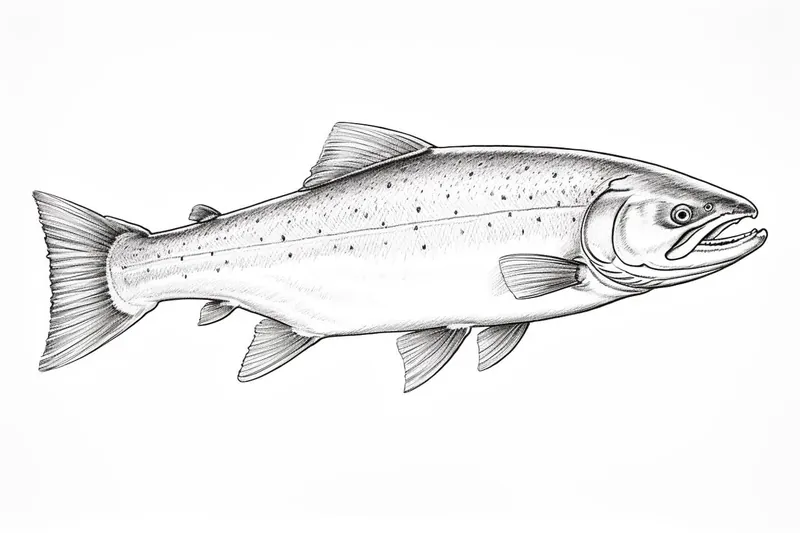
Learn how to draw a salmon with this step-by-step tutorial. Create a realistic and detailed depiction of this magnificent fish using simple techniques.
Materials You'll Need
- Pencil
- Paper
- Eraser
The salmon is an iconic fish, celebrated for both its environmental importance and its striking appearance. Known for their remarkable migratory journeys and shimmering, streamlined bodies, salmon have long been depicted in art and culture. Their unique shape—with a powerful tail, sleek fins, and silvery scales—makes them an interesting and inspiring subject for artists of all levels. Whether you are fascinated by marine life, want to enhance your nature sketchbook, or simply wish to challenge yourself with drawing aquatic animals, learning how to draw a salmon is a wonderful way to expand your artistic skills and knowledge of wildlife anatomy.
Many artists are drawn to the salmon because of its graceful form and the subtle details that make it distinctive, such as the textured scales, the gentle curve of the body, and the characteristic shape of the head and tail. This tutorial on how to draw a salmon will guide you through each step, making the process approachable whether you are a beginner looking to practice basic shapes and shading, or an experienced artist aiming to capture realistic textures and movement. You'll have the opportunity to practice outlining, refining proportions, and adding details that bring your drawing to life.
No matter your skill level, drawing a salmon can be both relaxing and rewarding. By following this step-by-step guide, you'll not only create a beautiful fish illustration, but also improve your observation skills and confidence with new techniques. So gather your materials, open your mind to creativity, and let's embark on this artistic journey together—you might be surprised by what you can achieve!
Materials Required
Before we begin, gather the following materials:
- A pencil
- Drawing paper
- Eraser
- Fine-tipped markers or pens
- Colored pencils or watercolors (optional)
With these materials ready, you are all set to begin your salmon drawing.
Step 1: Basic Shape
Start by lightly sketching an elongated oval shape on your drawing paper. This will serve as the basic outline of the salmon's body. Keep the lines light, as you will be refining the shape later on.
Step 2: Head and Tail
Using the oval as a guide, add the head and tail to your salmon. The head should be slightly pointed on one end, while the tail should be more forked. Make sure to maintain the overall shape and proportion of the fish as you draw these features.
Step 3: Fins and Scales
Next, add the fins and scales to your salmon. Start with the pectoral fins located on each side of the body, followed by the dorsal fin along the back, and the anal fin towards the tail. Remember to reference a picture of a salmon or use your imagination to ensure accuracy.
Step 4: Detailing the Head
Now it's time to add more detail to the salmon's head. Sketch the eye, which should be almond-shaped, and add a small circle for the pupil. Define the mouth by drawing a curved line, and add a few small lines to represent the gills on the side of the head.
Step 5: Body Texture
Tip: While drawing your salmon, make sure to observe real-life references or photographs to capture the unique characteristics of the fish accurately, such as the variations in scale texture and coloration. This attention to detail will enhance your depiction and help you create a more realistic and dynamic illustration that reflects the beauty of this incredible creature.
To give your salmon a realistic look, it's important to add texture to its body. Draw diagonal lines along the length of the fish, starting from the head and continuing to the tail. These lines will represent the scales of the salmon and add depth to your drawing.
Step 6: Shading and Shadows
To make your salmon drawing even more lifelike, add shading and shadows. Determine the light source in your drawing and shade the areas that would be in shadow. Use a soft pencil or a fine-tipped marker to create smooth transitions between light and dark areas.
Step 7: Color or Additional Details (Optional)
If you prefer to add color to your drawing, you can use colored pencils or watercolors to bring your salmon to life. Research the specific colors and patterns of the type of salmon you are drawing and apply them accordingly. Additionally, you can add more details such as water bubbles or a riverbed to enhance the overall composition.
Conclusion
Drawing a salmon may seem challenging at first, but with some practice and the right techniques, you can create a stunning representation of this magnificent fish. By following the step-by-step instructions provided in this article and using the materials listed, you'll be able to create a realistic and detailed salmon drawing. So, grab your drawing materials and give it a try!
Fun Facts About Salmon
- Salmon are famous for their incredible upstream migration, sometimes traveling hundreds of miles to spawn in the same place where they were born.
- There are several species of salmon, including Atlantic and five Pacific types, each with unique life cycles and habitats.
- Salmon can leap up to 12 feet in the air to overcome obstacles like waterfalls during their migration.
- Salmon are anadromous, meaning they are born in freshwater, migrate to the ocean, and return to freshwater to reproduce.
- Their sense of smell is so acute that salmon can detect their home stream's unique scent signature.
- Salmon play a crucial role in their ecosystems by transporting nutrients from the ocean to freshwater streams, benefiting plants and animals.
- Some salmon change color dramatically during spawning, with males often developing bright red bodies and hooked jaws.
- Salmon are a vital food source for many animals, including bears, eagles, and orcas.
- Wild salmon populations are threatened by overfishing, habitat loss, and climate change.
Suggestions for Scenes and Settings for Salmon Drawings
- [A salmon leaping upstream over a waterfall](https://yonderoo.com/how-to-draw-a-waterfall/) during its migration.
- A detailed close-up of a salmon's shimmering scales catching the light underwater.
- A school of salmon swimming together in clear, flowing river water with rocks and aquatic plants.
- A salmon in its natural habitat, hiding among river stones and driftwood.
- An underwater scene showing a salmon and its reflection on the water's surface.
- A dynamic side view of a salmon chasing after smaller fish or insects as prey.
- A salmon depicted in the moment of transforming color during spawning season.
- A stylized, abstract salmon inspired by indigenous or folk art patterns.
- A young salmon (fry) navigating the shallow edges of a stream with pebbles and reeds.
- A salmon interacting with other wildlife, such as bears or birds, near the riverbank.