How to Draw a Saint Bernard
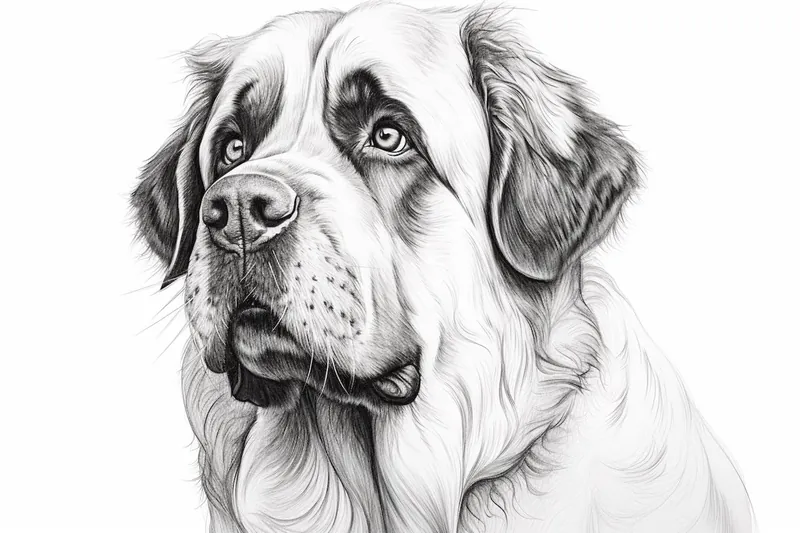
Learn how to draw a realistic and adorable Saint Bernard with this step-by-step tutorial. Follow expert instructions and create your own pet portrait.
Materials You'll Need
- Pencil
- Paper
- Eraser
The Saint Bernard is an iconic dog breed known for its gentle temperament, massive size, and distinctive appearance, featuring a broad head, expressive eyes, and a thick, weather-resistant coat. Originally bred in the Swiss Alps for rescue work, Saint Bernards have become beloved family companions and pop culture favorites, recognized for their loyalty and friendly disposition. Learning how to draw a Saint Bernard offers a wonderful opportunity to capture the unique charm and noble character of these gentle giants, making it a rewarding subject for artists and dog lovers alike.
Whether you are looking to improve your animal drawing skills or simply want to create a heartwarming portrait of this famous breed, this tutorial will guide you step by step through the process of how to draw a saint bernard. We'll cover essential techniques such as sketching basic shapes to establish correct proportions, adding layered details to depict their expressive face and fluffy fur, and refining your lines to achieve a realistic finish. This guide is suitable for artists of all skill levels—from beginners eager to learn the fundamentals of pet portraiture, to more experienced artists seeking to practice new shading and texturing methods.
Don't worry if you've never drawn a dog before—patience and practice are key, and each step is clearly explained to help you along the way. By the end of this tutorial, you'll not only have a delightful drawing of a Saint Bernard, but you'll also have gained valuable techniques you can apply to future animal drawings. So gather your drawing tools, get comfortable, and let's embark on this creative journey together!
Tip: To enhance your drawing of a Saint Bernard, frequently refer to high-quality images of the breed as you work—this will help you accurately capture their unique proportions and features, such as the broad head and expressive eyes. Keeping a reference image nearby not only aids in achieving realism but also allows you to observe the subtle details of their fur texture and facial expressions, making your final artwork more authentic and lifelike.
Materials Required
Before we dive into the drawing process, make sure you have the following materials at your disposal:
- Pencil: A medium-hardness pencil (HB or 2B) is recommended for sketching and initial outlines.
- Eraser: A kneaded eraser will come in handy for correcting mistakes and creating highlights.
- Paper: Choose a smooth surface paper that is suitable for your drawing medium of choice.
- Reference Image: Find a high-quality photo or image of a Saint Bernard to use as a reference. This will help you capture the breed's unique features accurately.
Now that you have all the necessary materials, let's begin!
Step 1: Basic Shapes
To start, let's create the basic shapes of the Saint Bernard's head and body. Begin by lightly sketching a circle for the head and a large oval shape for the body. Remember to keep your pencil strokes light and easy to erase later on.
Step 2: Facial Guidelines
Next, let's add some guidelines to help us position the facial features accurately. Draw a vertical line down the center of the head circle and a horizontal line across the middle. These lines will serve as reference points for the eyes, nose, and mouth.
Step 3: Eyes and Nose
Using the guidelines, sketch the eyes on either side of the vertical line. Saint Bernards have large, expressive eyes, so make sure to capture their gentle gaze. Then, draw a triangular shape for the nose, positioning it slightly below the horizontal line.
Step 4: Ears and Mouth
Moving on to the ears, draw two floppy, droopy shapes on the sides of the head. Saint Bernard's ears are long and hang down, so be sure to depict their characteristic shape. Then, outline the mouth below the nose, focusing on the placement of the lips and the jowls.
Step 5: Fur and Details
Now that we have the basic structure in place, it's time to add some fur and details to our drawing. Start by refining the shape of the head, making it more rounded and lifelike. Then, add some fur texture around the face, paying attention to the fur direction and flow.
Step 6: Body Proportions
To ensure our Saint Bernard looks proportional, let's focus on the body now. Refine the oval shape we drew earlier, adding more curves and contours to represent the breed's muscular build. Pay attention to the thickness of the neck and the size of the paws.
Step 7: Legs and Tail
Continue by sketching the legs and tail of the Saint Bernard. These dogs have robust limbs and a bushy tail. Make sure to capture their sturdy appearance by adding the appropriate thickness and texture to these areas.
Step 8: Face Details
Now it's time to add more details to the face. Refine the shape of the eyes, adding highlights to make them appear shiny and lifelike. Add eyebrows above the eyes to enhance the expression. Then, carefully draw the mouth, focusing on the teeth, tongue, and any visible wrinkles.
Step 9: Fur Texture
To give our drawing a realistic look, let's work on the fur texture. Start by using short, overlapping strokes to define the fur direction. Pay attention to the longer fur around the neck and chest area, as well as the shorter fur on the face and legs. Take your time with this step, as it will greatly contribute to the overall realism of the drawing.
Step 10: Shading and Highlights
Now that we have the basic structure and texture in place, it's time to add shading and highlights to create depth and dimension. Observe your reference image carefully to identify areas of light and shadow. Use a darker pencil or shading tool to add shadows, and a kneaded eraser to lift and create highlights.
Step 11: Final Touches
Lastly, take a step back and observe your drawing as a whole. Make any necessary adjustments to ensure accuracy and balance. Add any finishing touches and details that you feel are missing to complete your Saint Bernard drawing.
Congratulations! You have successfully drawn a realistic Saint Bernard. We hope you enjoyed this tutorial and found it helpful in creating your artwork. Remember, practice makes perfect, so keep honing your skills and experimenting with different techniques.
Mistake Alert: A common mistake when drawing a Saint Bernard is underestimating the size and structure of their broad head and short, square muzzle, which often leads to a dog that looks too slim or generic. This happens because it's easy to default to standard dog proportions or forget the subtle bulk in the cheeks and jowls that give Saint Bernards their distinctive, gentle expression. To avoid this, take a moment to lightly map out the basic head shape with generous, rounded forms before adding facial features—think of the head as a large oval with wide cheeks and a prominent, boxy snout. Regularly compare your drawing to reference photos, checking the width of the head against the body and making sure the muzzle doesn't get too tapered or long.
Conclusion
In conclusion, this step-by-step guide provided you with a clear and concise process for drawing a Saint Bernard. By following these instructions and using the provided materials, you can create a realistic and adorable representation of this beloved breed. Remember to have fun and embrace your creativity throughout the drawing process. Happy drawing!
Fun Facts About Saint Bernards
- Historical Role: Saint Bernards are famous for their role as rescue dogs in the Swiss Alps. They were originally bred by monks at the Saint Bernard Hospice in the Alps to assist with search and rescue missions, particularly during snowstorms and avalanches.
- Gentle Giants: Despite their large size, Saint Bernards are known for their gentle and friendly temperament. They are often referred to as "gentle giants" and are generally good-natured and affectionate with people, especially children.
- Massive Size: Saint Bernards are one of the largest dog breeds in the world. Adult males typically weigh between 140-180 pounds (64-82 kilograms), while females typically weigh between 120-140 pounds (54-64 kilograms).
- Distinctive Appearance: Saint Bernards have a distinctive appearance with a large, broad head, deep chest, and muscular build. They have a dense, thick coat that comes in both short and long-haired varieties, with coloring typically consisting of white with patches of tan, red, or brindle.
- Drooling: Saint Bernards are notorious for their tendency to drool, especially after eating or drinking. This is due to their large jowls and deep facial folds, which can trap saliva and water.
- Cold-Weather Adaptations: Saint Bernards have several adaptations to help them thrive in cold climates. Their thick fur provides insulation against the cold, and they have large, webbed feet that help them navigate through snow and ice.
- Social and Friendly: Saint Bernards are social dogs that thrive on human companionship. They are generally good with other pets and can get along well with other dogs if properly socialized from a young age.
- Exercise Needs: Despite their large size, Saint Bernards have relatively low exercise needs compared to other large breeds. They enjoy daily walks and moderate activity but are not overly energetic dogs.
- Health Considerations: Like all dog breeds, Saint Bernards are prone to certain health issues, including hip dysplasia, elbow dysplasia, and bloat. Responsible breeding and regular veterinary care can help mitigate these risks.
- Pop Culture Icon: Saint Bernards have become iconic symbols in popular culture, thanks in part to their roles in movies and television shows. Perhaps the most famous fictional Saint Bernard is "Beethoven" from the movie series of the same name.
Suggestions for Scenes and Settings for Saint Bernard Drawings
- A Saint Bernard heroically rescuing a lost traveler in a snowy Alpine landscape, wearing a classic barrel around its neck.
- A gentle Saint Bernard lounging by a cozy fireplace with a child reading beside it, emphasizing warmth and companionship.
- A playful Saint Bernard bounding through a field of wildflowers on a sunny spring day, capturing its joyful spirit.
- A Saint Bernard puppy napping in a basket surrounded by plush toys and soft blankets, highlighting its adorable, gentle side.
- A portrait of a Saint Bernard with detailed, expressive eyes and a textured, fluffy coat, focusing closely on the face.
- A Saint Bernard leading a group of hikers through a mountain pass, evoking its historic rescue role in the Swiss Alps.
- A family picnic scene with a Saint Bernard patiently waiting for a treat, showing its good-natured patience.
- A Saint Bernard in a raincoat and boots splashing through puddles for a whimsical, lighthearted illustration.
- A group of Saint Bernards socializing at a dog park, showing their playful and friendly nature with other dogs.
- A majestic Saint Bernard standing on a rocky outcrop overlooking a breathtaking mountain vista, symbolizing strength and nobility.