How to Draw a Sailfish
Learn how to draw a sailfish with this step-by-step tutorial. Capture the grace and beauty of this majestic fish with expert guidance.
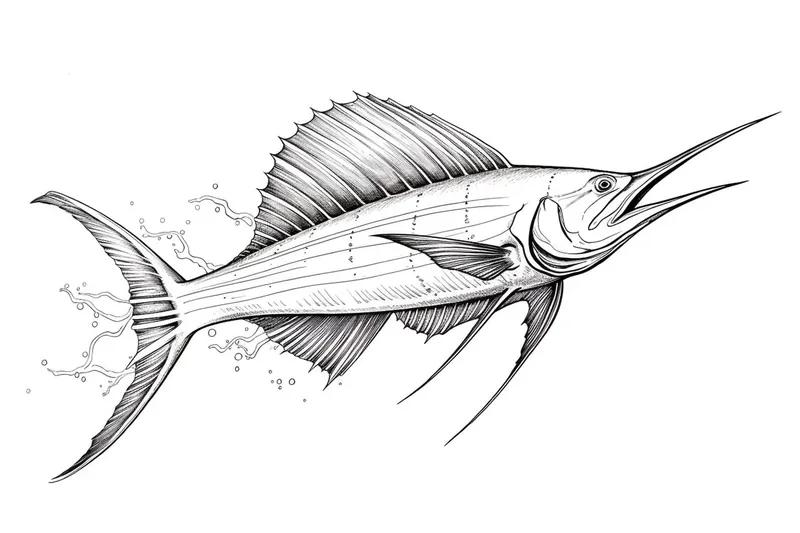
Materials You'll Need
- Pencil
- Paper
- Eraser
The sailfish is renowned for its extraordinary appearance—sleek, streamlined, and crowned with a dramatic sail-like dorsal fin that makes it one of the ocean's most striking predators. Famous for its speed and agility, the sailfish captivates both marine enthusiasts and artists alike with its dynamic form and vibrant colors. Learning how to draw a sailfish not only helps you appreciate the anatomy and movement of this magnificent creature but also offers a rewarding artistic challenge that can enhance your skills in depicting animals and underwater scenes.
Whether you are an aspiring marine artist, a student working on a biology project, or simply someone who loves to draw unique sea life, mastering how to draw a sailfish can be a fulfilling endeavor. This tutorial is designed for artists of all skill levels. Beginners will benefit from the step-by-step breakdown of basic shapes and careful attention to proportion, while more experienced artists can experiment with adding intricate details and shading to bring their sailfish to life. Throughout this guide, you'll practice sketching organic lines, capturing fluid movement, and using shading techniques to suggest texture and depth.
Don't worry if you're new to drawing or if this is your first time tackling such an impressive subject—every artist starts somewhere! With patience, practice, and the guidance provided here, you'll soon discover that drawing a sailfish isn't just possible, but also a fun and enriching artistic journey. Gather your materials, get comfortable, and let's dive in together to create a stunning sailfish illustration you'll be proud of!
Materials Required
Before we get started, let's gather the materials you will need for this drawing:
- [Drawing paper or sketchbook](https://yonderoo.com/best-sketchbooks-for-artists/)
- Pencils (HB, 2B, 4B)
- Eraser
- Fineliner pen or thin marker
- Colored pencils or markers (optional)
Now that we have everything we need, let's move on to the step-by-step instructions.
Step 1: Basic Outline
Begin by lightly sketching the basic outline of the sailfish. Start with a long, curved line for the body. Then, add a triangle shape at the front for the head. Next, draw a slightly curved line extending from the head to form the sail. Finally, add a tail at the back, using long and flowing lines.
Step 2: Define the Body
Using a darker pencil (2B or 4B), go over the basic outline to define the body of the sailfish. Pay attention to the curves and contours of the fish, capturing its streamlined form. Add a slightly curved line to indicate the mouth and a small circle for the eye.
Step 3: Details of the Head
Focus on the head of the sailfish now. Start by adding the mouth, which has a sharp, pointed shape. Then, draw a line across the eye to represent the stripe that extends along the fish's body. Add a tiny circle within the eye to indicate the pupil. Finally, sketch the gill slits on the side of the head with a few short lines.
Step 4: Add the Sail
Now, let's move on to the sail, which is the most distinctive feature of the sailfish. Sketch a series of long, curved lines that follow the shape of the sail. These lines should extend from the top of the head to the back of the sailfish. Make sure to space them evenly and maintain a smooth flow.
Step 5: Draw the Fins and Tail
Next, draw the fins and tail of the sailfish. Add two triangular-shaped pectoral fins on each side of the body, slightly below the head. Then, sketch the dorsal fin, which is located at the back of the fish, just in front of the tail. The dorsal fin should be tall and pointed. Finally, draw the tail using long and flowing lines, giving it an elegant and powerful appearance.
Step 6: Refine the Outline
Go back to the body of the sailfish and refine the outline, making it smoother and more defined. Use a darker pencil (4B or softer) to carefully go over the lines, erasing any unnecessary guidelines as you progress. Pay attention to the details of the fish, ensuring that the curves and proportions are accurate.
Step 7: Add Texture and Details
It's time to bring your sailfish drawing to life by adding texture and details. Start by adding scales along the body of the fish. Draw small, curved lines running horizontally across the body, parallel to each other. Be patient and take your time with this step, as the scales contribute to the realistic appearance of the fish.
Step 8: Finalize the Drawing
Take a step back and evaluate your drawing. Make any necessary adjustments to the lines and proportions to ensure accuracy. Once you're satisfied with the overall look and feel of your sailfish, use a fineliner pen or thin marker to ink over the final lines. Let the ink dry, then erase any remaining pencil marks for a clean and finished drawing.
Tip: When drawing a sailfish, pay special attention to the flow and direction of its elongated body and dramatic dorsal fin—use long, sweeping pencil strokes to capture that sense of speed and elegance. Start with a light, basic framework using simple shapes: a slender oval for the body, a triangle for the sail, and a thin, straight line for the bill. When you refine your lines, let your pencil pressure vary to suggest the delicate texture of the fin and the subtle curves of the body. For added realism, lightly shade along the top of the back and under the sail to create depth, and use a soft eraser to lift out highlights, especially where light would glint off the sailfish's smooth skin.
Conclusion
Congratulations on successfully drawing a sailfish! By following our step-by-step instructions, you have captured the grace and beauty of this incredible creature. Remember, practice makes perfect, so don't be discouraged if your first attempt doesn't turn out exactly as you imagined. Keep honing your skills and experimenting with different techniques, and you'll soon be creating stunning artwork that showcases your talent. Enjoy the process and happy drawing!
Fun Facts About Sailfish
- The sailfish is considered the fastest fish in the ocean, reaching speeds up to 68 miles per hour.
- Sailfish are easily recognized by their long, slender bills and large, sail-like dorsal fins.
- They can rapidly change the color of their skin, a trait used for communication and hunting.
- Sailfish are found in both the Atlantic and Indo-Pacific oceans.
- They use their elongated bills to slash through schools of fish, stunning or injuring prey.
- The sailfish's dorsal fin can be folded down to reduce drag while swimming at high speeds.
- Sailfish can grow up to 11 feet in length and weigh as much as 220 pounds.
- They are highly migratory and travel long distances in search of food and suitable breeding grounds.
- Sailfish are popular among sport fishers for their speed and challenge.
Suggestions for Scenes and Settings for Sailfish Drawings
- A sailfish racing through a vibrant coral reef, surrounded by darting schools of colorful fish.
- Close-up of a sailfish leaping dramatically out of the water, with droplets sparkling in the sunlight.
- A dynamic underwater chase scene, with a sailfish pursuing a school of smaller fish, its sail fully extended.
- Sailfish depicted in silhouette against a glowing sunset on the open ocean surface.
- An educational cutaway illustration showing the anatomy of a sailfish, labeling its unique features.
- A pair of sailfish engaged in a synchronized swimming display, their sails raised in a show of agility.
- Sailfish camouflaged among sea plants and shadows, highlighting its sleek form and coloring.
- A dramatic scene of a sailfish evading a predator, such as a shark, using its speed and agility.
- A whimsical underwater city with sailfish gliding between fantastical coral skyscrapers and marine creatures.
- A close-up study of the sailfish's head, focusing on the textures, patterns, and eye details.