How to Draw a Protogen
Learn how to draw a protogen with this step-by-step drawing tutorial. From basic structure to final touches, create your own robotic masterpiece.
Materials You'll Need
- Pencil
- Paper
- Eraser
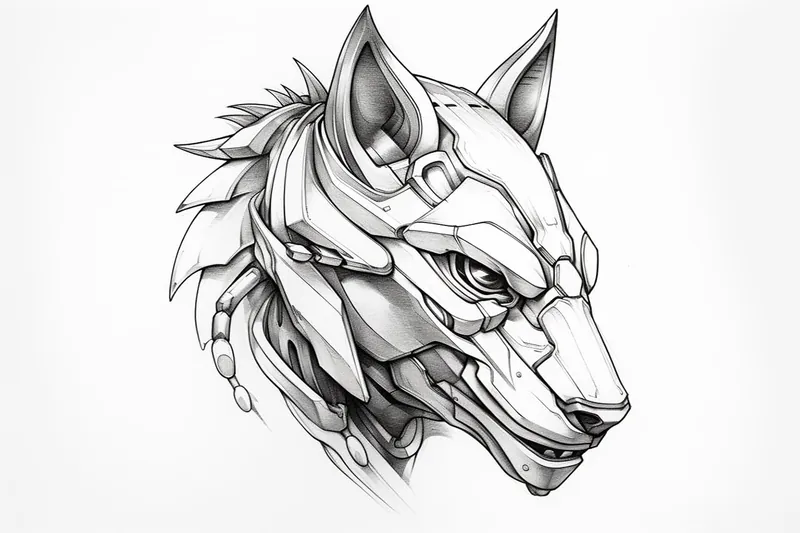
Welcome to this comprehensive step-by-step guide on how to draw a protogen! Protogens are a fascinating and imaginative species of anthropomorphic creatures that combine organic animal features with advanced robotics and technology. Recognizable by their distinct visors, digitigrade legs, and expressive LED faces, protogens have become a favorite within the furry and sci-fi communities for their unique blend of futuristic and organic elements. Their design allows for endless creativity, making them an exciting subject for artists who enjoy exploring new character concepts or want to challenge their skills with something out of the ordinary.
Learning how to draw a protogen can be a rewarding experience, whether you are a fan of digital art, character design, or world-building. Many artists are drawn to protogens because they offer a perfect balance between mechanical precision and organic flow—allowing you to experiment with both hard-edged robotic shapes and the softer, more dynamic lines of animal anatomy. Drawing protogens can help you practice important artistic skills such as symmetry, perspective, and rendering reflective surfaces, all while letting your imagination run wild as you invent custom features or unique color schemes for your creation.
This tutorial is designed to be accessible to artists of all skill levels, from beginners who are just starting their artistic journey to experienced creators looking to expand their repertoire. We'll break down the process of how to draw a protogen into simple, manageable steps, covering everything from sketching basic shapes to refining details and adding finishing touches. Along the way, you'll pick up tips on proportion, line work, and shading techniques that are especially useful when illustrating robotic or hybrid characters. Whether your goal is to create a full illustration, design your own original protogen, or simply have fun, you'll find helpful guidance in each section.
So, gather your favorite drawing materials and get ready to unleash your creativity! Remember, every artist develops their own style through practice and experimentation. Don't be afraid to try different features or add your personal touch as you learn how to draw a protogen. With patience and enthusiasm, you'll soon have a striking protogen artwork to share and be proud of. Let's embark on this creative adventure together!
Materials Required
Before we begin, here are the materials you will need for this drawing:
- Paper: Choose a smooth, high-quality paper that is suitable for drawing. You can use either a sketchbook or loose sheets of paper.
- Pencils: A set of graphite pencils ranging from H to B is ideal. These will allow you to create different shades and textures in your drawing.
- Eraser: A kneaded eraser or a soft vinyl eraser will be useful for correcting mistakes or adjusting details.
- Drawing Tools: You may also find it helpful to have a ruler, a compass, and a circle template for drawing neat and precise shapes.
Now that you have your materials ready, let's dive into the step-by-step process of drawing a protogen!
Step 1: Basic Structure
Tip: As you draw your protogen, consider using a reference image to help you visualize the blend of mechanical and organic elements, especially when detailing the face, limbs, and tail. This will not only aid in achieving proportional accuracy but also inspire your creativity when it comes to customizing features like textures and patterns. Remember, observing real-life animals or machinery can spark ideas for unique designs that make your protogen stand out!
Start by lightly sketching the basic structure of your protogen. Begin with a large oval shape for the head, followed by a slightly elongated oval for the body. Add guidelines to indicate the position of the eyes, ears, and mouth. Don't worry about the details at this stage, as we will refine them later.
Step 2: Facial Features
Next, focus on the facial features of your protogen. Draw two large circular eyes within the guidelines, leaving some space between them. Add two smaller circles within the eyes to represent the pupils. Above the eyes, draw a curved line for the brow ridge. Then, draw a rectangular shape for the mouth, with rounded corners.
Step 3: Ears
Protogens have unique ear designs, so let's draw them next. Start by drawing two triangular shapes on top of the head, pointing upwards. Add some details to the ears, such as small antennas or mechanical parts. Feel free to get creative and customize the design to your liking.
Step 4: Body and Limbs
Now it's time to add more details to the body and limbs of your protogen. Extend the body by drawing two outward curves from the sides of the head. These curves will form the shoulders and upper body. Then, draw the arms and legs by adding two sets of curved lines. Remember to keep the proportions balanced and symmetrical.
Step 5: Tail and Additional Details
Protogens often have long, mechanical tails that enhance their futuristic appearance. Draw a tail extending from the back of your protogen, using curved lines or geometric shapes. Add any additional details you like, such as buttons, switches, or patterns on the body. These details will bring your protogen to life and make it unique.
Step 6: Refine and Shade
Once you are satisfied with your protogen's overall appearance, it's time to refine the drawing and add shading. Use a darker pencil, such as a 2B or 4B, to trace over your initial sketch and define the outlines. Erase any unnecessary guidelines or stray lines.
To create depth and dimension, add shading to your protogen. Imagine a light source and shade the areas that would be in shadow, such as the sides of the head, under the chin, and the interior of the ears. Use a blending tool or your finger to smoothly blend the shading for a more realistic effect.
Step 7: Final Touches
To make your protogen even more visually appealing, add some final touches to your drawing. You can experiment with different textures and patterns on the body, or you can add highlights to the eyes and metallic parts. Don't be afraid to add your own artistic flair and make the drawing uniquely yours.
Wild Inspiration: Imagine a protogen fused with the elemental power of a living thunderstorm—its visor illuminated by crackling lightning patterns, and its mechanical limbs swirling with clouds and swirling rain. Instead of standard ears, picture arcing antennae that channel electric energy, and a tail trailing misty vapor as it dashes through a futuristic sky. For extra drama, design its chest plate to open and reveal a miniature, glowing weather system, with tiny tornadoes and flashes of light inside. This combination of organic, robotic, and atmospheric elements will challenge your creativity and technical skills, resulting in a truly one-of-a-kind, breathtaking character!
Conclusion
Congratulations! You have successfully learned how to draw a protogen from start to finish. By following these step-by-step instructions, you have created your very own robotic creature with intricate details and unique characteristics. Keep practicing and refining your skills, and soon you'll be able to create even more amazing artwork.
Remember, drawing is all about expressing your creativity and enjoying the process. So have fun, experiment with different styles, and let your imagination run wild. Happy drawing!
Fun Facts About Protogen
- Protogens are a species of open-source, user-created furry characters that blend organic animal traits with advanced robotics.
- The most recognizable feature of a protogen is their expressive LED visor, which can display a wide range of emotions and symbols.
- Protogens were first introduced in 2017 by the artist Malice-Risu.
- Unlike their more complex counterparts, Primagens, protogens are designed to be more accessible for fans to create and customize.
- Protogen characters are popular in both the furry and sci-fi communities for their unique mix of futuristic and animalistic features.
- There are specific design rules for protogens, such as a maximum of 30% mechanical parts and a prohibition on wings, according to the species guidelines.
- Protogens often have digitigrade legs, giving them a more animal-like stance.
- The protogen community encourages creativity, allowing for a wide variety of colors, patterns, and accessories.
Suggestions for Scenes and Settings for Protogen Drawings
- A protogen exploring a neon-lit cyberpunk city at night, with reflections shining off their visor and metallic body parts.
- A protogen in a high-tech laboratory, surrounded by holographic screens and futuristic gadgets, possibly building or repairing another robot.
- A protogen participating in a virtual reality game, with digital effects and pixelated landscapes swirling around them.
- A protogen relaxing in a lush, overgrown forest where nature intertwines with technology, such as glowing plants or cybernetic wildlife.
- A protogen piloting a sleek spaceship through a colorful nebula, with stars and cosmic clouds in the background.
- A protogen attending a sci-fi convention, interacting with other robotic or alien characters in a lively, imaginative crowd.
- A battle-ready protogen in an arena, their armor gleaming under spotlights, preparing for a friendly duel with another mech-inspired character.
- A protogen customizing their own body with new upgrades or accessories in a futuristic workshop, tools and spare parts scattered around.
- A protogen roaming a desolate wasteland, scavenging for parts among ruined machines and abandoned tech relics.
- A protogen enjoying downtime in a cozy, robot-themed café, sipping a cup of energy drink with friends.