How to Draw a Pen
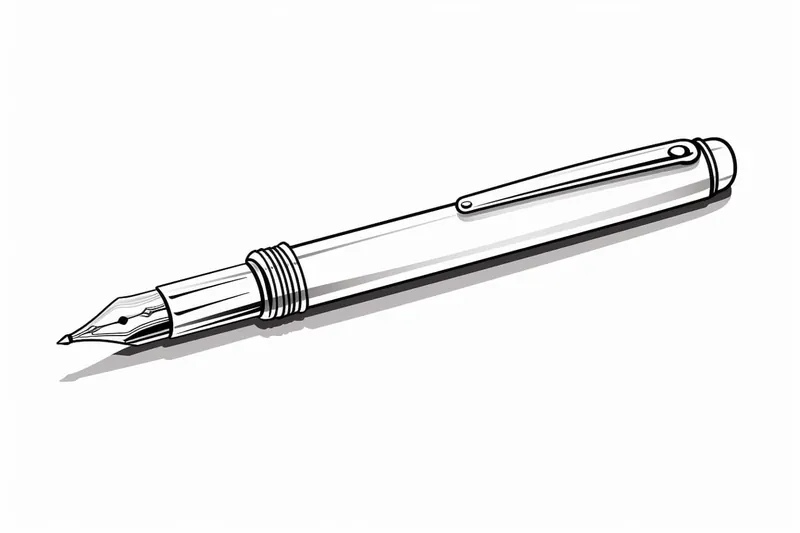
Learn how to draw a pen in this step-by-step tutorial. Discover the techniques to depict its shape, details, and texture while enhancing your drawing skills.
Materials You'll Need
- Pencil
- Paper
- Eraser
Pens are everyday objects that play a significant role in our lives, from jotting down notes to creating beautiful artworks. Despite their simple appearance, pens come in a variety of shapes and designs, offering an interesting challenge for artists who want to capture their unique details. Learning how to draw a pen can help you practice observation skills, understand basic geometric forms, and improve your ability to render shiny, reflective surfaces. Pens are also a great subject for still life drawings, making them an excellent addition to your sketchbook studies.
Whether you're a beginner looking to build your confidence with simple objects or a more advanced artist seeking to refine your technique, this tutorial will guide you step by step through the process of drawing a realistic pen. You'll learn how to break down the pen into basic shapes, add dimension with shading, and capture the subtle highlights that give it a metallic or plastic finish. Practicing how to draw a pen not only enhances your technical drawing skills but also helps you appreciate the beauty in everyday items. So, gather your materials and get ready to transform a common object into a striking piece of art—remember, every great artist started with the basics!
Don't worry if you're new to drawing or have never tried sketching objects like this before. With patience and careful observation, you'll soon discover that drawing a pen is both achievable and rewarding. Let's embark on this creative journey together and unlock new artistic skills one step at a time!
Materials Required
Before we dive into the drawing process, let's gather the materials you will need:
- Pencil (preferably HB or 2B for a darker line)
- Eraser
- Smooth paper (such as drawing paper or bristol board)
- Fine-liner or pen (for adding details, optional)
- Ruler (for measuring and creating straight lines, optional)
Now that you have your materials ready, let's begin the journey of drawing a pen!
Step 1: Sketch the Basic Shape of the Pen
Tip: As you work through the steps of drawing your pen, take frequent breaks to step back and assess your drawing from a distance; this will help you spot any proportion or alignment issues that are easier to see when you're not focused up close. Additionally, using a reference image can enhance your understanding of the pen's details and textures, allowing for a more accurate and polished final piece.
Start by lightly sketching an elongated rectangle in the center of your paper. This will serve as the main body of the pen. Remember, the outline should be proportional and aligned with the edges of your paper.
Step 2: Add Details to the Cap
Next, draw a smaller rectangle at the top of the pen's body, representing the cap. Make sure it overlaps slightly with the main body. Within the cap, sketch a circular shape to depict the part where the cap clicks onto the pen.
Step 3: Illustrate the Clip
Now, it's time to add the clip that attaches the pen to your shirt pocket. At the top of the pen's body, draw a small rectangle, slightly tilted. Connect the bottom corners of the rectangle to the main body using curved lines, forming the clip.
Step 4: Draw the Pen's Writing End
Moving towards the bottom of the pen, sketch a small cylindrical shape, slightly wider than the rest of the body. This represents the part where the ink cartridge or ballpoint tip would be. Make sure to align it with the center of the pen.
Step 5: Outline the Pen's Grip
Around the middle of the pen's body, add a cylindrical shape with a slightly thicker circumference. This indicates the grip, helping you hold the pen comfortably while writing. It should be positioned slightly above the pen's center.
Step 6: Refine the Shape and Add Texture
Now it's time to refine the shape of your pen. Go over the sketch with darker lines, emphasizing the edges and curves. Erase any unnecessary guidelines from the initial sketch to clean up the drawing.
To make your pen look more realistic, you can add texture. Observe your own pen or reference images to identify any patterns or texture details on the body. Depict these details by lightly adding strokes or crosshatching with your pencil.
Step 7: Finalize the Details
In this step, you can add the finer details that make your pen drawing stand out. Observe the pen you are drawing and add any additional features like a branding logo, model name, or other small elements that might be present.
If you have a fine-liner or pen, you can use it to trace over the important lines of your drawing. This will make them more defined and help highlight certain areas of the pen.
Conclusion
Congratulations on completing your pen drawing! By following these step-by-step instructions, you have learned how to depict the shape, details, and texture of a pen. Remember, practice is key to improving your drawing skills, so keep experimenting and trying new subjects.
Drawing everyday objects like a pen helps develop your observation skills and attention to detail. It's a fun way to enhance your artistic abilities, whether you're a beginner or an experienced artist.
So grab your sketchbook and continue exploring the world of art through drawing!
Fun Facts About Pen
- The earliest known pens were made from reeds and used by ancient Egyptians as early as 3000 BCE.
- The modern ballpoint pen was patented in 1938 by László Bíró, whose invention revolutionized writing tools worldwide.
- Fountain pens use capillary action and gravity to draw ink to the nib.
- NASA developed a special pressurized pen that can write in zero gravity, famously known as the "space pen."
- The world's most expensive pen, the Fulgor Nocturnus, sold for over $8 million.
- Disposable pens are a major source of plastic waste, with an estimated 1.6 billion pens thrown away each year in the U.S. alone.
- Quill pens, made from bird feathers, were the primary writing instrument in the Western world from the 6th to the 19th century.
- Some pens use erasable ink, which contains thermosensitive compounds that disappear with friction.
Suggestions for Scenes and Settings for Pen Drawings
- A close-up study of a single ballpoint pen, focusing on its reflections and metallic details.
- A scattered arrangement of various pens with different shapes and designs on a desk surface.
- An open sketchbook with a pen resting across the pages, capturing shadow and perspective.
- A still life composition featuring pens, pencils, and other writing tools in a cup or holder.
- A pen partially unscrewed to reveal the ink cartridge and inner mechanics.
- A detailed drawing of a pen clipped onto the pocket of a shirt or notebook cover.
- A dynamic action scene of a hand writing or drawing with a pen, emphasizing finger positioning.
- An artistic interpretation of a pen surrounded by ink splatters or creative doodles.
- A collection of vintage fountain pens displayed on a textured background.
- A minimalist, high-contrast composition of a single pen casting a dramatic shadow.