How to Draw a Horse's Head
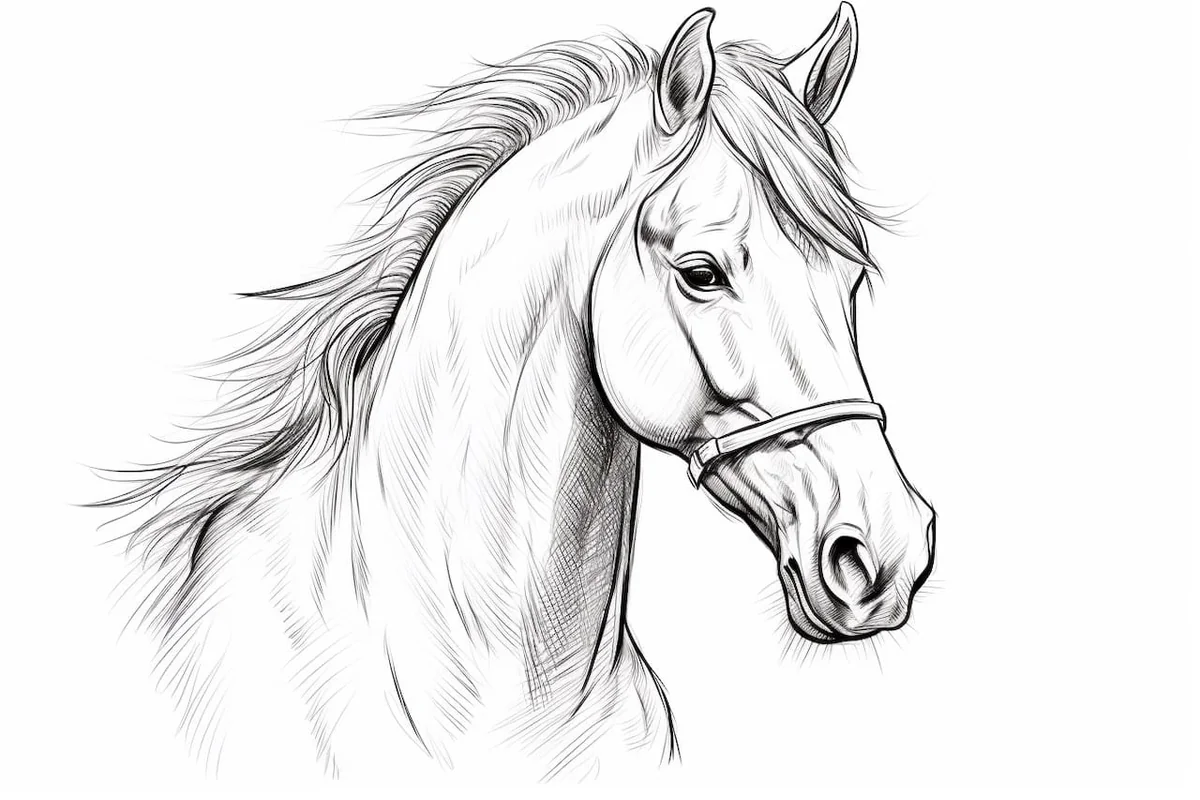
Learn how to draw with this step-by-step tutorial.
Materials You'll Need
- Drawing paper
- Pencil (HB or 2B)
- Eraser
- Blending stump
Welcome to this comprehensive and engaging tutorial on how to draw a horse's head! Horses have long been admired not only for their strength and speed but also for their elegance and expressive features. Capturing the essence of a horse's head in a drawing allows artists to explore intricate details such as the distinct shape of the muzzle, the flowing mane, and the soulful eyes that convey emotion and character. Whether you are a beginner eager to try your hand at animal portraiture or an experienced artist looking to refine your skills, this guide will provide valuable insights and techniques tailored to various skill levels.
Learning how to draw a horse's head is both a challenging and rewarding artistic pursuit. It requires an understanding of anatomy, proportion, and shading to bring the drawing to life. Throughout this tutorial, you will discover how to break down the complex structure of the horse's head into manageable shapes and lines, making the process less intimidating. We will cover important techniques such as contour drawing, value control, and texture creation, which will help you accurately depict the horse's unique features. With patience and practice, you will develop the confidence to create stunning, realistic representations of these magnificent creatures.
So, gather your pencils, paper, and an open mind as we embark on this artistic journey together. Remember, every great artist starts with simple steps, and by following this step-by-step guide on how to draw a horse's head, you will not only improve your drawing skills but also deepen your appreciation for the beauty of horses. Keep an encouraging mindset, stay patient with yourself, and most importantly, enjoy the creative process!
Materials Required:
To begin your horse drawing journey, you'll need the following materials:
-
Pencil: Start with a medium-soft graphite pencil, which will allow you to create a range of light and dark values.
-
Paper: Opt for a smooth, heavyweight paper that can withstand erasing and shading.
-
Eraser: A kneaded eraser is ideal for lifting off excess graphite and creating highlights.
-
Blending Tools: You can use a blending stump or a tortillon to smudge and blend the graphite for a softer look.
-
Reference Image: Find a clear and detailed reference photo of a horse's head to guide you throughout the drawing process.
Now that you have your materials ready, let's begin!
Step 1: Basic Shapes and Proportions
Start by lightly sketching a circle to represent the horse's skull. Then, draw a smaller oval shape attached to the circle to outline the muzzle. This will help establish the basic proportions of the head.
Step 2: Eye and Nostril Placement
Place two small circles within the skull circle to represent the horse's eyes. Position them slightly to the side and towards the top of the skull. Next, draw a small oval shape below the eye line for the nostril.
Step 3: Ear Placement
Ears play a crucial role in capturing a horse's character. Draw two long, curved lines that emerge from the top of the skull circle, angling slightly toward each other. The base of the ears should be wider and gradually taper towards the tip.
Step 4: Face Outline and Jawline
Use light, curved lines to gently connect the muzzle to the skull circle, forming the outline of the horse's face. Add a curved line below the muzzle to indicate the jawline, slightly narrower than the skull circle.
Step 5: Shading the Head
Now it's time to add some depth and dimension to your drawing. Start by shading the darker areas of the head, such as the eye sockets, nostrils, and around the jawline. Use light, hatching strokes to build up the value gradually.
Step 6: Eye and Nostril Details
Refine the shape of the eyes by adding the iris, pupil, and eyelashes. Remember to observe your reference photo for accurate details. Darken the nostril and add shading to create depth and realism.
Step 7: Shading the Ears
To add depth and texture to the ears, use gentle, curved strokes to indicate the direction of the fur. Pay attention to the highlights and shadows within the ear structure.
Step 8: Mane and Forelock
Draw the flowing strands of the mane and forelock using fluid, curved lines. Vary the thickness and length of the lines to create a sense of movement and realism.
Step 9: Refining and Blending
Take a step back and evaluate your drawing so far. Make any necessary adjustments to the proportions or details. Once you're satisfied, use a blending tool to softly blend and smudge the graphite, creating a smoother appearance.
Step 10: Final Details and Texture
Add the final details and textures to your horse's head. Pay attention to the subtle variations in the coat's texture and the play of light and shadow on the face. Use your eraser to lift off small highlights and create a more realistic look.
Conclusion
Congratulations on completing your horse's head drawing! By breaking down the process into simple steps, you've successfully captured the essence of these majestic creatures. Remember, practice is key, and the more you draw, the better you'll become. So keep exploring different angles and capturing the beauty of horses in your artwork. Happy drawing!
Fun Facts About Horse's Head
-
The horse's head contains approximately 700 muscles, allowing for a wide range of facial expressions and movements.
-
Horses have large eyes positioned on the sides of their heads, giving them nearly 360-degree vision.
-
The shape of a horse's muzzle is unique to each individual, much like a human fingerprint.
-
Horses use their ears to communicate mood and intentions, swiveling them independently to detect sounds.
-
The nostrils of a horse can flare widely to increase airflow during intense exercise.
-
The mane begins at the poll, the highest point of the horse's head, and flows down the neck, often used to identify breeds.
-
Horses have a highly sensitive upper lip and muzzle area, which they use to explore their environment.
Suggestions for Scenes and Settings for Horse's Head Drawings
-
A close-up portrait of a horse's head framed by wildflowers in a sunlit meadow.
-
Horse's head emerging from the mist of a early morning stable scene.
-
A majestic horse head with wind-blown mane against a dramatic stormy sky backdrop.
-
Profile view of a horse's head adorned with traditional equestrian tack and bridle.
-
Horse's head peeking over a wooden fence post in a rustic countryside setting.
-
A detailed study of a horse's head with textured fur and expressive eyes under soft indoor lighting.
-
Silhouette of a horse's head at sunset with rolling hills in the background.
-
A playful foal's head with curious eyes and tousled mane in a farmyard environment.
-
Horse's head reflected gently in a calm water surface near a riverbank.
-
A stylized drawing of a horse's head decorated with floral patterns or tribal motifs for an artistic effect.