How to Draw a Horse Eye
Learn how to draw with this step-by-step tutorial.
Materials You'll Need
- Drawing paper
- Pencil (HB or 2B)
- Eraser
- Colored pencils
- Markers
- Blending stump
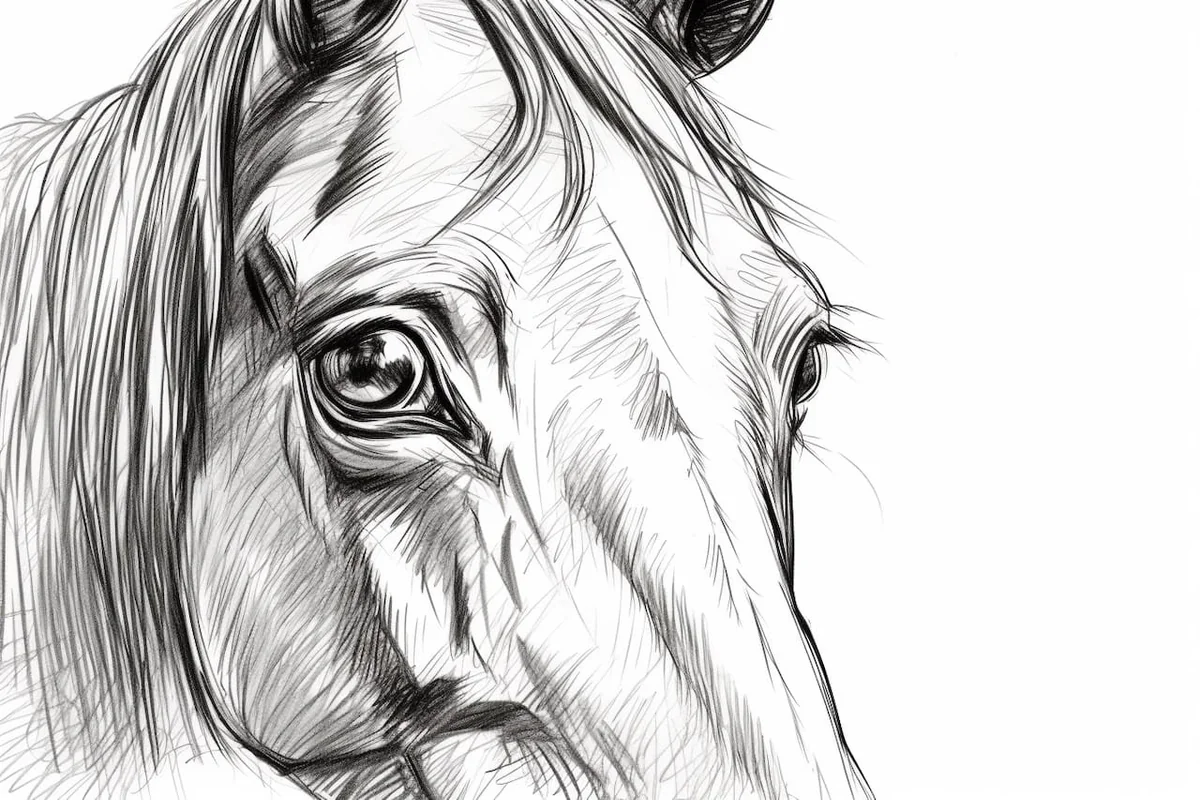
Welcome to this detailed tutorial on how to draw a horse eye, where we will explore the artistry behind capturing one of the most expressive and captivating features of a horse. The horse's eye is not only a window to its soul but also a complex subject that combines subtle textures, reflections, and emotions that bring life to any equine artwork. Whether you are an animal lover, an aspiring artist, or simply fascinated by horses, learning how to draw a horse eye allows you to depict their gentle yet powerful nature with authenticity and depth. This tutorial is designed to guide you through every step, from understanding the anatomy of the eye to mastering shading techniques that convey realism.Drawing a horse eye is an excellent exercise for artists at various skill levels, as it challenges you to observe fine details such as the curvature of the cornea, the shimmer of light on the surface, and the intricate eyelashes framing the eye. This tutorial blends foundational drawing skills with specific techniques tailored to animal portraiture, including layering pencil strokes to build texture and using contrast to highlight the eye's natural glossiness. Whether you're a beginner eager to improve your observational skills or an intermediate artist aiming to refine your technique, this step-by-step guide will provide clear instructions and helpful tips that make the process enjoyable and rewarding.By learning how to draw a horse eye, you'll not only enhance your ability to capture realism but also deepen your appreciation for the beauty and emotion expressed through this single feature. So grab your pencils and paper, and let's embark on this creative journey together—remember, every great artist starts with a single line, and with patience and practice, you'll soon bring the mesmerizing gaze of a horse to life on your canvas. Happy drawing!
Materials Required
Before we begin, let's gather the materials you will need for this drawing tutorial:
-
Drawing paper or sketchbook
-
Pencil (HB or 2B)
-
Eraser
-
Blending stump or cotton swab
-
Fine-tip black marker or pen
-
Colored pencils or markers (optional)
Now that we have our materials ready, let's get started!
Step 1: Outline the Basic Shape
Start by lightly sketching a circle on your drawing paper. This will serve as a guide for the basic shape of the horse eye. Remember, at this stage, don't press too hard with your pencil. We want these lines to be easily erasable later on.
Step 2: Add the Eyelids
Using the circle as a guide, sketch two curved lines above and below it to create the upper and lower eyelids. Pay attention to the shape of the eyelids, as they can vary depending on the angle and expression of the horse.
Step 3: Define the Eye
Within the circle, lightly sketch an almond shape to define the eye itself. The exact shape may vary depending on the breed or individual horse you are drawing. Take your time to get the proportions right, as this will greatly affect the realism of your drawing.
Step 4: Draw the Iris and Pupil
Inside the almond shape, draw the iris and pupil. The iris is usually slightly oval-shaped and can be of various colors, such as brown, blue, or green. The pupil, located in the center of the iris, is typically a vertical slit shape. Make sure to leave a small area of white for the reflection of light.
Step 5: Add Detail and Reflection
Now it's time to add more detail to the eye. Use your pencil to lightly shade the iris, giving it a sense of depth. Pay attention to any unique patterns or markings that may exist in the horse's eye you are drawing. Don't forget to add a small highlight or reflection on the iris to make it look more alive.
Step 6: Refine the Eyelids and Eyelashes
Go back to the eyelids and darken the lines to make them more defined. Add eyelashes along the edges of the upper and lower eyelids. These lashes should be slightly curved and vary in length. Pay attention to the direction of the lashes, as they can help convey the expression of the horse.
Step 7: Clean Up and Refine
Take a step back and evaluate your drawing so far. Use an eraser to remove any unwanted lines or smudges. Refine any areas that may need more definition or shading. This is your opportunity to make necessary adjustments and ensure the overall accuracy and realism of your horse eye drawing.
Step 8: Ink the Drawing
Once you are satisfied with your pencil drawing, use a fine-tip black marker or pen to outline the final lines. Carefully trace over the main contours, eyelashes, and any other important details. This will give your horse eye drawing a more finished and polished look.
Step 9: Add Color (optional)
If you prefer a colored horse eye drawing, you can now use colored pencils or markers to add color to your artwork. Consider the breed or specific horse you are drawing to choose the appropriate colors for the iris and any other details. Blend the colors smoothly using a blending stump or a cotton swab for a more realistic result.
Conclusion
Congratulations! You have successfully learned how to draw a horse eye. By following these step-by-step instructions, you can create stunning horse eye drawings that capture their beauty and essence. Remember to take your time, be patient with yourself, and allow your creativity to flourish. Whether you choose to draw in black and white or add colors, your horse eye drawing will evoke the grace and majesty of these incredible animals.
Fun Facts About Horse Eyes
-
Horses have the largest eyes of any land mammal, allowing them to have excellent night vision.
-
The horse's eye is positioned on the side of its head, giving it a nearly 350-degree field of vision.
-
Horses have a unique third eyelid called the nictitating membrane that helps protect and moisten their eyes.
-
The pupil of a horse's eye is horizontal and rectangular, which helps them scan the horizon for predators.
-
Horses can see some colors but have limited color vision compared to humans, mainly perceiving blues and greens.
-
The reflective layer behind a horse's retina, called the tapetum lucidum, enhances their night vision by reflecting light back through the retina.
-
Horses use their eyes to communicate emotions, with subtle changes in eye shape and eyelid position indicating mood.
Suggestions for Scenes and Settings for Horse Eye Drawings
-
A close-up of a horse eye reflecting a lush green pasture at sunset
-
The horse eye with raindrops on the eyelashes, capturing a rainy day mood
-
A horse eye showing a reflection of a rider approaching in the distance
-
An expressive horse eye with wildflowers gently brushing its face in a meadow
-
The eye of a horse peeking through a rustic wooden stable door
-
A majestic horse eye against a backdrop of snowy mountain peaks
-
A horse eye glistening with the reflection of a nearby flowing river
-
The eye of a foal with soft, youthful lashes and a curious gaze
-
A dramatic horse eye illuminated by the warm glow of a campfire at night
-
An artistic interpretation of a horse eye with abstract patterns blending into its iris