How to Draw a Hole
Learn how to draw a hole in a step-by-step guide. Master the art of creating depth and dimension in your drawings with these expert tips.
Materials You'll Need
- Pencil
- Paper
- Eraser
Holes may seem simple at first glance, but capturing the illusion of a true opening in a surface is a captivating artistic challenge. In art, a hole isn't just an absence of material—it's an opportunity to play with light, shadow, and perspective to trick the viewer's eye. Whether you're drawing a cartoon pit, a mysterious tunnel, or a realistic cavity in the ground, understanding how to render a convincing hole can elevate your work and open up new creative possibilities. Mastering this technique is especially useful in scenes where you want to add depth, intrigue, or a touch of visual humor to your compositions.
If you've ever wondered how to draw a hole that truly looks three-dimensional, you're not alone. Artists of all levels are drawn to this subject because it's both a test of observational skills and a way to practice essential shading and contouring techniques. Beginners can benefit from learning the basics of light and form, while more experienced artists can experiment with more complex perspectives and dramatic lighting. Whether you're adding a playful twist to a cartoon or creating a realistic landscape, the ability to draw holes convincingly will add depth and professionalism to your art.
This tutorial will guide you step by step through the process of how to draw a hole, breaking down each stage and offering tips to enhance the illusion of depth. By the end, you'll not only have a better understanding of how light and shadow interact, but also the confidence to incorporate this fun and useful element into your own artworks. So gather your materials, get comfortable, and let's get started—you'll be surprised at how much your drawing skills can grow with just a little practice and guidance!
Materials Required
Here's a list of materials you will need to draw a hole:
- [Drawing paper or sketchbook](https://yonderoo.com/best-sketchbooks-for-artists/)
- Graphite pencils of varying grades (HB, 2B, 4B)
- Eraser
- Ruler
- Blending stump or cotton swabs
- Optional: Colored pencils or markers for added effects
Step 1: Planning the Composition
Before starting the actual drawing, it's essential to plan the composition to ensure a well-balanced and visually appealing result. Decide on the size and position of the hole on your paper. Consider the surrounding elements, such as shadow, texture, or objects that may be inside or overlapping the hole.
Step 2: Sketching the Outline
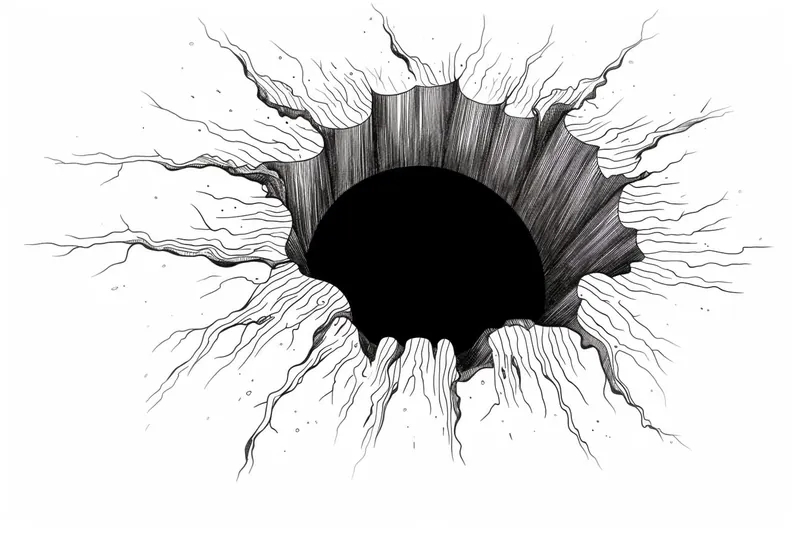
Using a lighter graphite pencil (HB), lightly sketch the outline of the hole. Pay attention to the proportions and angles, as these will determine the perspective of the hole. Start with a basic shape, such as a circle or an oval, which will serve as the opening of the hole.
Step 3: Adding Depth and Dimension
To create the illusion of depth, we need to add shading and highlights. Start by identifying the light source in your composition. This will determine where the shadows and highlights fall on the hole. Use a darker graphite pencil (2B or 4B) to shade the areas where the hole recedes into the surface. Gradually build up the layers of shading to achieve a realistic effect.
Step 4: Creating Texture
Tip: When working on creating the illusion of depth in your hole drawing, regularly step back and assess your work from a distance. This perspective check will help you see whether the shadows and highlights are effectively enhancing the three-dimensionality of the hole, allowing you to make adjustments that improve the overall realism and impact of your artwork.
Texture is crucial in making the hole appear more realistic. Use cross-hatching or stippling techniques to add texture to the inner walls of the hole. Pay attention to the direction of your strokes, following the contours of the hole. Vary the pressure and spacing of your lines to create the desired texture.
Step 5: Adding Shadows and Highlights
Shadows and highlights add depth and dimension to your drawing. Use a darker graphite pencil (4B) to shade the areas where the hole casts a shadow on the surrounding objects or surfaces. Pay attention to the angles and intensity of the shadows. Use an eraser to lift off highlights on the edges of the hole and any reflective surfaces within it.
Step 6: Refining the Details
Now it's time to add finer details to your drawing. Use a lighter graphite pencil (HB) or a mechanical pencil to refine the edges of the hole and add any necessary details, such as cracks, pebbles, or debris. Be mindful of the overall composition and ensure that the details complement the depth and perspective of the hole.
Step 7: Blending and Smoothing
To achieve a more realistic and seamless look, use a blending stump or a cotton swab to blend and smooth the shading and textures. This helps soften any harsh lines and creates a more cohesive drawing. Be careful not to overblend, as it may result in a loss of contrast and definition.
Step 8: Adding Color (Optional)
If you want to take your drawing to the next level, consider adding color to your hole. Colored pencils or markers can be used to add depth and vibrancy to the composition. Experiment with different color combinations and shading techniques to enhance the realism of your drawing.
Conclusion
Drawing a hole can be a challenging but rewarding experience. By following these step-by-step instructions, you can learn how to create a realistic and visually compelling hole in your artwork. Remember to sketch the outline, add depth and dimension through shading and highlights, create texture, refine the details, and blend and smooth your drawing. With practice and patience, you'll be able to master the art of drawing a hole and use this technique to add depth and interest to your future artwork.
Fun Facts About Holes
- The concept of a hole is formally defined in mathematics as a topological feature of a space.
- In art, holes are often used to create the illusion of depth and are a key element in trompe-l'œil techniques.
- Black holes, one of the most famous types of holes in science, are regions in space where gravity is so strong that not even light can escape.
- The word "hole" comes from the Old English "hol," meaning a hollow place or cavity, according to the Online Etymology Dictionary.
- Swiss cheese is famous for its holes, which are formed by bacteria releasing carbon dioxide during the cheese-making process.
- In golf, the objective is to get the ball into a series of holes on a course in as few strokes as possible.
- Wormholes are theoretical passages through space-time that could create shortcuts for long journeys across the universe.
- Sinkholes are natural depressions or holes in the ground caused by the collapse of a surface layer.
Suggestions for Scenes and Settings for Hole Drawings
- An old wooden floorboard with a small, mysterious hole revealing a glimmer of something hidden beneath.
- A cartoon character tiptoeing around the edge of a comically large circular pit, with exaggerated shadows and depth.
- A realistic sidewalk with a jagged, broken hole exposing pipes, soil, or roots underneath.
- An enchanted forest scene with a burrowed hole as the entrance to an animal's home, surrounded by leaves and twigs.
- A science fiction landscape with a glowing portal-like hole hovering above the ground, casting unusual light patterns.
- A sandy beach with a freshly dug hole and a child's shovel beside it, shadows suggesting the depth of the cavity.
- A cracked wall with a small, irregular hole showing a glimpse of another mysterious room beyond.
- A whimsical Alice-in-Wonderland-inspired rabbit hole, complete with swirling patterns and trippy perspectives.
- An ancient stone well viewed from above, using perspective to show the dizzying depth inside the hole.
- A surreal floating island with a hole that appears to lead straight through to the sky below.