How to Draw a Female Body
Learn how to draw a female body with this step-by-step tutorial. Discover techniques for proportions, pose, and details. Improve your drawing skills and create stunning illustrations.
Materials You'll Need
- Pencil
- Paper
- Eraser
The human body has long been a central subject in art, admired for its complexity, elegance, and expressive potential. Among these, the female form stands out for its graceful lines, unique proportions, and the subtle curves that define its anatomy. Learning how to draw a female body offers artists the opportunity to explore these elements, capturing not just physical accuracy but also the movement, emotion, and character that make each figure unique. Whether you're interested in classical figure drawing, fashion illustration, comics, or character design, mastering the female form will open up a world of creative possibilities in your artwork.
Many artists are drawn to the challenge and beauty of depicting the female body, and understanding how to draw a female body is an essential skill for developing your artistic abilities. This tutorial will guide you step by step through the process, breaking down complex anatomy into manageable shapes and focusing on key aspects like proportions, posture, and detail. Regardless of your current skill level—whether you're just starting out or seeking to refine your technique—this guide aims to build your confidence and provide you with practical methods to improve your figure drawings. We'll discuss fundamental techniques, such as gesture drawing, construction lines, and shading, to help bring your figures to life.
Don't worry if drawing the female body feels intimidating at first. With patience, practice, and the right guidance, you'll be amazed at how quickly your skills can progress. Artistic growth comes with every sketch, and by following along with this tutorial, you'll gain valuable experience and a deeper appreciation for the art of figure drawing. So gather your materials, relax, and let's get started on this exciting journey together!
Materials Required
Before we begin, let's gather the materials you will need for this drawing tutorial:
- Pencil: Choose a quality pencil with a soft lead. A 2B or 4B pencil is ideal for sketching and shading.
- Sketchbook or Drawing Paper: Use a sketchbook or thick drawing paper that can handle erasing and shading.
- Eraser: Have a kneaded or vinyl eraser to correct mistakes and refine your drawing.
- Ruler: A straight ruler will help you measure and maintain accurate proportions.
- Reference Images: Find reference images of the female body to study and use as a guide for your drawings. You can use books, magazines, or online resources.
Now that you have your materials ready, let's dive into the process of drawing a female body.
Step 1: Basic Proportions
Start by drawing a vertical line in the center of your paper. This line will serve as the backbone of your figure. Next, lightly sketch an oval shape at the top of the line to represent the head. Divide the remaining length of the line into eight equal sections. These sections will be used to establish the basic proportions of the body.
Step 2: Shoulder and Hip Width
Using the sections as a guide, draw horizontal lines across the body to indicate the shoulder and hip widths. Typically, the shoulders are slightly wider than the hips.
Step 3: Torso and Pelvis
Sketch the torso by drawing two curved lines that connect the shoulder and hip widths. Remember to keep the lines fluid and not too rigid. Next, draw two more curved lines to represent the upper and lower parts of the pelvis.
Step 4: Legs and Arms
From the bottom of the pelvis, draw two straight lines to indicate the length of the legs. The legs should be approximately four to five heads long. Add curved lines to define the shape of the thighs, knees, and calves. For the arms, draw two straight lines extending from the shoulders to represent the upper arms. Add more curved lines to depict the forearms and hands.
Step 5: Head and Face
Refine the shape of the head by adding more details to the oval shape. Divide the head into thirds horizontally and vertically. These divisions will help you place the facial features accurately. Sketch the eyes, nose, and mouth within these divisions, paying attention to the specific features and angles of the female face.
Step 6: Adding Details
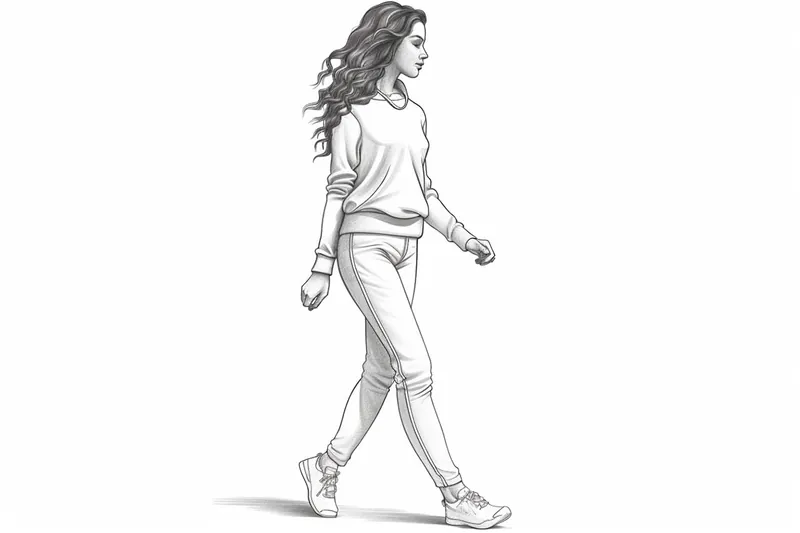
Now that you have established the basic proportions and structure of the female body, it's time to add more details. Start by refining the contours of the body, emphasizing the curves and form. Pay attention to the natural flow of the muscles and the positioning of the joints. Add details to the face, hair, hands, and feet, ensuring they are in proportion to the rest of the body.
Step 7: Clothing and Accessories
Tip: To enhance your drawings of the female body, consider incorporating gesture drawing techniques into your practice. Spend a few minutes sketching quick, fluid poses to capture the essence of movement and the natural curves of the figure. This approach will help you develop a more intuitive understanding of the body's dynamics and improve the overall expressiveness of your artwork, making your figures appear more lifelike and engaging.
If you want to dress your female figure, sketch the clothing and accessories on top of the body. Consider the fabric folds, wrinkles, and the way the clothing drapes over the form. Add any desired accessories like jewelry or shoes to enhance the overall look.
Step 8: Shading and Textures
To give your drawing more depth and dimension, start shading the different areas of the body. Observe the light source and create highlights and shadows accordingly. Use smooth, controlled strokes to achieve a realistic texture. You can experiment with different shading techniques like cross-hatching or blending, depending on the effect you want to achieve.
Mistake Alert: A common pitfall when drawing the female body is making the torso and limbs too straight and rigid, which can result in stiff, unnatural-looking figures. This often happens because beginners focus on getting proportions "correct" and forget to capture the subtle curves and flow that define the female form. To avoid this, pay close attention to the S-curve of the spine and the gentle tapering of limbs—use light, fluid construction lines to map out the gesture before refining the anatomy. Observing real-life references or gesture drawings can help you spot where natural curves occur, bringing more grace and movement into your artwork. Remember, a relaxed, dynamic pose will always feel more lifelike than a perfectly symmetrical but static one!
Conclusion
Drawing the female body requires practice and an understanding of proportions and anatomy. By following the step-by-step instructions in this article, you can develop your skills and create stunning illustrations. Remember to use reference images, pay attention to details, and experiment with shading techniques. With time and dedication, you will become more confident in drawing the female body.
I hope this article has provided you with valuable insights and guidance on how to draw a female body. Happy drawing!
Fun Facts About Female Body
- The average adult female body contains about 55% water, which is slightly less than the male body due to higher fat composition.
- Women typically have a higher percentage of body fat than men, which is essential for reproductive health.
- The female pelvis is wider and more circular than the male pelvis, aiding in childbirth.
- Females generally have a stronger immune response than males, making them less susceptible to certain infections.
- On average, women have a better sense of smell than men due to a higher number of olfactory cells.
- The female heart is typically smaller and beats faster than the male heart.
- Women are more flexible than men on average, partly due to differences in muscle and connective tissue.
- Females have two X chromosomes, which provides a genetic advantage in resisting certain diseases.
- Women's skin is generally thinner and more sensitive than men's, making it more prone to certain conditions.
Suggestions for Scenes and Settings for Female Body Drawings
- A ballet dancer mid-pose, capturing flowing movement and graceful lines.
- A sunlit beach scene, with the figure standing ankle-deep in water and wind-swept hair.
- A fashion model walking down a runway, showcasing confident posture and contemporary clothing.
- A classic reclining pose, inspired by Renaissance paintings, emphasizing natural curves and relaxed anatomy.
- A superheroine in dynamic action, highlighting powerful muscles and dramatic gesture.
- A yoga practitioner in a challenging pose, illustrating balance, flexibility, and focused expression.
- An everyday moment, like tying shoelaces or stretching after waking up, for a natural, candid feel.
- A fantasy setting, such as a forest spirit surrounded by leaves and forest, blending human and nature.
- A portrait with dramatic lighting, focusing on the interplay of light and shadow across the body.
- A figure interacting with a pet or child, emphasizing warmth, care, and gentle body language.