How to Draw a Crystal
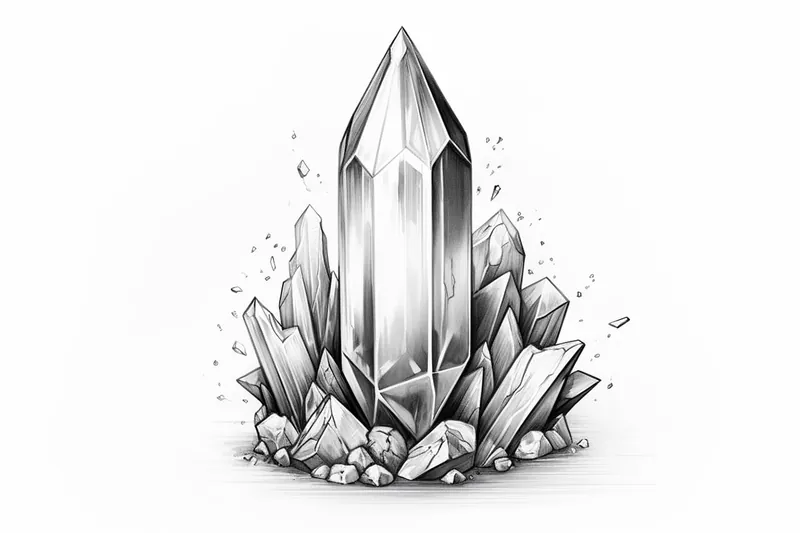
Learn how to draw a crystal with this step-by-step tutorial. Follow the expert instructions to create a stunning and realistic crystal drawing.
Materials You'll Need
- Pencil
- Paper
- Eraser
Crystals have long fascinated artists and admirers alike with their mesmerizing facets, unique shapes, and dazzling interplay of light. Whether found in nature as minerals or imagined as magical objects in stories and games, crystals offer an endless source of inspiration for creative projects. Their sharp angles, transparent qualities, and reflective surfaces present both a challenge and an opportunity for artists to experiment with light, shadow, and form. By learning how to draw a crystal, you not only develop your observation skills but also open up new possibilities for enhancing fantasy illustrations, jewelry designs, or simply adding a touch of sparkle to your sketchbook.
This tutorial will guide you step by step through the process of drawing a crystal, making it accessible to beginners while also providing tips that more experienced artists can use to refine their technique. We'll focus on understanding the basic geometry of crystals, capturing their signature sharp edges, and using shading techniques to convey depth and luminosity. Whether you're looking to improve your realism or add stylized crystals to your artwork, mastering these skills can help set your creations apart. Remember, even though drawing crystals may seem daunting at first, with practice and patience you'll be amazed at how quickly your confidence grows. Grab your materials and let's dive into the fascinating world of crystal drawing together!
Materials Required
Before we begin, gather the following materials:
Now that we have everything we need, let's dive into the steps.
Step 1: Prepare Your Workspace
Tip: To enhance your crystal drawing, consider using a light source from a specific angle to create consistent shadows and highlights, which will give your artwork a more realistic and dynamic appearance. Experiment with different light directions while sketching to see how it affects the facets and overall depth of your crystal, and remember to maintain crisp lines for the edges to emphasize the geometric shapes inherent in crystals.
Find a clean and well-lit area to work in. Make sure you have enough space to comfortably place your materials. This will ensure that you can work with precision and focus.
Step 2: Familiarize Yourself with Crystals
Before attempting to draw a crystal, it's important to observe and study real crystals. Look for reference images or even real crystals if you have them. Pay attention to their shapes, angles, and patterns. This observation will help you depict the crystal accurately in your drawing.
Step 3: Start with Basic Shapes
Begin by lightly sketching the basic shape of your crystal. Most crystals have geometric shapes like cubes, pyramids, or hexagons. Start with a simple shape that you feel comfortable with. Use your pencil and ruler to create straight lines and well-defined angles.
Step 4: Add Details and Facets
Now it's time to add details and facets to your crystal. Crystals have multiple flat surfaces called facets that reflect light in different ways. Use your observation skills to determine where these facets should be placed. Remember, each facet should be parallel to the corresponding facet on the opposite side of the crystal.
Step 5: Create Depth and Shadows
To make your crystal drawing look more realistic, it's important to create depth and shadows. Determine the direction of the light source in your drawing and shade the areas that would be in shadow. Use your pencil to create gradual changes in tone, from light to dark, to give your crystal a three-dimensional appearance.
Step 6: Refine Your Drawing
Take a step back and evaluate your work so far. Look for any areas that need refinement or adjustment. Use your eraser to correct any mistakes or smudges. Pay attention to the overall shape and proportions of your crystal. Make any necessary changes to ensure accuracy.
Step 7: Add Final Touches (Optional)
If you want to add a touch of color to your crystal drawing, now is the time to do so. Use colored pencils or markers to carefully fill in the facets of your crystal. Take note of the color and intensity of light that is being reflected by the crystal. This step is optional, but it can enhance the visual impact of your drawing.
Mistake Alert: A frequent mistake when drawing crystals is making the edges too soft or rounded, which can cause the crystal to lose its distinct, faceted appearance. This often happens because artists are used to blending or smoothing lines in other subjects, but crystals require crisp, confident strokes to capture their sharp geometry. To avoid this, use a ruler or straightedge when sketching out the facets, and focus on drawing each edge with a single, deliberate line. Remember to keep your eraser handy for refining the angles—clean, intersecting lines are key to achieving that believable crystalline look!
Conclusion
Drawing a crystal may seem daunting at first, but with practice and patience, you can create stunning and realistic crystal artwork. By following the step-by-step instructions outlined in this tutorial, you have learned the techniques and methods to draw a crystal with precision and accuracy. So grab your materials and start creating your own sparkling masterpiece!
Fun Facts About Crystals
- The word "crystal" comes from the Greek word "krystallos," meaning ice, because ancient Greeks believed clear quartz was eternally frozen water.
- Crystals form when molecules arrange themselves in a repeating pattern, creating their signature geometric shapes (National Geographic).
- Quartz is the most abundant crystal on Earth and is used in everything from watches to electronics.
- Some crystals, like diamonds, are formed deep within the Earth under extreme pressure and heat.
- Salt is a common crystal that you can easily grow at home by evaporating saltwater.
- Crystals can be found in a variety of colors due to trace elements or impurities in their structure.
- Snowflakes are natural ice crystals, and each one has a unique six-sided structure.
- Some people believe crystals have healing properties, though scientific evidence for this is limited.
- Crystals are used in lasers, which rely on their ability to amplify light.
- Amethyst, a purple variety of quartz, was once as valuable as rubies and emeralds until large deposits were found in Brazil.
Suggestions for Scenes and Settings for Crystal Drawings
- A cluster of glowing crystals emerging from a cave wall, illuminated by torchlight.
- A magical forest clearing with giant, colorful crystals growing among the roots of ancient trees.
- A crystal suspended over a wizard's desk, casting prismatic light over spellbooks and potions.
- An underwater scene with crystals encrusted on the ocean floor, surrounded by curious sea creatures. (Drawing Ideas - Underwater Seascape Scene)
- A futuristic cityscape where buildings are made of faceted crystal towers reflecting the sunset. (Drawing Ideas - A Busy Cityscape)
- A close-up study of a gemstone necklace, focusing on the light refracting through the individual crystals.
- A crystal altar at the center of a fantasy temple, radiating energy and surrounded by glowing runes.
- A dragon curled around a massive, gleaming crystal in its treasure hoard.
- An abstract arrangement of floating crystals in a surreal, dreamlike landscape.
- A snowy mountain peak with natural crystals jutting out from the rocks, catching the morning light.