How to Draw a Cavalier King Charles Spaniel
Learn how to draw a Cavalier King Charles Spaniel with this step-by-step tutorial. Capture the charm and elegance of this beloved breed in your artwork.
Materials You'll Need
- Pencil
- Paper
- Eraser
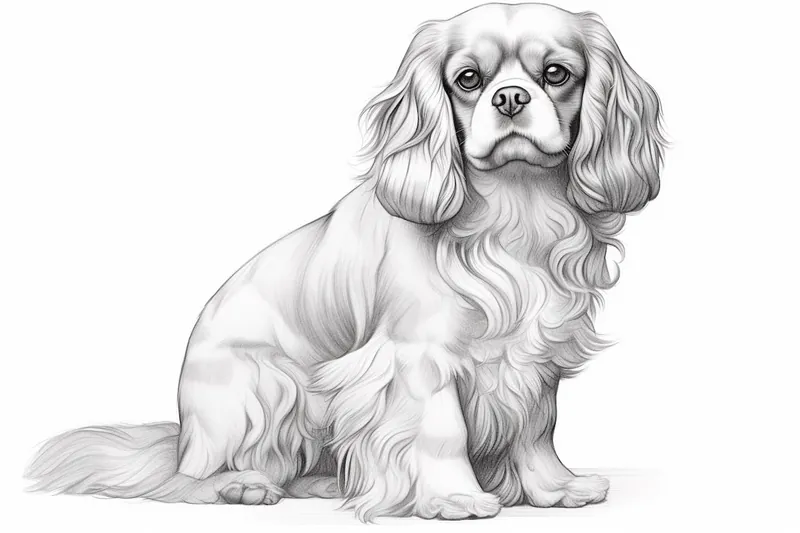
The Cavalier King Charles Spaniel is renowned for its gentle expression, flowing silky coat, and endearing personality, making it a favorite among dog lovers and artists alike. With their soulful eyes, feathered ears, and graceful posture, these dogs exude a unique blend of nobility and warmth that is both captivating and challenging to portray on paper. Capturing the beauty and spirit of this beloved breed can add a delightful touch to your sketchbook or serve as a heartfelt tribute for anyone who cherishes Cavaliers.
Learning how to draw a Cavalier King Charles can be a fulfilling project, whether you're looking to improve your animal drawing skills, create a personalized gift, or simply enjoy the creative process. This tutorial is designed for artists of all experience levels—beginners will find step-by-step instructions to guide them through the basics, while more advanced artists can explore techniques for adding detail and realism. You'll learn how to map out the proportions of the head and body, capture the characteristic long ears, and render the distinctive textures of the breed's coat. Along the way, you'll also pick up valuable tips for shading and refining your lines to bring your drawing to life.
No matter your skill level, remember that practice and patience are key to mastering any new subject. As you work through this tutorial on how to draw a Cavalier King Charles, allow yourself to enjoy the process and don't be afraid to make adjustments as you go. With each step, you'll gain more confidence and discover new ways to express the charm and elegance of this wonderful breed. Let's get started and unleash your creativity!
Materials Required
Before we dive into the drawing process, let's gather the materials you'll need to complete this project:
- Drawing paper or sketchbook
- Pencils (preferably a range of 2B to 4B)
- Eraser (kneaded or vinyl)
- Pencil sharpener
- Ruler (optional, for drawing guidelines)
Now that you have everything ready, let's get started on your Cavalier King Charles Spaniel drawing!
Step 1: Outline the Head and Ears
Begin by lightly sketching a circle at the center of your paper. This circle represents the head of the Spaniel. Then, draw two perpendicular lines intersecting at the center of the circle to create guideline markings.
Next, add the ears by drawing two curved lines on either side of the head. These lines should start at the top of the circle and extend towards the sides, slightly curving downwards.
Step 2: Sketch the Facial Features
Tip: When drawing the Cavalier King Charles Spaniel, take the time to study reference photos that highlight the breed's unique features, especially the shape of the head and the placement of the eyes, as these details are essential for capturing their distinct expression. Use light, gentle strokes for your initial sketches, allowing for adjustments as you refine the drawing; this will help you maintain the soft, gentle look that characterizes this beloved breed while ensuring accurate proportions and features.
Now, let's bring the face of the Cavalier King Charles Spaniel to life. Start by sketching two almond-shaped eyes within the head, using the guidelines as a reference. Remember to leave some space between the eyes to create a natural look.
Below the eyes, draw a small curved line for the nose. Then, add a slightly curved line above the nose for the eyebrows. These small details can make a big difference in capturing the expression of the Spaniel.
Step 3: Add the Muzzle and Mouth
Extend a curved line from the bottom of the head to create the muzzle. This line should curve slightly downwards towards the center of the face, resembling the shape of a shallow letter "U".
Within the muzzle, draw a small dot for the nose and a curved line below it for the mouth. Take your time to ensure these features align properly and maintain the proportions of the breed.
Step 4: Outline the Body and Legs
To continue, let's outline the body of the Spaniel. From the bottom of the head, extend two curved lines downward, gradually converging towards the center. These lines will form the sides of the neck and body.
Next, sketch two curved lines extending downwards from the body, representing the front legs. Remember to make them slightly wider towards the body and tapering towards the paws.
Step 5: Draw the Back and Hind Legs
Now, draw a curved line behind the neck and body to create the Spaniel's back. This line should start from the neck and smoothly flow towards the hindquarters.
For the hind legs, draw two parallel lines extending downwards from the back, curving slightly towards the paws. Pay attention to the proportions and angles to accurately represent the pose of the Spaniel.
Step 6: Add the Tail and Tail Feathers
The Cavalier King Charles Spaniel is known for its beautiful feathered tail. To depict this characteristic, sketch a long curved line extending from the hindquarters downwards. Then, draw several small curved lines branching out from the main line to create the tail feathers.
Step 7: Refine the Details
With the basic structure in place, it's time to refine the drawing and add more intricate details. Use a darker pencil or increase the pressure on your pencil to define the outline of the Spaniel's body, head, and ears.
Pay close attention to the unique markings and fur patterns of this breed. Use short, gentle strokes to mimic the texture of the fur, giving your drawing a more realistic appearance.
Step 8: Erase Guidelines and Add Final Touches
Before finishing your artwork, carefully erase any remaining guidelines and unnecessary sketch lines. Use an eraser that won't smudge or damage the drawing paper.
Once the guidelines are erased, take a step back and observe your drawing. Make any necessary adjustments to ensure the proportions and overall likeness of the Cavalier King Charles Spaniel are accurate.
Mistake Alert: One frequent mistake when drawing Cavalier King Charles Spaniels is making the head too round or generic, which can cause the dog to lose its distinctive look. This often happens because artists focus on the softness of the breed and overlook the subtle length of the muzzle and the gentle, tapering shape of the head. To avoid this, take time to study reference photos and lightly sketch the head shape, paying special attention to the slightly domed skull and the way the muzzle blends into the face. Remember, the eyes sit relatively low and are widely spaced, which contributes to the breed's signature sweet expression—double-check their placement before finalizing your outlines for a true-to-life Cavalier!
Conclusion
Congratulations on completing your drawing of a Cavalier King Charles Spaniel! By following these step-by-step instructions, you've learned how to capture the unique features and personality of this wonderful breed. Remember, practice makes perfect, so don't hesitate to try this tutorial multiple times to improve your skills.
Now, armed with your newfound knowledge, grab your materials and let your creativity flow as you continue to explore the world of art. Happy drawing!
Fun Facts About Cavalier King Charles Spaniels
- The Cavalier King Charles Spaniel is named after King Charles II of England, who was famously devoted to the breed.
- This breed is known for its affectionate and gentle temperament, making it an excellent companion dog.
- Cavalier King Charles Spaniels come in four recognized color patterns: Blenheim, Tricolor, Ruby, and Black & Tan.
- They are one of the largest toy breeds, typically weighing between 13 and 18 pounds.
- The breed is prone to certain genetic health issues, including mitral valve disease.
- Cavaliers are highly social and do not like being left alone for long periods.
- Their long, silky coats require regular grooming to prevent tangles and mats.
Suggestions for Scenes and Settings for Cavalier King Charles Spaniel Drawings
- A Cavalier King Charles Spaniel sitting regally on a plush velvet armchair in a Victorian-style living room.
- A playful Spaniel bounding through a field of wildflowers, ears flapping in the breeze.
- A gentle close-up portrait capturing the soulful eyes and flowing ears of a Cavalier resting its head on its paws.
- A Spaniel joyfully chasing butterflies in a sun-dappled garden.
- A cozy scene of a Cavalier curled up by a roaring fireplace, surrounded by favorite toys and a soft blanket.
- A whimsical depiction of a Spaniel wearing a tiny crown and cape, posing as canine royalty.
- Two Cavaliers sharing a moment of companionship on a park bench beneath cherry blossom trees.
- A Spaniel exploring a forest path with sunlight filtering through the leaves, nose to the ground in curiosity.
- A humorous sketch of a Cavalier attempting to balance a treat on its nose, eyes wide with anticipation.
- A family picnic with a Cavalier eagerly waiting for a tasty morsel, surrounded by children and laughter.