How to Draw a Cane Corso
Learn how to draw a Cane Corso with this step-by-step tutorial. Master the art of sketching this majestic dog breed with expert tips and techniques.
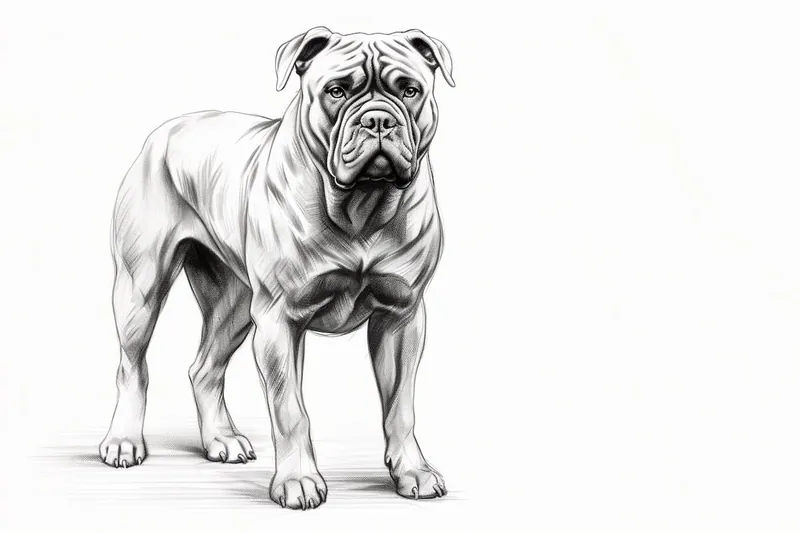
Materials You'll Need
- Pencil
- Paper
- Eraser
The Cane Corso is a powerful and dignified Italian mastiff breed, celebrated for its loyal yet imposing presence. Known for their muscular build, expressive faces, and striking profiles, Cane Corsos have become favorites among dog lovers and artists alike. Their distinctive features, such as their broad heads, deep-set eyes, and short, sleek coats, make them a fascinating subject for anyone interested in animal portraiture. Learning how to draw a Cane Corso not only helps you capture the essence of this majestic canine, but also improves your ability to observe and render complex forms and textures found in nature.
Drawing a Cane Corso can be both a rewarding and challenging experience. This tutorial is designed for artists of all skill levels, whether you're just starting out or looking to refine your technique. By breaking down the drawing process into clear, manageable steps, you'll learn how to approach proportions, outline the powerful musculature, and add shading to bring out the dog's distinctive character. Mastering how to draw a Cane Corso can enhance your understanding of anatomy, shading, and the subtle details that make a portrait come alive. Plus, creating art based on such a noble breed can be a meaningful gift for a dog lover or a unique addition to your portfolio.
So, gather your favorite drawing materials and let's embark on this creative journey together. Remember, every drawing is an opportunity to learn and express yourself. Don't worry about perfection—focus on enjoying the process and watching your skills grow with each step. By the end of this tutorial, you'll be amazed at how much you've learned and how beautifully you can capture the spirit of a Cane Corso!
Materials Required:
Before we get started, gather the following materials:
- [Drawing paper or sketchbook](https://yonderoo.com/best-sketchbooks-for-artists/)
- Pencil set (ranging from HB to 6B)
- Eraser (preferably a kneaded eraser for easy removal of pencil marks)
- Blending stumps or cotton swabs
- Reference photo of a Cane Corso
Now that you have all the necessary materials, let's dive into the drawing process!
Step 1: Basic Sketch
Start by lightly sketching the basic shapes that form the structure of the Cane Corso. Begin with a large oval shape for the body, followed by a smaller oval for the head. Add guidelines to indicate the placement of the eyes, ears, muzzle, and neck. Keep your lines light and easily erasable.
Step 2: Outline the Body
Using the basic sketch as a guide, start outlining the body of the Cane Corso. Pay attention to the proportions and curves of the breed. Start with the neck and gradually move towards the chest, back, and hindquarters. Refine the shape of the body, ensuring that it aligns with the reference photo.
Step 3: Define the Facial Features
Focus on the head of the Cane Corso. Sketch the eyes, nose, and mouth, using the reference photo as a guide. Pay attention to the placement and size of each feature. Add details such as the wrinkles on the forehead and the strong jawline that characterizes this breed.
Step 4: Sketch the Ears and Tail
Move on to drawing the ears of the Cane Corso. These ears are medium-sized, triangular in shape, and slightly folded. Make sure the position and size of the ears are accurate. Then, sketch the tail, which is thick at the base and tapers to a point. Pay attention to the curve and length of the tail.
Step 5: Add the Details
Now, it's time to add the finer details to your drawing. Pay attention to the texture and folds of the skin, the wrinkles around the face and neck, and the muscles on the body. Take your time to capture the unique features of the Cane Corso, such as its strong and powerful build.
Step 6: Shade and Blend
Using a range of pencils from HB to 6B, start shading the various parts of the Cane Corso. Begin with the darker areas, such as the eyes, nose, and mouth. Gradually add shading to the body, creating depth and dimension. Remember to blend the pencil strokes using blending stumps or cotton swabs for a smoother appearance.
Step 7: Refine and Erase
Take a step back and observe your drawing. Look for any areas that require refinement or adjustment. Pay attention to the proportions and overall symmetry of the Cane Corso. Make any necessary corrections using your eraser or by adding additional lines and shading.
Step 8: Final Details
In this final step, add the last touches to your drawing. Emphasize the details of the face, such as the eyes, nose, and mouth. Highlight the texture of the fur by adding short lines and strokes in the direction of the fur growth. Take your time to ensure that every detail is precisely represented.
Tip: As you work through the drawing steps, take frequent breaks to step back and evaluate your progress from a distance; this will help you spot any proportion or detail issues that might not be apparent up close. Also, consider using a grid method to ensure accuracy in placement and scale, especially for defining the Cane Corso's distinctive features like its broad head and muscular build.
Congratulations! You have successfully created a realistic drawing of a Cane Corso. By following these steps and practicing regularly, you will continue to enhance your artistic skills and create stunning artworks.
Mistake Alert: A frequent mistake when drawing Cane Corso dogs is making their heads too narrow or rounded, which can make them look like a different breed altogether! This often happens because beginners focus more on the overall silhouette and less on the underlying structure—forgetting that the Cane Corso's head is broad, blocky, and has well-defined cheek muscles. To avoid this, take time to carefully map out the head's width and strong jawline in your initial sketch, using reference photos to compare proportions. Double-check your guidelines before adding details, and don't be afraid to erase and adjust—getting this foundation right will make your Cane Corso instantly recognizable and give your drawing the powerful presence this breed is known for.
Conclusion
In this tutorial, we have explored the step-by-step process of drawing a Cane Corso. Remember to start with a basic sketch, outline the body, define the facial features, and add the necessary details. Take your time to shade and blend, refine and erase, and add the final touches. With practice, you'll be amazed at the progress you can make. So grab your materials and get started on your Cane Corso masterpiece today!
Fun Facts About Cane Corso
- The Cane Corso is an ancient Italian breed originally used as a guard dog and hunter, with roots tracing back to Roman times.
- Cane Corsos are known for their intelligence and trainability, making them excellent working dogs.
- This breed is highly protective of its family and property, often serving as a loyal watchdog.
- Cane Corsos have a short, dense coat that comes in a variety of colors, including black, gray, fawn, and brindle.
- Despite their imposing appearance, Cane Corsos can be affectionate and gentle with children when properly socialized.
- The name "Cane Corso" comes from the Latin "cohors," meaning "guardian" or "protector".
- Cane Corsos require regular exercise and mental stimulation to stay healthy and happy.
- This breed is known for its expressive face, often displaying a range of emotions through its eyes and ears.
Suggestions for Scenes and Settings for Cane Corso Drawings
- A Cane Corso standing proudly on an old Italian stone staircase, with sunlight casting dramatic shadows on its muscular form.
- A close-up portrait capturing the expressive eyes and wrinkled brow of a Cane Corso, emphasizing its noble character.
- A playful Cane Corso puppy tumbling in a field of wildflowers, showing both its power and youthful energy.
- A Cane Corso guarding a rustic wooden gate, highlighting its protective nature and imposing presence.
- A relaxed Cane Corso lounging on a cozy rug by a fireplace, with warm, soft lighting accentuating the textures of its coat.
- A dynamic scene of a Cane Corso running alongside its owner through an autumn forest, leaves swirling in the air.
- A Cane Corso gazing out over a misty mountain landscape at dawn, evoking a sense of loyalty and watchfulness.
- A regal Cane Corso sitting beside an ornate fountain in an Italian piazza, surrounded by classic architecture.
- A stylized study focusing on the anatomy and muscle structure of the Cane Corso in a variety of action poses.
- A Cane Corso gently interacting with a child or family member, emphasizing its gentle side and deep bond with humans.