How to Draw a Bullet
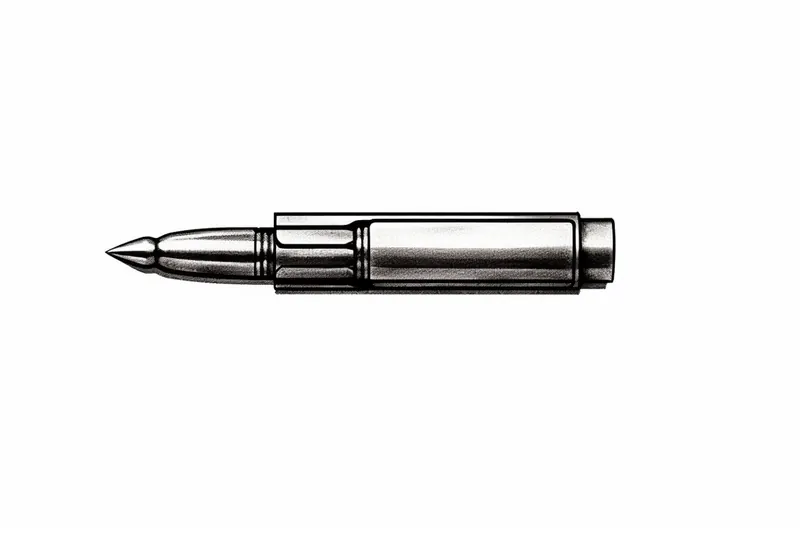
Learn how to draw a realistic and detailed bullet with this step-by-step tutorial. Follow the easy instructions to create an impressive bullet drawing.
Materials You'll Need
- Pencil
- Paper
- Eraser
Drawing a bullet might seem straightforward at first glance, but this small object is packed with intricate details and subtle curves that make it an excellent subject for artists looking to hone their observational and technical drawing skills. Bullets, with their sleek metallic surfaces and precise cylindrical shapes, have been depicted in countless works of art, graphic novels, and video game designs. Understanding how to draw a bullet can be especially useful if you're interested in illustration, concept art, or simply want to add more realism and depth to your technical drawings. Plus, learning to capture reflective surfaces and symmetrical forms is a valuable exercise that will benefit your overall artistic technique.
In this tutorial, you'll explore how to break down the basic shapes that form a bullet, practice creating smooth gradients for a metallic effect, and master the use of highlights and shadows to achieve a realistic appearance. The steps are designed to be approachable for beginners while still offering valuable insights for more experienced artists who want to refine their skills. Whether you're adding a bullet to a still life composition, working on a themed project, or just want to challenge yourself with a new subject, learning how to draw a bullet will expand your creative toolkit. Remember, every artist improves by trying new things, so grab your materials and let's start creating a lifelike bullet drawing together!
Materials Required:
Before we begin, gather the following materials:
- Pencil
- Eraser
- Paper
- Ruler
- Fine-tipped pen or marker (optional)
Step 1: Start with a Basic Shape
Begin by lightly sketching a long, narrow rectangle standing vertically on your paper. This will serve as the main body of the bullet. You can use a ruler to help you create straight and symmetrical lines.
Step 2: Add Details to the Bullet Body
To make the bullet look more three-dimensional, sketch a smaller rectangle on the top of the main body, leaving a small gap in between. This will represent the indentation at the tip of the bullet.
Step 3: Define the Bullet Tip
On the top of the bullet, draw a curved shape. Start from the base of the top rectangle and then gently curve upwards, gradually tapering to a point. This will form the tip of the bullet.
Step 4: Create the Bullet Casing
Below the main body of the bullet, draw a slightly larger rectangle that extends a little beyond the bottom edge of the bullet. This rectangle represents the casing of the bullet. Make sure it is aligned with the main body and equal in width.
Step 5: Add the Base of the Bullet
Tip: As you work through the steps of drawing a bullet, pay close attention to the light source and how it interacts with the bullet's surface; this will greatly enhance the realism of your depiction. Experiment with different shading techniques, such as cross-hatching or stippling, to create varied textures and depth in the metallic surface, and don't hesitate to adjust your highlights for a more striking contrast between light and shadow.
To complete the bullet shape, draw a rounded shape at the bottom of the bullet casing. This will represent the base of the bullet. Ensure that it is centered and proportionate to the rest of the drawing.
Step 6: Refine the Details
Take a closer look at your sketch and refine any rough edges or lines. Clean up any unnecessary marks and make sure the proportions of the different parts of the bullet are accurate. Erase any remaining construction lines.
Step 7: Shade the Bullet
To make the bullet drawing more realistic, add shading to create depth. Identify the light source and imagine where the shadows would fall. Start shading the areas that are furthest away from the light source, gradually building up the shading to create a smooth transition from light to dark.
Step 8: Add Highlights
Using an eraser, carefully lift off some of the graphite to create highlights on the bullet. These highlights will make the drawing appear more three-dimensional and reflective.
Step 9: Enhance the Details
To make the bullet drawing look more polished, you can go over the outline with a fine-tipped pen or marker. This will create a clean and defined look. Be careful not to overdo it and maintain a balance between the shaded areas and the outlined edges.
Conclusion
Congratulations! You have successfully drawn a realistic and detailed bullet. By following the step-by-step instructions in this tutorial, you have learned how to create a lifelike representation of a bullet. With your newfound drawing skills, you can now apply them to other subjects and continue to improve your artistic abilities. Keep practicing, and soon you'll be amazed at your progress. Happy drawing!
Fun Facts About Bullets
- The word bullet comes from the French word "boulette," meaning "little ball."
- Modern bullets are typically made from lead or lead alloys and are often jacketed in copper for improved performance.
- The first true bullets were developed in the mid-19th century with the invention of the Minié ball.
- Bullets are designed in various shapes, such as round nose, hollow point, and spitzer, each serving different purposes.
- The grooves inside a gun barrel, called rifling, spin the bullet to stabilize its flight.
- Some bullets are engineered to expand on impact, known as hollow-point bullets, to maximize stopping power.
- Tracer bullets contain a small pyrotechnic charge, making their path visible and aiding in aiming at night.
- The fastest bullets can travel at speeds exceeding 4,000 feet per second.
- Forensic experts can match a bullet to a specific firearm by analyzing unique tool marks left on the bullet's surface.
- Bullets are a common subject in art and pop culture, symbolizing themes from surrealism to action.
Suggestions for Scenes and Settings for Bullet Drawings
- A close-up still life of a single bullet resting on a reflective metal surface, emphasizing the play of light and shadow.
- A partially disassembled bullet and casing, showing the internal components for an educational or technical illustration.
- A bullet captured in mid-air with motion lines, as if it's been fired, to practice dynamic movement and perspective.
- A group of different types of bullets arranged in a row or scattered on a wooden tabletop to explore varying shapes and sizes.
- A weathered, old bullet partially buried in the earth, surrounded by grass and soil textures for an atmospheric effect.
- A bullet as part of a detective's evidence board, with string, notes, and fingerprints for a narrative-driven scene.
- A macro shot of a bullet tip with dramatic lighting, highlighting scratches, reflections, and metallic textures.
- A bullet incorporated into a surreal or fantasy environment, such as growing out of a flower or melting into liquid metal.
- A bullet casing ejected from a gun, frozen in time with smoke curling from the barrel in the background.
- A bullet engraved or decorated with intricate patterns, turning it into a unique piece of artwork or jewelry.