How to Draw a Bedroom
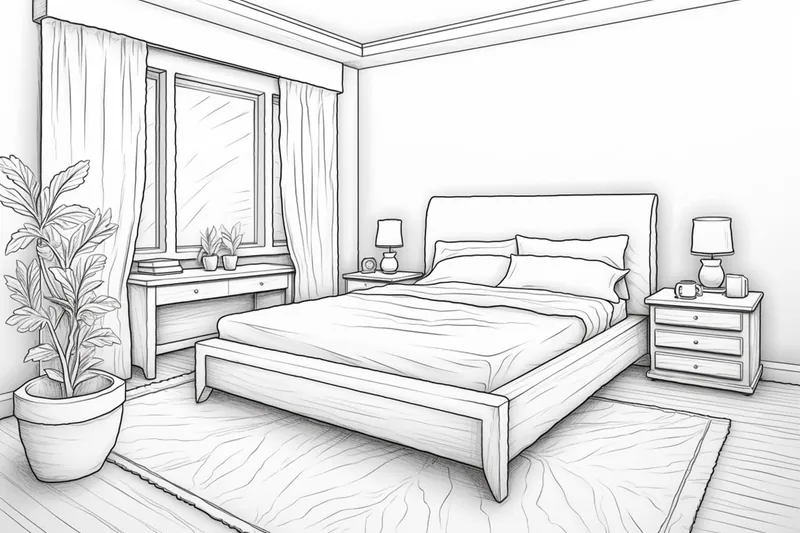
Learn how to draw a bedroom with this step-by-step tutorial. Create a realistic and inviting bedroom scene on paper using simple techniques and materials.
Materials You'll Need
- Pencil
- Paper
- Eraser
Welcome to this detailed tutorial on how to draw a bedroom, a subject that offers a wonderful opportunity to practice perspective, composition, and interior detailing. Bedrooms are intimate spaces filled with personal touches and varying textures—from soft bedding and plush rugs to sleek furniture and decorative elements—making them both challenging and rewarding to capture on paper. Whether you are an aspiring artist eager to improve your spatial awareness or someone who enjoys creating cozy, realistic environments through art, mastering how to draw a bedroom can greatly enhance your drawing repertoire.
In this guide, we will explore fundamental techniques such as one-point and two-point perspective to accurately depict the room's dimensions, as well as shading and texturing methods to bring your drawing to life. This tutorial is suitable for beginners who want to build confidence with basic shapes and perspective, as well as intermediate artists looking to refine their attention to detail and depth. Drawing a bedroom involves balancing structural elements like walls, windows, and furniture with softer details such as pillows, curtains, and lighting effects, making it an excellent exercise in blending technical skills with creative expression.
By following this step-by-step process on how to draw a bedroom, you will not only develop your technical drawing skills but also learn to convey the warmth and personality that make a bedroom feel inviting. So gather your pencils, erasers, and paper, and get ready to dive into a fun and rewarding artistic challenge. Remember, every great drawing starts with simple shapes and careful observation—keep practicing, and soon you'll be able to create stunning bedroom scenes that truly reflect your unique artistic vision.
Materials Required
To begin with, gather the following materials:
- Drawing paper: Ensure that the paper is of good quality and suitable for the drawing medium you plan to use.
- Pencils: Have a range of graphite pencils with different hardness (e.g., 2H, HB, 2B, 4B) to achieve varying shades and textures.
- Erasers: Keep a soft eraser for light corrections and a kneaded eraser for more extensive adjustments.
- Ruler: Use a ruler to create straight lines and maintain symmetry in your drawing.
- Pens: If you prefer using ink pens, have a range of thicknesses available to add detail and definition.
- Optional materials: Colored pencils or markers can be used to add color to your drawing if desired.
With all your materials in place, let's move on to the next steps!
Step 1: Outline the Room
Tip: As you work through your drawing of a bedroom, take breaks to step back and view your artwork from a distance; this will help you assess overall composition and balance, allowing you to catch any inconsistencies in perspective or proportion before adding final details.
Start by lightly sketching the basic outline of the room using a pencil. Decide on the perspective and size of your bedroom. Use the ruler to draw straight lines for the walls and any architectural elements such as windows or doors. Remember to consider vanishing points if you want to create a sense of depth in your drawing.
Step 2: Add Furniture
Next, draw the main furniture pieces in the bedroom. Begin with larger items like the bed, wardrobe, or dresser. Use simple shapes to outline each piece and consider their placement within the room. Pay attention to proportions and perspective to ensure a realistic representation.
Step 3: Sketch Details
Now it's time to add more detail to your bedroom. Start by drawing smaller items such as bedside tables, lamps, or decorations. Take your time to capture the shape, texture, and any intricate features of these objects. Use lighter pencil strokes for a more realistic look, adding depth and shading to create a three-dimensional feel.
Step 4: Define Lighting and Shadows
Proper lighting and shadows can greatly enhance the realism of your drawing. Observe the direction of light sources within the room and sketch the highlights and shadows accordingly. Pay attention to how shadows interact with objects and surfaces to create depth and dimension.
Step 5: Texture and Patterns
In this step, focus on adding texture and patterns to your bedroom. Whether it's the wood grain on the furniture or the fabric patterns on the curtains or bedspread, carefully observe and recreate these details in your drawing. Use different shading techniques to depict the various textures realistically.
Step 6: Refine and Add Final Details
Now that the basic structure of your bedroom is complete, it's time to refine and add the final touches. Take a step back and assess your drawing as a whole. Make any necessary adjustments to proportions, lines, or shading. Add any additional elements such as wall art, rugs, or plants to further enhance the ambiance of the room.
Conclusion
Congratulations! You have successfully learned how to draw a bedroom. By following these step-by-step instructions and paying attention to details, you can create a realistic and inviting bedroom scene. Remember to practice regularly to improve your drawing skills and don't be afraid to experiment with different styles and techniques.
So, grab your drawing materials and start creating your very own bedroom masterpiece. Happy drawing!
Fun Facts About Bedrooms
- The average person spends about one-third of their life sleeping in their bedroom, making it one of the most important rooms for health and well-being.
- Bedrooms have evolved from simple sleeping spaces to multifunctional rooms, often including work and relaxation areas, as detailed by the Architectural Digest.
- The concept of a "master bedroom" originated in the early 20th century to denote the largest bedroom in a house.
- Colors used in bedroom design can significantly affect sleep quality; for example, blue tones are known to promote relaxation.
- Historically, bedrooms were often shared by multiple family members, but modern design trends favor private, personalized spaces, as noted by History.com.
- Proper bedroom lighting, including natural light and adjustable lamps, plays a crucial role in mood and circadian rhythm regulation, according to research from the National Institutes of Health.
- Minimalist bedroom designs have gained popularity for their ability to reduce stress and clutter, a trend highlighted by Apartment Therapy.
- The placement of furniture in a bedroom can influence sleep quality and energy flow, a principle rooted in feng shui.
Suggestions for Scenes and Settings for Bedroom Drawings
- A cozy morning scene with sunlight streaming through a curtained window, casting soft shadows on a neatly made bed.
- A minimalist modern bedroom featuring sleek furniture and clean lines, emphasizing perspective and geometric shapes.
- An artist's bedroom filled with creative clutter—sketchbooks, paintbrushes, and colorful fabrics scattered around.
- A vintage-style bedroom with ornate furniture, patterned wallpaper, and a plush rug to practice textures and intricate details.
- A nighttime scene illuminated by a bedside lamp and moonlight, focusing on dramatic lighting and shadow contrasts.
- A child's bedroom decorated with toys, posters, and a canopy bed, adding playful elements and varied textures.
- A small urban apartment bedroom with a loft bed, emphasizing compact space and multi-functional furniture.
- A nature-inspired bedroom with indoor plants, wooden furniture, and natural light to explore organic textures and atmosphere.
- A luxurious bedroom featuring elegant drapes, a chandelier, and richly textured bedding to challenge shading and detail work.
- An eclectic bedroom mixing vintage and modern elements with personalized wall art and patterned textiles for a unique composition.