How to Draw a 3D Rectangle
Learn how to draw a 3D rectangle with this step-by-step tutorial. Enhance your drawing skills with these easy-to-follow instructions and create realistic three-dimensional shapes.
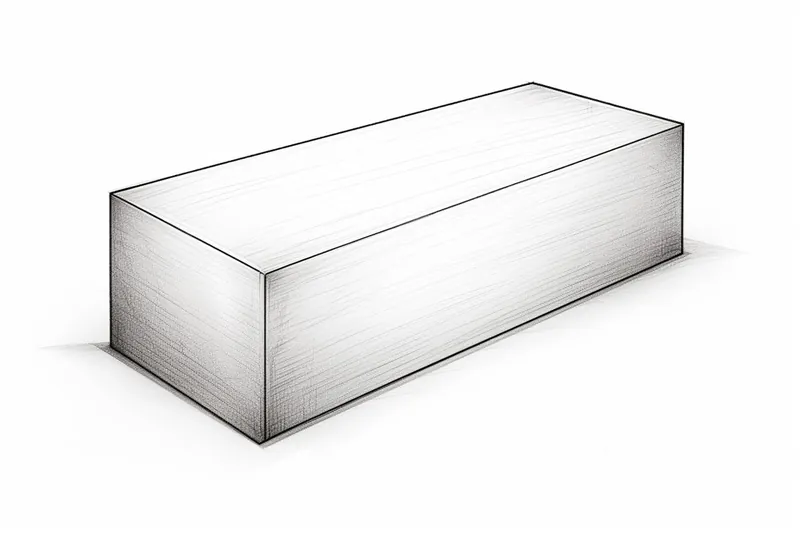
Materials You'll Need
- Pencil
- Paper
- Eraser
Drawing three-dimensional objects is a fundamental skill that can elevate your artwork by adding depth and realism. Learning how to draw a 3d rectangle is a perfect starting point because it introduces you to the principles of perspective, shading, and spatial awareness. A 3D rectangle, often referred to as a rectangular prism or cuboid, is a shape frequently seen in everyday objects such as boxes, books, and buildings. Mastering this shape not only helps you understand geometry in art but also serves as a building block for more complex forms.
This tutorial is designed for artists of all skill levels—from beginners taking their first steps into three-dimensional drawing to more advanced creators looking to refine their technique. We will walk you through simple, clear steps that break down the process, covering how to construct accurate angles and proportions using a ruler, and how to apply shading techniques that bring your rectangle to life with a convincing sense of volume. Understanding how to draw a 3d rectangle will boost your confidence in rendering other geometric forms and improve your overall drawing skills.
So, gather your drawing paper, pencils, and a ruler, and get ready to dive into this engaging exercise. By the end of this tutorial, you'll have a strong foundation in creating three-dimensional shapes that can be applied to countless artistic projects. Remember, practice is key, and every sketch brings you closer to mastering perspective and dimension. Let's embark on this creative journey together and unlock your potential to draw stunning 3D shapes with ease!
Materials Required
To begin this drawing tutorial, you will need the following materials:
- Drawing paper
- Pencil
- Ruler
- Eraser
Now that you have gathered all the necessary materials, let's begin the journey of drawing a 3D rectangle!
Step 1: Start with a Horizontal Line
Begin by drawing a horizontal line at the center of your paper. Use your ruler to ensure the line is straight and neat. This line will serve as the base of our 3D rectangle.
Step 2: Add Vertical Lines
Next, draw two vertical lines perpendicular to the horizontal line you just created. The length of these lines will determine the height of your rectangle. Make sure the lines are parallel and evenly spaced from each other.
Step 3: Connect the Lines
Now, connect the top ends of the vertical lines with a straight horizontal line. This line should be parallel to the base horizontal line, completing the outline of your rectangle.
Step 4: Add Depth
To make your rectangle appear three-dimensional, we need to add depth. Start by drawing two diagonal lines connecting the top corners of the rectangle to the base. These lines should be slightly slanted.
Step 5: Create the Side Faces
To complete the three-dimensional look, draw two vertical lines that connect the top corners of the rectangle to the corresponding corners on the base line. These lines will form the side faces of your 3D rectangle.
Step 6: Add Dimension
To give your 3D rectangle more dimension, sketch diagonal lines from the bottom corners of the side faces to the base line. These lines will create the illusion of depth and perspective.
Step 7: Erase Unnecessary Lines
Now that you have the basic structure of your 3D rectangle, take your eraser and gently remove any lines that are no longer needed. Erase the extra lines inside the shape, leaving only the outline and the essential details of the rectangle.
Step 8: Shade and Add Details
To make your 3D rectangle appear more realistic, we need to add shading and details. Begin by shading the side faces of the rectangle to create a sense of depth. Use your pencil to darken these areas, gradually building up the shading to achieve the desired effect.
Next, add any additional details you want to include, such as highlights or shadows. Pay attention to where the light source is coming from and shade accordingly.
Conclusion
Congratulations! You have successfully learned how to draw a 3D rectangle. By following these step-by-step instructions, you can now create realistic-looking three-dimensional shapes in your artwork. Remember to practice regularly to improve your drawing skills and explore other variations of 3D shapes.
Drawing three-dimensional objects can be challenging at first, but with patience and practice, you will soon master this skill. So grab your pencil and paper, and start creating amazing 3D artwork today!
Fun Facts About 3D Rectangle
- A 3D rectangle is also known as a rectangular prism, a solid figure with six rectangular faces.
- Rectangular prisms are common in everyday objects like boxes, books, and buildings, making them easy to recognize in real life (BYJU'S).
- Understanding how to draw a 3D rectangle helps artists grasp the basics of perspective drawing, which adds depth to flat images.
- The volume of a 3D rectangle is calculated by multiplying its length, width, and height (Media4Math).
- Rectangular prisms are a type of polyhedron, a 3D shape with flat polygonal faces.
- Shading the faces of a 3D rectangle correctly can create the illusion of light and shadow, enhancing realism in drawings (Artists Network).
- [In geometry, the edges of a 3D rectangle meet at right angles, making it an example of an orthogonal solid (Media4Math](https://www.media4math.com/library/definition-3d-geometry-concepts-rectangular-prism)).
Suggestions for Scenes and Settings for 3D Rectangle Drawings
- A stack of books arranged on a wooden table, each book represented as a 3D rectangle with varying heights and widths.
- A cityscape featuring modern rectangular skyscrapers with reflective glass surfaces and shaded sides.
- A collection of gift boxes wrapped with ribbons, showcasing different perspectives and shadows to emphasize depth.
- A minimalist desk setup with rectangular electronic devices such as a laptop, smartphone, and a closed notebook.
- A set of wooden crates stacked unevenly in a warehouse, highlighting overlapping 3D rectangles with strong shadows.
- An abstract composition of floating 3D rectangles with varying transparency and shading for a futuristic effect.
- A simple room interior showing rectangular furniture pieces like a bookshelf, a coffee table, and a cabinet.
- A playground scene with rectangular blocks forming a jungle gym or building blocks for children.
- A row of parked rectangular mailboxes along a street, each with distinct shading to show volume and light direction.
- A detailed drawing of a rectangular prism-shaped perfume bottle with reflective shading and highlights.