How to Draw an Italian Greyhound
Learn how to draw an Italian Greyhound step by step with this comprehensive drawing tutorial. Capture the grace and elegance of this beloved breed in your artwork.
Materials You'll Need
- Pencil
- Paper
- Eraser
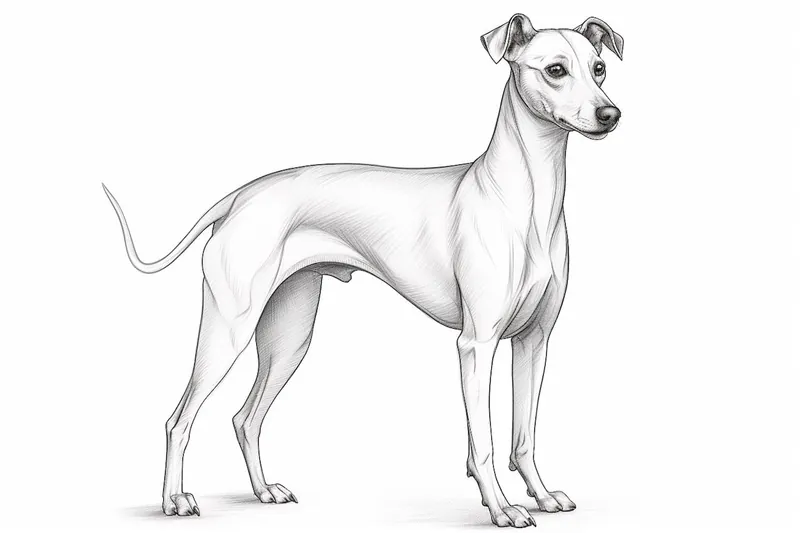
Italian Greyhounds are renowned for their slender frames, delicate features, and graceful demeanor, making them a favorite among dog lovers and artists alike. With their elegant posture, long legs, and expressive eyes, these dogs exude a timeless charm that is both captivating and challenging to capture on paper. Learning how to draw an Italian Greyhound allows you to appreciate their unique characteristics and can be a rewarding subject for anyone interested in animal art or canine portraiture.
Whether you are an aspiring artist or simply want to immortalize your beloved pet, mastering the basics of how to draw an Italian Greyhound will help you develop essential skills in observation, proportion, and shading. This breed's graceful form presents an excellent opportunity to practice drawing smooth, flowing lines and subtle contours, which are key techniques for both beginners and more advanced artists. You'll learn to break down complex shapes into simple steps, making the process approachable and enjoyable regardless of your experience level.
By following this step-by-step guide, you'll not only create a beautiful representation of this elegant breed but also build confidence in your artistic abilities. Drawing Italian Greyhounds can be a fun way to improve your skills and express your love for these wonderful dogs. So gather your drawing materials, let your creativity flow, and remember—every artist improves with practice. Let's dive in and discover the joy of capturing the spirit of the Italian Greyhound on paper!
Materials Required
To draw an Italian Greyhound, you will need the following materials:
- Drawing paper or sketchbook
- Pencils (preferably a range of hardness, such as 2H, HB, 2B, and 4B)
- Eraser
- Blending stump or tortillon (optional)
- Reference photo of an Italian Greyhound
Make sure you have all these materials ready before you begin.
Step 1: Basic Framework
Tip: When drawing an Italian Greyhound, it's beneficial to use a reference photo that showcases the breed's anatomy from multiple angles. This will help you accurately capture their slender frame and elegant posture while allowing you to observe details like the gentle curve of their back and the delicate proportions of their legs and neck. Additionally, consider sketching lightly in the initial stages to easily make adjustments as needed, ensuring that you maintain the dog's natural elegance without overstating its slenderness.
Start by drawing a vertical line that will act as the center of the body. Then, draw a circle at the top of the line to represent the head. Add a horizontal line intersecting the vertical line to mark the eye level. This will serve as a guide for placing the facial features later on.
Step 2: Body Outline
From the top of the circle, draw a curved line downwards to create the back of the dog. Continue drawing a curved line to form the belly and bring it back up towards the starting point, creating an elegant curve. Make sure the back is slightly arched, as it's characteristic of Italian Greyhounds. Add a small curved line to represent the tail.
Step 3: Legs and Paws
Extend four lines downwards from the belly to create the legs. These lines should curve slightly towards the back to emulate the dog's posture. At the ends of the legs, draw small rounded shapes to represent the paws. Italian Greyhounds have delicate and slender legs, so keep that in mind while drawing.
Step 4: Head and Facial Features
Refine the shape of the head by adding a slightly curved jawline. Then, draw two almond-shaped eyes on the horizontal line you previously marked. Italian Greyhounds have large, expressive eyes, so try to capture that in your drawing. Add a small triangular shape to represent the nose, and a curved line underneath to indicate the mouth.
Step 5: Ears and Neck
Draw two long, thin ears on either side of the head. They should start from the top of the head and curve gently towards the sides. These ears are one of the distinctive features of Italian Greyhounds, so pay attention to their shape and size. Connect the head and body with a slender neck, curving it slightly to add elegance.
Step 6: Filling in Details
Now that you have the basic framework, it's time to add details to your drawing. Start by refining the shape of the body, emphasizing the curves and contours of the Italian Greyhound. Sketch in the chest, shoulder, and hindquarters, paying attention to their proportions and muscle definition.
Next, add more details to the face. Use curved lines to define the muzzle and the bridge of the nose. Draw the eyelids and add a small reflection to the eyes to make them appear more alive. Don't forget to capture the gentle expression of the Italian Greyhound by adding a hint of a smile.
Step 7: Fur Texture
Italian Greyhounds have short, smooth fur that lies close to their bodies. To create a textured appearance, use short, soft strokes with your pencil. Start by shading the areas that are in shadow, such as the underside of the body, the legs, and the neck. Gradually build up layers of shading, adding more depth and volume to your drawing.
Step 8: Refining and Blending
Take a step back and observe your drawing so far. Look for any areas that need refinement or adjustment. Use an eraser to lighten any lines that may be too dark or to correct any mistakes. If desired, you can also use a blending stump or tortillon to smooth out the shading and create a more seamless transition between light and dark areas.
Mistake Alert: A common mistake when drawing Italian Greyhounds is unintentionally exaggerating their slenderness, resulting in figures that look fragile or unrealistic. This often happens because beginners focus so much on the breed's delicate frame that they make the neck, legs, or body too thin, sacrificing anatomical accuracy. To avoid this, always reference multiple photos and pay close attention to the underlying bone structure and muscle placement—Italian Greyhounds are slim but still have defined shoulders, hips, and a gentle taper in their limbs. Lightly sketch the main shapes first, using soft guidelines to map proportions before refining the contours, and remember that subtle curves and carefully observed anatomy will help capture their true elegance without making them appear brittle.
Conclusion
Drawing an Italian Greyhound may seem challenging at first, but with the right guidance and practice, you can create a stunning representation of this elegant breed. Remember to start with a basic framework, gradually add details and shading, and refine your drawing as you go. With time and patience, your Italian Greyhound drawing will capture the unique beauty of this beloved dog.
So, grab your pencils and let your creativity flow as you bring an Italian Greyhound to life on paper. Enjoy the process and embrace the joy of capturing the essence of this wonderful breed through your art!
Fun Facts About Italian Greyhounds
- The Italian Greyhound is the smallest of the sighthound breeds, typically weighing just 7–14 pounds.
- This breed has been a favorite companion of royalty and nobility since ancient Roman times.
- Italian Greyhounds can reach speeds up to 25 miles per hour, making them impressively fast for their size.
- Despite their delicate appearance, Italian Greyhounds are known for their playful and affectionate personalities.
- Their short, fine coat makes them sensitive to cold weather, so they often need sweaters in winter.
- Italian Greyhounds are prone to dental issues and require regular teeth cleaning.
- They are highly intelligent and respond well to positive reinforcement training.
- Italian Greyhounds have a life expectancy of 14–15 years, making them a long-lived breed.
- They are known for their "tuck up," a pronounced curve in the belly, which is a classic sighthound trait.
Suggestions for Scenes and Settings for Italian Greyhound Drawings
- An Italian Greyhound lounging gracefully on a velvet chaise lounge in a sunlit room, capturing its regal and relaxed posture.
- The dog sprinting across a grassy field, its slender body and long legs depicted in full motion to emphasize speed and elegance.
- A cozy scene of the Italian Greyhound curled up in a soft blanket by a fireplace, highlighting its delicate frame and gentle demeanor.
- A whimsical outdoor café setting, with the Greyhound sitting patiently beside its owner at a bistro table, wearing a stylish sweater or scarf.
- The dog gazing out a window, its silhouette framed by soft curtains, showing off its elegant neck and attentive expression.
- An Italian Greyhound interacting with butterflies or small birds in a blooming garden, capturing its curiosity and gentle nature.
- A portrait of the Greyhound in classical Renaissance attire, paying homage to its Italian heritage and aristocratic looks.
- The Greyhound playfully chasing a ball or toy in an urban park, surrounded by trees and cityscape in the background.
- A close-up study focusing on the expressive eyes and fine features of the Italian Greyhound, with attention to light and shadow.
- The dog standing tall on a rocky outcrop at sunset, with the wind gently ruffling its short fur, evoking a sense of freedom and grace.