How to Draw a Snake Head
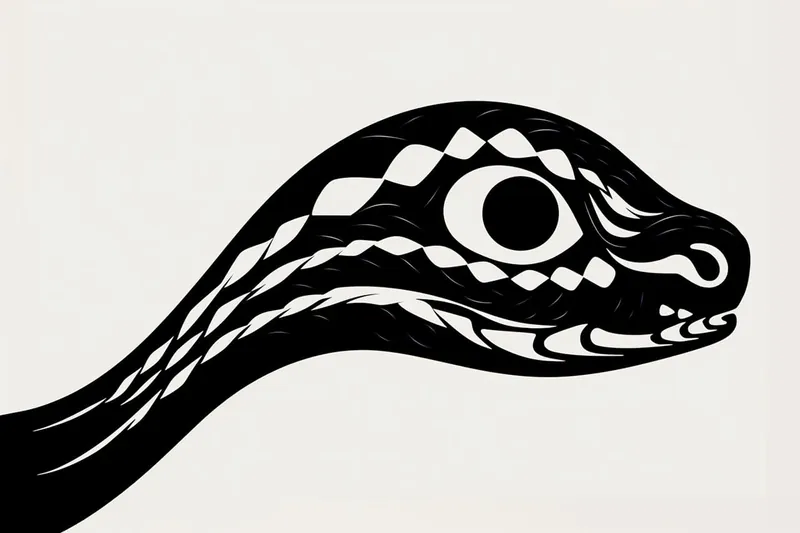
Learn how to draw a snake head with this step-by-step tutorial. From sketching the basic shape to adding details and shading - master the art of drawing a realistic snake head.
Materials You'll Need
- Pencil
- Paper
- Eraser
Welcome to this comprehensive step-by-step tutorial on how to draw a snake head! Snakes are fascinating creatures known for their sleek forms, mesmerizing patterns, and captivating eyes. Their heads, with distinctive scales and expressive features, have inspired artists for centuries and can be found in everything from ancient mythology to modern tattoo designs. Learning to capture the unique structure of a snake head not only enhances your drawing repertoire but also deepens your appreciation for the subtle beauty found in nature's details.
There are many reasons you might want to learn how to draw a snake head. Perhaps you are working on a wildlife illustration, designing a fantasy character, or simply challenging yourself to master different animal anatomies. Drawing a snake head can help you improve your skills in creating textures, understanding animal proportions, and working with shading to create depth. Since snakes are such symbolic creatures, your finished drawing could serve as a striking piece of art, a tattoo concept, or a fun addition to your sketchbook.
This tutorial is designed to be accessible to artists of various skill levels, from beginners eager to gain confidence with animal portraits, to more experienced artists looking to refine their observational and rendering abilities. You'll explore techniques such as sketching basic shapes, mapping out proportions, and adding detailed textures like scales and eyes. With clear, easy-to-follow instructions, you'll see how to draw a snake head by breaking the process down into manageable steps, making the task less intimidating and more enjoyable.
So, gather your pencils and drawing paper, and get ready to embark on a creative adventure. Remember, every artist develops their skills with patience and practice, and this tutorial will guide you at each stage. By the end, you'll not only have a striking drawing, but also a greater confidence in your ability to tackle other animal subjects. Let's dive in and discover the secrets of how to draw a snake head together!
Materials Required
Before we begin, gather the following materials:
- Paper: Use a white sketching or drawing paper that is preferably heavyweight to prevent any smudging.
- Pencils: Get a set of graphite pencils ranging from H to 6B. The H pencils are lighter, while the B pencils are darker.
- Eraser: Have a kneaded eraser or a vinyl eraser handy to correct any mistakes.
- Sharpener: Make sure you have a sharpener to keep your pencils ready for use.
Now that you have your materials ready, let's dive into the process of drawing a snake head!
Step 1: Sketch the Basic Shape
Start by lightly sketching an oval shape to represent the snake's head. Keep the lines faint as they will be erased later. Place the oval horizontally in the middle of your paper.
Step 2: Outline the Jawline
Tip: As you progress through the steps of drawing the snake head, consider using reference images to enhance your understanding of the anatomical features and textures, especially for the scales and facial structure. Observing real snakes will help you capture their unique characteristics and subtleties, making your drawing more realistic and dynamic. Additionally, don't hesitate to experiment with different pencil pressures while shading to create a more nuanced representation of light and texture.
From the bottom of the oval shape, sketch a curved line that extends outward to form the snake's lower jaw. Then, connect the endpoint of the curved line to the top of the oval shape, creating a smooth outline for the snake's head.
Step 3: Draw the Eyes
Position the snake's eyes on either side of the head. Start by drawing elongated almond shapes with pointed ends. Leave a small space between the eyes and the outline of the head.
Step 4: Add Detail to the Eyes
Within each eye shape, draw a smaller oval to represent the iris. Add a smaller circle within the iris to depict the pupil. Leave a small white highlight in the pupil to give the eyes depth and realism. Shade the area around the eyes lightly to create depth.
Step 5: Sketch the Nostrils
Position the snake's nostrils just above the upper jawline. Draw two small, triangular shapes on each side of the head to represent the nostrils. Ensure they are symmetrical.
Step 6: Define the Snout
Sketch the snake's snout by drawing a curved line that connects the nostrils to the upper jawline. This will give the snake head a more defined shape.
Step 7: Detail the Scales
Begin adding texture and detail to the snake head by drawing small, curved lines within the oval shape. These lines represent the snake's scales. Start from the top of the head and work your way down, following the contour of the oval shape. These lines should be slightly curved, giving the illusion of depth and dimension.
Step 8: Shape the Lower Jaw
To give the snake head a realistic look, add depth to the lower jaw. Start by drawing a curved line that runs from the top of the lower jawline and gradually widens towards the back of the head. This will create the snake's characteristic triangular-shaped lower jaw.
Step 9: Define the Mouth
Within the lower jaw, add a curved line to represent the snake's mouth. Make sure the line is slightly open to give the snake a menacing appearance. Add small, sharp teeth along the upper and lower jawlines, keeping them evenly spaced.
Step 10: Refine the Outline
Once you are satisfied with the overall structure and shape of the snake head, carefully darken the outlines using a darker pencil, such as a 2B or 4B. Erase any remaining faint guidelines to clean up the drawing.
Step 11: Add Shading and Details
To create depth and dimension, add shading to the snake head. Observe the reference image or imagine a light source, then shade the appropriate areas accordingly. Leave the scales near the top of the head lighter, while the scales around the eyes and the lower jaw can be darker. Use lighter strokes for lighter shadows and press harder for darker shadows.
Step 12: Final Touches
To enhance the realism of your snake head drawing, add highlights to the scales and eyes using an eraser. Lift off small portions of graphite to create an illusion of light reflecting on the surface. Be careful not to overdo it, as it may make the drawing look unrealistic.
Congratulations! You have successfully drawn a snake head. With practice, your snake drawings will become more refined and detailed.
Mistake Alert: A common mistake when drawing a snake head is making the jawline too straight or angular, which can make your snake look stiff or unnatural. This often happens because beginners focus on the fierce reputation of snakes and exaggerate the sharpness of their features, or they simply overlook the subtle curves that define a real snake's anatomy. To avoid this, study reference photos and notice how the lower jaw gently curves from the back of the head to the tip of the mouth, creating a sleek, flowing silhouette. Try sketching the jawline with loose, sweeping strokes instead of hard, straight lines—this will help your snake head appear more lifelike and dynamic.
Conclusion
Drawing a snake head may seem challenging at first, but with patience and practice, you can create stunning and lifelike results. Remember to start with a basic shape, add the key features, and gradually build up the details and textures. By following the step-by-step instructions in this guide, you are well on your way to becoming a skilled snake head artist. So, grab your materials, let your creativity flow, and enjoy the process of bringing a snake head to life on paper!
Fun Facts About Snake Head
- The shape of a snakehead can help identify whether it is venomous or non-venomous.
- Snakes have highly flexible jaws that allow them to swallow prey much larger than their head.
- Many snakes have heat-sensing pits on their heads to detect warm-blooded prey.
- The scales on a snake's head are often larger and more shield-like than those on the rest of its body.
- Some snakes, like cobras, can flare out the skin on their heads and necks to appear larger and more threatening.
- Snake eyes have vertical or round pupils depending on whether they are nocturnal or diurnal.
- The nostrils on a snake's head are used solely for breathing, while their forked tongue is used for smelling.
- Some snakes have specialized head shapes for burrowing, swimming, or climbing.
- Snakehead fish are named for their large, snake-like head shape with enlarged scales, giving them a distinctive appearance.
- They have long, cylindrical bodies with long dorsal and anal fins, and can grow up to 4 feet in length depending on species and location.
- Snakeheads are aggressive, carnivorous predators with dagger-like teeth and large mouths that allow them to consume a wide variety of prey, including fish, crustaceans, frogs, and even small mammals.
- They breathe air using specialized gills and suprabranchial organs, enabling them to survive in low-oxygen waters and even migrate short distances over land.
- Snakeheads create large floating nests for their eggs, and parents fiercely protect their young by distracting predators and keeping the fry together in a "fry ball."
- Native to Asia and Africa, snakeheads have become invasive in parts of the United States, where they disrupt local ecosystems by competing with native fish and potentially spreading diseases.
- Their preferred habitats include shallow, stagnant or slow-moving waters with muddy substrates and dense vegetation, such as ponds, lakes, rivers, and wetlands.
Suggestions for Scenes and Settings for Snake Head Drawings
- Close-up of a snake head emerging from tall grass, with dew drops on its scales.
- A snake head peeking out from a crack in ancient ruins, surrounded by mysterious carvings.
- Portrait of a snake head with its tongue flicking and reflecting in a still pond.
- Snake head adorned with mythical patterns, inspired by ancient mythology or fantasy lore.
- A dramatic snake head in mid-strike, fangs exposed and eyes focused on prey.
- Snake head with exaggerated scales and vibrant colors, inspired by tropical species.
- Profile of a snake head coiled around a tree branch, blending into the bark texture.
- Snake head partially submerged in water, with reflections and ripples on the surface.
- Snake head wearing a crown or surrounded by jewels, as a symbol of royalty or power.
- Dual snake heads facing each other, representing balance or duality in nature.