How to Draw a Scottish Terrier
Learn how to draw a Scottish Terrier in this easy-to-follow step-by-step guide. Capture the adorable features of this breed on paper using simple techniques.
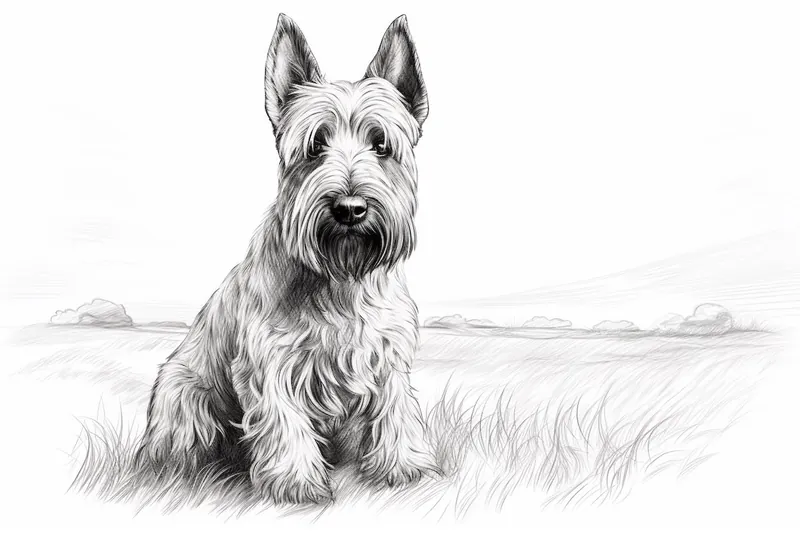
Materials You'll Need
- Pencil
- Paper
- Eraser
The Scottish Terrier, affectionately known as the "Scottie," is an iconic breed recognized for its sturdy build, bushy eyebrows, and dignified beard. With their pointed ears and expressive eyes, Scotties have charmed dog lovers for generations, making frequent appearances in art, advertising, and even pop culture. Their unique silhouette and distinct personality traits offer artists a wonderful opportunity to study character and form, making them a rewarding subject for both beginners and experienced illustrators. Whether you're a fan of the breed or simply looking to expand your skills in drawing animals, learning how to draw a Scottish Terrier can be a delightful and enriching artistic experience.
People are often drawn to sketch Scotties because of their lively spirit and unmistakable look. Capturing the textured fur, the proud stance, and the charming facial features requires attention to detail and a bit of patience, but it's also a fantastic way to practice techniques like shading, layering, and rendering texture. This tutorial is suitable for artists of all skill levels; beginners will benefit from the clear step-by-step instructions, while more advanced artists can experiment with different styles and details. As you work through this guide on how to draw a Scottish Terrier, remember that each line brings your subject to life—embrace the process, and don't be afraid to add your own creative flair. With a bit of practice and enthusiasm, you'll soon have a Scottie drawing to be proud of!
Materials Required
To draw a Scottish Terrier, you'll need the following materials:
- Pencil: A good quality graphite pencil with a range of hardness, such as 2B, 4B, and 6B.
- Paper: Choose a smooth-surfaced paper that can handle graphite shading techniques. Sketch paper or drawing paper will work well.
- Eraser: A kneaded eraser or a soft plastic eraser is ideal for correcting mistakes and refining details.
- Blending stump or tortillon: This tool is useful for blending graphite and creating smooth shading.
Now that we have our materials ready, let's move on to the step-by-step instructions.
Step 1: Basic Shape
Tip: As you draw your Scottish Terrier, take frequent breaks to step back and assess your work from a distance; this will help you identify any proportions or details that may need adjustment. Additionally, using a reference image of a real Scottie can enhance your understanding of its unique features and ensure you capture its distinctive silhouette accurately.
Begin by lightly sketching a circular shape that will serve as the head of the Scottish Terrier. This shape should be slightly elongated horizontally to represent the dog's muzzle. Place this shape towards the upper part of your paper, leaving enough space for the body and legs.
Step 2: Eyes and Nose
Within the head shape, draw two small circles for the eyes. Leave a highlight in the top-left corner of each eye to add a touch of realism. Place the eyes towards the center of the head shape, slightly below the horizontal midpoint.
Between the eyes, draw a small triangle shape for the nose. Add two small dots at the bottom of the triangle to indicate the nostrils.
Step 3: Ears
Scottish Terriers have small, triangular-shaped ears that point upward. Draw two triangles on either side of the head shape, with their bases attached to the upper part of the head. Make sure the inner corners of the ears are slightly rounded.
Step 4: Mouth and Beard
Beneath the nose, draw a slightly curved line to represent the mouth. Add a small, curved line at each end of the mouth to create a smile-like appearance. Extend these lines slightly outwards to create the lower part of the muzzle.
To depict the characteristic Scottie beard, draw a series of short, curved lines that flow downwards from the bottom of the mouth. These lines should form a V-shaped pattern.
Step 5: Neck and Body
Draw a curved line that connects the head to the body. This line represents the neck. From the end of this line, draw another curved line that curves outward slightly to create the back. At the bottom of the back line, draw a horizontal line to represent the belly.
Step 6: Legs and Feet
Starting from the bottom of the belly line, sketch four straight lines for the legs. These lines should be properly spaced to maintain a balanced posture. Then, add small oval shapes at the bottom of each leg for the paws. The front legs should be slightly shorter than the hind legs.
Step 7: Tail
At the back of the body, draw a curved line that represents the tail. The tail should curve upwards and then loop back towards the body, ending slightly above the back.
Step 8: Fur Texture and Details
Now that we have the basic structure, it's time to add some details and give our drawing a realistic touch. Start by refining the shape of the head and body, paying attention to the curves and proportions.
Add short, curved lines throughout the body to represent the Scottie's wiry fur. Focus on the head, neck, and body, as these areas exhibit the most prominent fur texture.
Step 9: Shading and Contrast
To create depth and three-dimensionality, we'll use shading techniques. Observe the reference image or visualize the light source, and shade the areas that would naturally be darker, such as the underside of the body and head, and the spaces between the legs.
Use your blending stump or tortillon to blend the shading, creating a smooth transition between light and dark areas.
Step 10: Final Touches
Evaluate your drawing and make any necessary adjustments. Erase any stray lines or smudges, and refine details like the eyes, nose, and mouth. Add highlights to the eyes with a fine-tipped eraser, making them appear shiny and lifelike.
Congratulations! You have successfully drawn a Scottish Terrier. Remember, the key to improving your skills is practice. Don't be discouraged if your first attempt doesn't turn out perfectly. With time and practice, you'll continue to refine your technique and create stunning works of art.
Mistake Alert: A common mistake when drawing Scottish Terriers is making their bodies too long or low, which can make them look more like generic terriers or dachshunds instead of true Scotties. This usually happens because their thick fur and short legs can be tricky to interpret in reference photos, leading beginners to overemphasize their length. To avoid this, pay special attention to the height of the shoulders compared to the overall body—Scotties are compact and sturdy, with a barrel-shaped chest and a relatively square outline. Try sketching the basic shapes first and frequently check your proportions against your reference, ensuring the back stays short and the legs look strong yet stubby. This will help capture the breed's signature silhouette and give your drawing the unmistakable Scottie charm!
Conclusion
In this article, we have explored the step-by-step process of drawing a Scottish Terrier. By following these instructions and incorporating your personal touch, you can create a beautiful representation of this adorable breed. Remember to have fun and enjoy the process of capturing the unique characteristics of the Scottish Terrier on paper.
We hope this guide has been helpful and inspiring. Happy drawing!
Fun Facts About Scottish Terrier
- The Scottish Terrier, or "Scottie," is one of five breeds originating from Scotland.
- Scottish Terriers are famous for their distinctive beard and eyebrows, which give them a dignified appearance.
- President Franklin D. Roosevelt's beloved Scottie, Fala, is memorialized alongside him at the FDR Memorial in Washington, D.C.
- Scottish Terriers have a double coat with a hard, wiry outer layer and a soft undercoat, as described by Hill's Pet.
- Despite their small size, Scotties are known for their bold and confident personality.
- The breed was originally developed to hunt vermin and foxes in the Scottish Highlands.
- Scottish Terriers have appeared in popular culture, including as the Monopoly game piece and in Disney's "Lady and the Tramp."
- They are sometimes called "Diehard" because of their determined and persistent nature.
- Scotties are prone to a unique health condition called "Scottie cramp," which causes muscle stiffness during excitement or stress.
Suggestions for Scenes and Settings for Scottish Terrier Drawings
- A Scottish Terrier proudly trotting across a misty Highland landscape with rolling hills and heather in the background.
- Close-up portrait of a Scottie with its characteristic bushy eyebrows and dignified beard, surrounded by tartan fabric or a Scottish flag.
- A playful Scottie digging in a garden, with dirt flying and a mischievous expression on its face.
- A Scottie sitting by a cozy fireplace in a rustic cottage, with shadows and warm light playing across its fur.
- Two Scottish Terriers playing together in a city park, capturing their energetic personalities and lively movement.
- A Scottie perched at the window, watching raindrops trickle down the glass, with reflections and soft interior lighting.
- A Scottish Terrier dressed in a raincoat and boots, splashing through puddles on a rainy day walk.
- An imaginative scene of a Scottie as a detective, complete with a magnifying glass and a Sherlock Holmes-style cap.
- A group of Scotties participating in a dog show, each with different poses and expressions highlighting their individuality.
- A Scottie napping in a sunbeam, with detailed attention to the texture of its wiry fur and the play of light and shadow.