How to Draw a Plant Cell
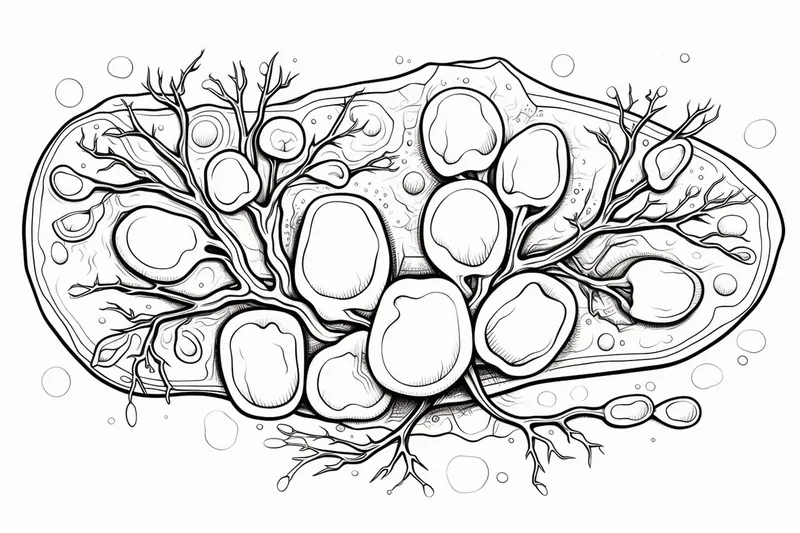
Learn how to draw a plant cell with this step-by-step tutorial. Explore the structures within a plant cell in an accurate and visually appealing way.
Materials You'll Need
- Pencil
- Paper
- Eraser
Welcome to this comprehensive tutorial on how to draw a plant cell! Plant cells are the fundamental building blocks of all plant life, containing unique structures such as the cell wall, chloroplasts, and a large central vacuole that set them apart from animal cells. Understanding the various parts of a plant cell not only deepens your appreciation for biology but also enhances your ability to visualize complex scientific concepts. By learning how to draw a plant cell, you'll be able to illustrate these fascinating microscopic worlds with accuracy and creativity, making it a valuable skill for students, educators, and anyone with a passion for science or art.
Whether you're a biology student needing a clear diagram for your notes, a teacher looking to create engaging classroom materials, or an artist intrigued by the beauty of natural forms, drawing a plant cell offers both educational and artistic rewards. This tutorial is designed to be accessible to all skill levels, guiding you step by step through sketching each component, from the cell membrane to the nucleus. You'll practice basic drawing techniques such as outlining, shading, and labeling, which are essential for creating detailed scientific illustrations. Don't worry if you're new to drawing—patience and practice are key, and by the end of this guide, you'll have a clear and attractive plant cell diagram. So grab your materials and let's embark on this artistic journey together—soon you'll discover just how rewarding and fun it can be to master how to draw a plant cell!
Materials Required
Before we begin, make sure you have the following materials handy:
Now that you have everything you need, let's get started!
Step 1: Sketch the Cell Outline
Begin by drawing a square or rectangular shape in the center of your paper. This will be the outline of the plant cell. Use light, gentle strokes to create the shape, as these lines will be erased later.
Step 2: Divide the Cell into Equal Sections
Using your ruler, draw two vertical lines and two horizontal lines inside the cell outline to divide it into equal sections. These lines will serve as guides for placing the various components of the plant cell.
Step 3: Add the Cell Wall
Within the outermost square or rectangle, draw a thicker line to represent the cell wall. The cell wall is a rigid structure that surrounds the plant cell, providing support and protection.
Step 4: Sketch the Cell Membrane
Inside the cell wall, draw a thinner line to represent the cell membrane. The cell membrane is a semipermeable barrier that controls the movement of substances in and out of the cell.
Step 5: Draw the Nucleus
At the center of the cell, draw a circular shape to represent the nucleus. The nucleus is often referred to as the control center of the cell, as it contains the DNA and regulates cell activities.
Step 6: Add the Nuclear Membrane
Within the nucleus, draw another circular shape to represent the nuclear membrane. This membrane encloses the nucleus and separates it from the rest of the cell.
Step 7: Sketch the Nucleolus
Inside the nucleus, draw a small, dark spot to represent the nucleolus. The nucleolus plays a crucial role in the production of ribosomes.
Step 8: Draw the Cytoplasm
Around the nucleus, fill the remaining space within the cell with a lighter shading to represent the cytoplasm. The cytoplasm is a gel-like substance that fills the cell and houses various organelles.
Step 9: Add the Endoplasmic Reticulum
Tip: To enhance your plant cell drawing, consider using reference images of actual plant cells or diagrams from biology textbooks. Observing these references can help you understand the proportions and details of each organelle, allowing you to depict them more accurately and with greater creativity. Additionally, don't hesitate to experiment with different shading techniques or colors to bring your illustration to life and make it visually appealing.
Within the cytoplasm, draw a series of interconnected shapes that resemble flattened tubes or sacs. These structures represent the endoplasmic reticulum, which is involved in the synthesis and transport of proteins and lipids.
Step 10: Sketch the Golgi Apparatus
Next to the endoplasmic reticulum, draw a stack of flattened, curved shapes to represent the Golgi apparatus. The Golgi apparatus processes and packages proteins and lipids for transport within and outside the cell.
Step 11: Draw the Mitochondria
Within the cytoplasm, draw several elongated ovals or sausage-shaped structures to represent the mitochondria. The mitochondria are often referred to as the powerhouses of the cell, as they produce energy through cellular respiration.
Step 12: Add the Vacuoles
Draw one or two large, circular shapes within the cytoplasm to represent the vacuoles. Vacuoles are fluid-filled sacs that store water, nutrients, and waste materials within the cell.
Step 13: Sketch the Chloroplasts
Within the cytoplasm, draw small, disc-shaped structures with green shading to represent the chloroplasts. Chloroplasts are responsible for photosynthesis, the process by which plants convert sunlight into energy.
Step 14: Add the Plasmodesmata
Finally, draw small dots or openings in the cell wall to represent the plasmodesmata. Plasmodesmata are channels that allow communication and transport of substances between plant cells.
Did You Know?: Plant cells are remarkable because they can convert sunlight into energy through a process called photosynthesis, thanks to their unique organelles called chloroplasts. Each chloroplast contains stacks of tiny green discs called thylakoids, which are responsible for capturing light energy—something animal cells cannot do! When you draw those little oval-shaped chloroplasts, remember you're illustrating the engines that power not only the plant but, indirectly, almost all life on Earth. Including these details in your drawing can help you appreciate how every part of the cell plays a vital role in the plant's survival and our planet's ecosystem.
Conclusion
Congratulations! You have successfully drawn a plant cell. By following these step-by-step instructions, you have created a visual representation of the various structures within a plant cell. Remember to experiment with different colors and shading techniques to make your drawing more vibrant and lifelike. Drawing and understanding the components of a plant cell can be a fascinating way to explore the complexity of living organisms.
I hope you enjoyed this tutorial on how to draw a plant cell. Now, grab your materials and start sketching! Happy drawing!
Fun Facts About Plant Cell
- Plant cells have a rigid cell wall made of cellulose that provides structural support.
- Chloroplasts in plant cells contain chlorophyll, which allows plants to perform photosynthesis.
- The large central vacuole in plant cells stores water, nutrients, and waste products.
- Plant cells communicate with each other through tiny channels called plasmodesmata.
- Unlike animal cells, plant cells usually lack centrioles for cell division.
- The Golgi apparatus in plant cells processes and packages proteins and lipids for transport.
- Plant cells contain mitochondria, which generate energy through cellular respiration.
- The endoplasmic reticulum helps synthesize proteins and lipids in plant cells.
- Plant cells have a nucleus that stores genetic material and controls cell activities.
- Chloroplasts are believed to have originated from ancient endosymbiosis.
Suggestions for Scenes and Settings for Plant Cell Drawings
- Draw a plant cell as if viewed through a microscope, complete with a glass slide and lens reflections in the background.
- Create a fantasy landscape inside a plant cell, where each organelle appears as a unique building or habitat within a microscopic city.
- Illustrate a plant cell with anthropomorphic organelles, each with faces and personalities, working together inside the cell "factory."
- Depict a cross-section of a leaf showing several plant cells together, highlighting how they fit and connect in a real tissue setting.
- Design a plant cell as a colorful infographic with each organelle labeled and highlighted in different vivid shades.
- Show a time-lapse sequence of a plant cell during photosynthesis, with light beams entering and chloroplasts glowing.
- Imagine the plant cell as a "space station," with organelles floating like modules in zero gravity inside the cell.
- Combine art and science by drawing a plant cell using abstract patterns, where each structure is represented by unique geometric shapes.
- Portray a plant cell under stress (like drought or disease), visually indicating changes in the cell's structures and contents.
- Draw a comic strip where different organelles interact or have a conversation about their roles within the plant cell.