How to Draw a Motorcycle
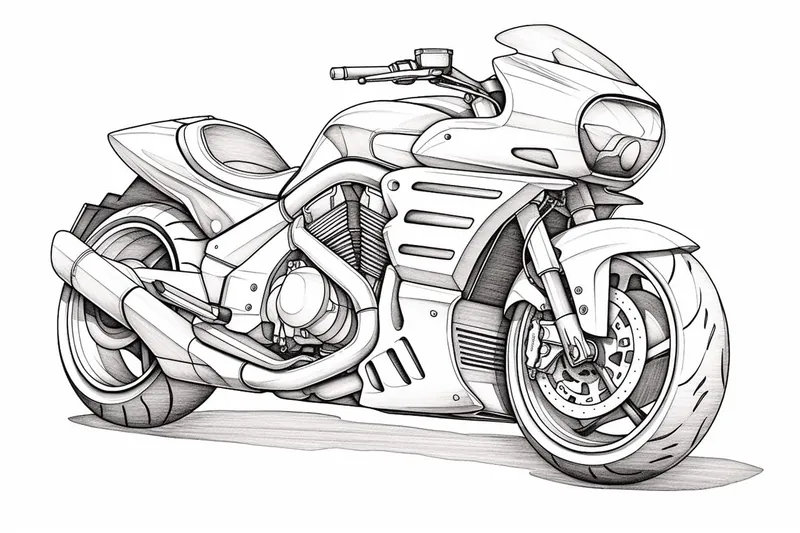
Learn how to draw a motorcycle with this step-by-step tutorial. Whether you're an artist or a beginner, this guide will help you create a detailed and realistic motorcycle drawing.
Materials You'll Need
- Pencil
- Paper
- Eraser
Motorcycles have long captured the imagination of artists and enthusiasts alike with their dynamic forms, intricate mechanical details, and sense of freedom and adventure. Drawing a motorcycle can be a rewarding challenge, as these vehicles combine both sleek, aerodynamic shapes and a surprising amount of technical complexity. From the curve of the frame to the details of the engine and wheels, every part offers an opportunity to practice observation and hone your skills in rendering different textures and components. Understanding how to draw a motorcycle isn't just about replicating its appearance—it's also a great way to explore perspective, proportion, and the art of capturing motion within a still image.
Whether you're a passionate motorbike fan wanting to pay tribute to your favorite ride, an aspiring concept artist aiming to include vehicles in your portfolio, or simply looking to expand your range of drawing subjects, learning how to draw a motorcycle can be incredibly beneficial. This tutorial is designed to be accessible to artists of all skill levels, from beginners eager to develop foundational techniques to more advanced artists seeking to refine their attention to detail. Throughout this guide, you'll learn how to break down the complex structure of a motorcycle into manageable shapes, use guidelines to maintain accurate proportions, and add details that bring your drawing to life.
No matter your experience level, remember that drawing is a process—every line you put down brings you closer to your goal. Don't be discouraged if your first attempt isn't perfect; with practice and patience, your skills will grow. So gather your materials, get comfortable, and let's embark on the exciting journey of learning how to draw a motorcycle together!
Materials Required
Before we begin, make sure you have the following materials on hand:
- A pencil(preferably an HB or 2B)
- An eraser
- Paper (preferably drawing paper or sketchbook)
- A ruler
- Optional: Colored pencils or markers (for adding color to your drawing)
Now that you have your materials ready, let's dive into the step-by-step process of drawing a motorcycle.
Step 1: Draw the Basic Shapes
Start by lightly sketching a horizontal line across your paper to serve as the ground. This will help you maintain the proportions of your motorcycle. Then, draw a medium-sized rectangle for the main body of the motorcycle. This rectangle will be slightly tilted towards the front.
Step 2: Outline the Wheels
Next, draw two circles on either side of the main body. These circles will represent the wheels of the motorcycle. Make sure they are evenly spaced and aligned with each other. Use your ruler to measure the distance between the circles if needed.
Step 3: Add the Front Wheel Fork
Draw two diagonal lines extending from the bottom corners of the rectangle towards the front of the motorcycle. These lines will serve as the fork for the front wheel. Make sure they are parallel to each other and slightly wider than the width of the front wheel.
Step 4: Sketch the Seat and Handlebars
Tip: As you work through the steps of drawing a motorcycle, consider using reference images to better understand the proportions and angles of different motorcycle models. Observing real-life bikes or high-quality photographs can provide insights into the unique details and shapes of various components, helping you achieve a more accurate and dynamic representation in your artwork.
Add a small rectangle shape above the rear part of the main body to represent the seat of the motorcycle. Then, draw a curved line extending from the top of the fork towards the rear of the motorcycle to create the handlebars. Make sure to position the handlebars slightly higher than the seat.
Step 5: Create the Fuel Tank and Headlight
Draw a curved shape on top of the main body to represent the fuel tank. This shape can vary depending on the style of motorcycle you want to draw. Above the fuel tank, add a small circle for the headlight of the motorcycle.
Step 6: Outline the Rear Wheel and Tail
Similar to the front wheel, draw a circle on the opposite side of the main body to represent the rear wheel. Make sure it is aligned with the front wheel and has the same size. Then, add a curved line extending from the rear of the main body to create the tail of the motorcycle.
Step 7: Refine the Details
Now that you have the basic structure of the motorcycle, it's time to add more details. Use your pencil to darken the outlines of the various components, such as the wheels, fuel tank, seat, handlebars, and tail. Pay close attention to the curves and angles to ensure accuracy.
Step 8: Add Shading and Texture
To give your motorcycle drawing depth and dimension, add shading and texture. Use your pencil to lightly shade areas that would be in shadow, such as the underside of the main body, wheels, and the space between components. You can also add texture to the seat, handlebars, and other parts by drawing small lines or patterns.
Step 9: Add Color (Optional)
If you prefer to add color to your drawing, now is the time to do so. Use colored pencils or markers to bring your motorcycle to life. Consider the colors commonly associated with motorcycles, such as black, silver, red, or any other color that suits your preference.
Mistake Alert: One of the most common mistakes when drawing a motorcycle is misaligning the wheels, which often results in a bike that looks unstable or awkward. This usually happens because it's tempting to focus on individual details—like the engine or handlebars—without first establishing a solid underlying perspective and axis for the wheels. To avoid this pitfall, always begin with a light sketch of the ground line and a central axis for the motorcycle, making sure both wheels are evenly spaced and share the same tilt and perspective. Double-check the alignment before adding any details, as correcting wheel placement later can be tricky and time-consuming. This foundational step will ensure your motorcycle looks balanced, realistic, and ready to ride!
Conclusion
Congratulations! You have successfully learned how to draw a motorcycle. By following the step-by-step instructions and using your creativity, you can create stunning motorcycle drawings. Remember to practice regularly and experiment with different styles and details to improve your skills as an artist. Now, grab your pencils and start drawing your own two-wheeled masterpieces!
Fun Facts About Motorcycles
- The first motorcycle was built in 1885 by Gottlieb Daimler and Wilhelm Maybach, and it was called the Daimler Reitwagen.
- The world's fastest production motorcycle is the Dodge Tomahawk, which can reach speeds of nearly 350 mph.
- Harley-Davidson, one of the most iconic motorcycle brands, was founded in 1903 in Milwaukee, Wisconsin.
- The longest motorcycle ever built measured over 86 feet and holds a Guinness World Record.
- Motorcycle helmets reduce the risk of head injury by about 69%, according to the Centers for Disease Control and Prevention.
- The Isle of Man TT is considered one of the most dangerous and prestigious motorcycle races in the world.
- There are more than 200 million motorcycles in use worldwide, with the highest numbers in Asia.
- Electric motorcycles are gaining popularity, with brands like Zero Motorcycles leading the way in innovation.
- The term "café racer" refers to a style of motorcycle popularized in 1960s Britain.
- Motorcycle clubs, such as the Hells Angels, have played a significant role in motorcycle culture.
Suggestions for Scenes and Settings for Motorcycle Drawings
- A classic cruiser motorcycle parked outside a retro diner at sunset, with neon lights reflecting off its chrome surfaces.
- A sport bike racing down a winding mountain road, capturing the blur of speed and dynamic motion.
- A vintage motorcycle being restored in a cluttered garage, surrounded by tools, spare parts, and posters on the walls.
- A group of motorcyclists on a scenic road trip, riding along a coastal highway with waves crashing below.
- A futuristic motorcycle zooming through a cyberpunk cityscape, illuminated by glowing billboards and rain-soaked streets.
- A motorcycle parked under a streetlamp on a rainy night, with reflections shimmering on the wet pavement.
- An adventure bike crossing a dusty desert trail, with mountains and cacti in the background.
- A rider performing a wheelie or trick at a motorcycle stunt show, surrounded by an excited crowd.
- An old chopper rusting in a field overgrown with wildflowers, evoking a sense of nostalgia and abandonment.
- A close-up, detailed study of a motorcycle engine, focusing on the intricate mechanical parts and textures.