How to Draw a Horse Jumping
Learn how to draw with this step-by-step tutorial.
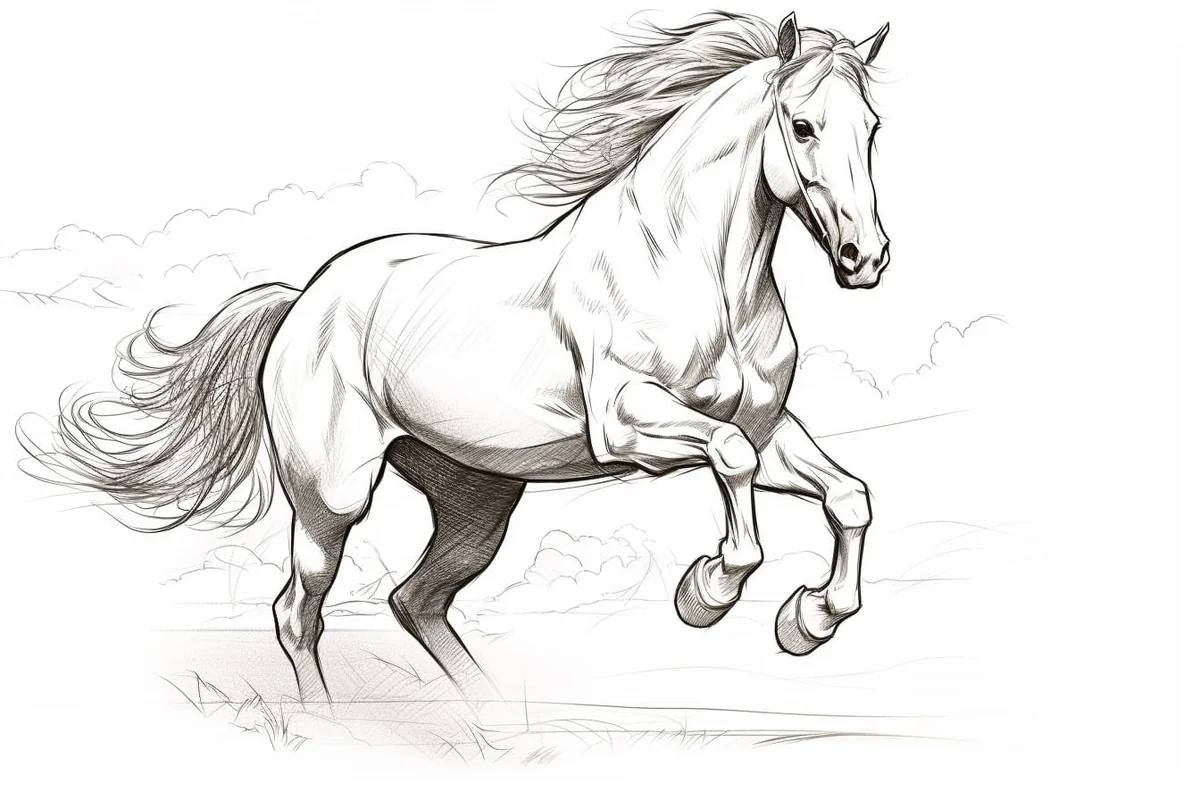
Materials You'll Need
- Drawing paper
- Pencil (HB or 2B)
- Eraser
- Blending stump
Drawing a horse in mid-jump is not only a captivating subject but also a fantastic way to challenge and improve your artistic skills. Horses are majestic creatures known for their strength, elegance, and dynamic movement. Capturing a horse jumping over an obstacle allows you to explore anatomy, motion, and perspective all at once. This action-packed pose embodies both power and grace, making it a rewarding subject for artists who want to bring energy and life into their drawings. Whether you are a beginner eager to expand your portfolio or an experienced artist looking to refine your skills, learning how to draw a horse jumping offers a unique opportunity to practice observing movement and form in a complex subject.When tackling how to draw a horse jumping, it's important to start with the fundamentals: understanding the basic shapes that make up the horse's body, the angles of its legs and neck, and the natural flow of muscles under the skin. This tutorial will guide you through each phase, from sketching simple geometric shapes to adding detailed anatomy and realistic shading. Although drawing a horse in motion can seem daunting at first, breaking down the process into manageable steps helps build confidence and ensures accuracy. Along the way, you'll develop skills such as proportion, gesture drawing, and capturing dynamic poses that will benefit your overall art practice.So, if you're ready to bring a powerful scene to life on paper, grab your sketchbook and pencil! With patience and practice, you'll soon master how to draw a horse jumping with both precision and artistic flair. Remember, every great drawing starts with a single line, and each attempt brings you closer to creating art that moves and inspires. Let's dive into this exciting journey together and discover the joy of drawing one of nature's most beautiful athletes in motion.
Materials Required
To draw a horse jumping, you will need the following materials:
-
Pencil: A graphite pencil of medium hardness (HB or 2B) is recommended for sketching the initial shapes.
-
Eraser: A kneaded eraser or a soft vinyl eraser will allow you to correct any mistakes.
-
Sketchbook or Drawing Paper: Choose a paper that is suitable for your preferred drawing medium.
-
Reference Photo: Find a high-quality reference photo of a horse jumping to help guide you in capturing the correct proportions and details.
Now that you have gathered your materials, let's begin drawing a horse jumping!
Step 1: Basic Shapes
Start by lightly sketching the basic shapes that make up the horse's body. Begin with an oval for the horse's head and a larger oval for its body. Connect these two shapes with a curved line to form the horse's neck. Add a slightly curved line at the bottom of the body for the belly and a smaller oval at the end for the hindquarters.
Step 2: Legs and Hooves
Next, add the legs and hooves of the horse. Use straight lines to indicate the position and angle of each leg. Pay attention to the position of the legs in relation to the body and the ground. Draw simple rectangular shapes for the hooves at the bottom of each leg.
Step 3: Neck and Mane
Refine the shape of the neck by adding curves and tapering it towards the head. Add details to indicate the mane, which is the horse's hair that falls along the neck. Use flowing lines to suggest the movement and direction of the mane.
Step 4: Tail and Ears
Draw the tail of the horse, which extends from the hindquarters. The tail should flow naturally and curve slightly as it hangs in the air. Add two small triangle shapes on top of the head for the ears.
Step 5: Eyes, Nose, and Mouth
Add the facial features of the horse. Draw two ovals for the eyes, a small triangle for the nose, and a line for the mouth. Pay attention to the placement and proportions of these features to capture the horse's expression.
Step 6: Muscles and Proportions
Now it's time to add more detail and refine the proportions of the horse. Study the reference photo to observe the muscles and skeletal structure of a horse in mid-jump. Use curved lines to indicate the contours of the muscles and add shading to create depth and volume.
Step 7: Jockey and Tack
If desired, you can add a jockey on the horse's back, along with the necessary saddles and reins. This will add an extra element of action and realism to your drawing. Draw the jockey in a riding position, with one hand holding the reins and the other in a balanced position.
Step 8: Final Details
Take a step back and evaluate your drawing so far. Look for any areas that need refinement or adjustments. Add any additional details such as the horse's mane flowing in the wind, dirt kicked up by its hooves, or any other elements that will enhance the overall composition.
Conclusion
Drawing a horse jumping requires careful observation and attention to detail. By following these step-by-step instructions, along with the aid of a reference photo, you can capture the grace and power of a horse in mid-air. Remember to start with basic shapes, refine the proportions, and add the final details to bring your drawing to life. With practice and patience, you'll be able to create stunning artwork of horses jumping. Now, go grab your pencils and start drawing!
Fun Facts About Horse Jumping
-
Horse jumping, also known as show jumping, became an Olympic sport in 1912, showcasing the agility and training of both horse and rider.
-
The highest recorded horse jump is 8 feet 1.25 inches (2.47 meters), achieved by Huaso ex-Faithful in 1949.
-
Show jumping courses are designed with a variety of obstacles including verticals, oxers, and combinations to test the horse's skill and precision.
-
Horses used in jumping are often warmblood breeds, prized for their strength, temperament, and athleticism.
-
Riders must maintain a balanced position and clear communication with their horse to successfully navigate jumps without faults. Equestrian Life
-
Show jumping tests not only jumping ability but also speed and accuracy, with penalties for knocking down rails or refusals. British Showjumping
-
The Fédération Équestre Internationale (FEI) governs international show jumping competitions and sets the rules for the sport.
-
Jumping horses use a bascule
Suggestions for Scenes and Settings for Horse Jumping Drawings
-
A horse leaping over a rustic wooden fence in a sunlit countryside meadow, with wildflowers and rolling hills in the background.
-
A dramatic nighttime showjumping event under bright stadium lights, capturing the horse and rider mid-air with colorful banners and an excited crowd.
-
A horse jumping over a water obstacle in a lush forest clearing, with reflections shimmering on the water's surface.
-
An elegant horse clearing a high jump during an Olympic-style arena competition, with flags fluttering and judges watching intently.
-
A dynamic scene of a wild mustang hurdling over fallen logs in a rugged mountain terrain, emphasizing natural freedom and power.
-
A horse and jockey navigating a challenging cross-country course, jumping over natural obstacles like stone walls and ditches amid autumn foliage.
-
A whimsical fantasy setting where a horse jumps over glowing magical gates or enchanted barriers in a misty, ethereal landscape.
-
A close-up perspective focusing on the horse's muscular legs and hooves mid-jump, with blurred background to emphasize motion.
-
A horse jumping at dawn on a beach, with waves crashing in the background and seagulls flying overhead.
-
A stylized urban scene where a horse jumps over graffiti-covered barriers in an abandoned cityscape, blending nature with street art.