How to Draw a Catfish
Learn how to draw a catfish with this step-by-step tutorial. Create a realistic and detailed catfish illustration using these clear and concise instructions.
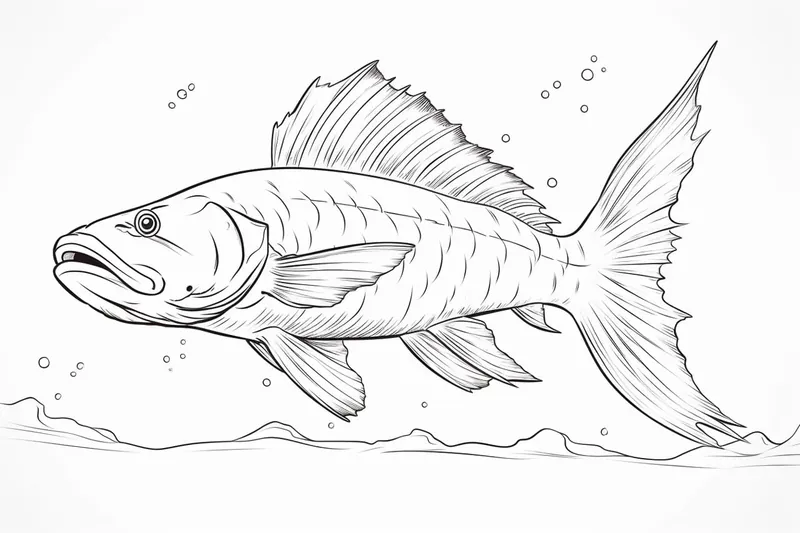
Materials You'll Need
- Pencil
- Paper
- Eraser
Drawing a catfish offers a unique opportunity to explore the fascinating features of this distinctive freshwater fish, known for its smooth, whisker-like barbels and broad, flat head. Catfish are not only interesting subjects due to their unusual anatomy but also because they play a significant role in many aquatic ecosystems around the world. Whether you are captivated by their natural habitat or intrigued by their adaptive features, learning how to draw a catfish can deepen your appreciation for aquatic life and improve your observational skills.
This tutorial on how to draw a catfish is designed for artists of all skill levels, from beginners eager to develop foundational drawing techniques to more experienced artists looking to refine their ability to capture realistic textures and proportions. Throughout the process, you will learn how to sketch the fish's characteristic barbels, smooth body contours, and distinctive fin placement with attention to detail and shading. These techniques will help you create a lifelike representation that highlights the catfish's unique appearance while enhancing your overall drawing skills.
By following this step-by-step guide, you'll gain confidence in your ability to accurately depict this fascinating creature, combining both creativity and technical skill. So, gather your pencils, erasers, and paper, and prepare to embark on a rewarding artistic journey. Remember, practice is key, and with patience and dedication, you will soon master how to draw a catfish that truly comes to life on the page!
Materials Required
Before we begin, make sure you have the following materials on hand:
- Pencil
- Eraser
- Drawing paper or sketchbook
- Fine-tip marker or pen (optional)
- Colored pencils or markers (optional)
Having these materials readily available will ensure a smooth drawing process, but feel free to experiment and use different tools if you prefer.
Step 1: Reference Image
To capture the unique characteristics of a catfish, it's essential to have a reference image to work from. Look for a clear and high-quality photo that showcases the distinct features of a catfish, such as its whiskers, fins, and tail. Having a reference image will help guide you throughout the drawing process and ensure accuracy.
Step 2: Basic Shapes
Tip: As you work through the drawing steps, consider taking regular breaks to step back and assess your progress from a distance; this will help you identify areas that may need adjustment in proportions or details, ensuring your catfish drawing remains balanced and lifelike.
Start by lightly sketching the basic shapes of the catfish. Begin with a large oval shape for the body, slightly elongated towards the tail. Add a small circle at the front for the head, positioning it above the oval body shape. Connect the head and body with a curved line.
Step 3: Facial Features
Add the catfish's facial features by sketching two small circles for the eyes on the head shape. Position them towards the top edges of the head. Draw a tiny dot inside each eye to represent the pupils. Just below the eyes, sketch a small triangle shape for the mouth, curving it slightly upward.
Step 4: Body Details
Next, it's time to add some details to the catfish's body. Starting from the top of the oval body shape, draw a series of curved lines to represent the catfish's back and sides. These lines should follow the general contours of the body, creating a sense of depth and dimension. Add a few small curved lines on the lower part of the body to represent the scales.
Step 5: Fins and Tail
Now, let's draw the fins and tail of the catfish. Starting with the dorsal fin, sketch a tall triangular shape on the top of the body, extending it slightly beyond the body outline. On the lower part of the body, draw two triangular shapes for the pectoral fins. Place them just behind the head. On the bottom of the body, sketch two more triangular shapes for the pelvic fins, positioned towards the middle of the body. Finally, draw a long and curved shape for the tail, extending it from the end of the body.
Step 6: Whiskers
One of the defining features of a catfish is its whiskers. To draw them, sketch a few long, curved lines on both sides of the catfish's mouth. Extend these lines outward, creating a sense of movement and flow. You can also add some smaller lines branching off from the main whiskers to add further detail.
Step 7: Refine the Outline
Now that the main features of the catfish are in place, it's time to refine the outline. Using your pencil, go over the sketch and darken the lines, making them more defined. Pay close attention to the contours and details of the catfish, ensuring that the body, fins, and tail are well-shaped and proportionate. Take your time with this step, as it lays the foundation for the final drawing.
Step 8: Value and Texture
To add depth and texture to your catfish drawing, focus on creating a range of values. Use your pencil to build up darker areas, such as the shadows underneath the body, fins, and tail. Pay attention to the reference image to observe where the light source is coming from, and add shading accordingly. This will enhance the three-dimensional quality of your drawing.
Step 9: Optional Inking
If you prefer a more defined and bold look for your catfish drawing, you can use a fine-tip marker or pen to trace over the pencil lines. Be careful and take your time to ensure clean and smooth lines. After inking, wait for the ink to dry before erasing any remaining pencil marks.
Step 10: Adding Color (Optional)
If you want to take your drawing to the next level, consider adding color to your catfish. Colored pencils or markers can bring your catfish to life, adding vibrancy and realism. Observe the colors in your reference image and apply them accordingly, paying attention to the subtle variations and patterns on the catfish's body.
Conclusion
Congratulations on completing your catfish drawing! By following these step-by-step instructions, you've learned how to create a realistic and detailed catfish illustration. Remember, practice makes perfect, so keep honing your skills and experimenting with different techniques. With time and dedication, your artistic abilities will continue to grow. Happy drawing!
Fun Facts About Catfish
- Catfish have prominent whisker-like barbels that help them sense food in murky waters.
- Some species of catfish can grow to over 9 feet long and weigh more than 600 pounds. Britannica
- Catfish are found on every continent except Antarctica, thriving in freshwater environments worldwide.
- Unlike most fish, catfish have no scales; their smooth skin is covered in mucus to protect against parasites.
- Some catfish species can produce electric shocks to stun prey or defend themselves.
- Catfish use their barbels to detect chemical signals in the water, aiding in navigation and hunting at night.
- They play an important role in aquatic ecosystems by scavenging and helping to keep waterways clean.
- Catfish have a unique ability to breathe through their skin and intestines in low-oxygen environments.
Suggestions for Scenes and Settings for Catfish Drawings
- A catfish resting under a sunken log in a murky freshwater riverbed, surrounded by aquatic plants and scattered pebbles.
- A close-up portrait focusing on the catfish's whiskers with water droplets and light reflections enhancing texture.
- A group of catfish swimming in a calm pond at dusk, with soft lighting casting gentle shadows and ripples on the water surface.
- A catfish navigating through a dense underwater kelp forest, showing interaction with other small fish and water currents.
- An imaginative scene depicting a catfish exploring a flooded cave, with dramatic lighting highlighting its broad head and barbels.
- A stylized drawing of a catfish blending into its habitat, camouflaged among rocks and algae, emphasizing its adaptive features.
- A dynamic action scene of a catfish feeding near the river bottom, with sediment clouds and tiny insects floating around.
- A whimsical underwater fantasy where a catfish is adorned with decorative patterns and vibrant colors, set against a magical aquatic backdrop.
- A scientific illustration showing labeled parts of the catfish anatomy, combined with subtle textures to highlight its smooth body and fins.
- A nighttime scene with bioluminescent plants illuminating a catfish gliding silently through the water.